WELCOME TO KINGHOME
Get A Free Quote
We will get back to you within 8 hours

WELCOME TO KINGHOME
We will get back to you within 8 hours
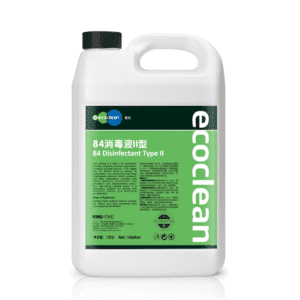
84 Disinfectant Type II cleaning and disinfection solution for ingredients, vs bleach checks, dilution ratio confirmation, sodium hypochlorite handling, surface compatibility, and TDS review.
| Scope of Use | Available Chlorine (mg/L) | Dilution Ratio | Contact Time (min) | Method of Use |
| General Object Surface Disinfection | 250 | 1:224 | 20 | Wipe, soak, rinse, or spray disinfect various clean object surfaces. |
| 500 | 1:112 | 20 | Wipe, soak, rinse, or spray disinfect various non-clean object surfaces. Apply until the surface is wet. | |
| Fruits & Vegetables Disinfection | 200 | 1:280 | 10 | First wash the fruits and vegetables, then disinfect. Rinse thoroughly with clean water after disinfection. |
| Fabric Disinfection | 250 | 1:224 | 20 | Completely submerge the fabric in the disinfectant solution. Rinse thoroughly with clean water after disinfection. |
| Food Processing Tools & Equipment | 500 | 1:112 | 20 | Wipe, soak, rinse, or spray disinfect various cleaned food processing tools and equipment. Rinse thoroughly with clean water after disinfection. |
84 Disinfectant Type II is a sodium hypochlorite disinfectant for professional cleaning programs. In practical buyer terms, 84 disinfectant is chosen when a site needs surface disinfection, fabric disinfection, food processing tool disinfection, or equipment disinfection with a documented available chlorine range and a controlled dilution plan.
| GSC search intent | English source answer | Product-side check |
|---|---|---|
| What is 84 disinfectant? | It is a chlorine-based disinfectant using sodium hypochlorite as the active ingredient. | Confirm the available chlorine range, intended surface, and required contact time before use. |
| Ingredients in 84 disinfectant solution | This Type II product lists sodium hypochlorite, available chlorine, linear alkylbenzene sulfonate, betaine surfactant, and supporting components. | Use the technical data sheet when buyers need ingredient, packaging, or compliance details. |
| 84 disinfectant vs bleach | Both are chlorine-based cleaning and disinfection chemistries, but buyers should compare available chlorine, dilution ratio, contact time, and application scope rather than treating every bleach product as interchangeable. | Use the product dilution table for surface, fabric, fruit and vegetable, and food-processing equipment use cases. |
| Where to buy 84 disinfectant | Professional buyers should request pricing by application, volume, destination country, packaging need, and whether the order also needs technical data sheets. | Share the intended use and annual volume so KingHome can confirm the suitable supply path. |
Safe handling should stay part of the purchase decision. The product is for external disinfection use only, should not be ingested, and should be prepared with suitable protective handling. Follow the listed dilution ratio, contact time, rinsing requirement, storage guidance, and the existing precautions on the product page before using it in a facility program.
Related planning paths: review the 84 Disinfectant Type II technical data sheet, compare other professional cleaner products, and use the KingHome contact page when the purchasing question is volume, packaging, destination, or documentation.
Precautions:84 Disinfectant Type II is a cleaning and disinfection solution for buyers checking what 84 disinfectant is, how it compares vs bleach, which ingredients need review, and how the dilution ratio should be confirmed before use. For a sodium hypochlorite based product, the practical decision is not only cleaning power; it also includes surface compatibility, handling, storage, and TDS review for the intended site.
| Buyer check | Why it matters | What to confirm |
|---|---|---|
| Ingredients and TDS | Searches for ingredients in 84 disinfectant solution usually mean the buyer wants to understand the active chemistry before purchase or use. | Review the TDS, product label, sodium hypochlorite information, concentration guidance, storage notes, and any local handling requirements. |
| 84 disinfectant vs bleach | Buyers often compare 84 disinfectant vs bleach because both may be discussed around chlorine-based cleaning, but product strength and use instructions can differ. | Confirm product type, intended surface, dilution guidance, contact expectations, ventilation, and whether the site requires a specific cleaning protocol. |
| Dilution ratio confirmation | Dilution affects cleaning performance, safety, odor, residue, and surface compatibility. | Check the recommended dilution ratio on the label or TDS, then match it to soil level, surface type, application method, and local safety practice. |
| Surface compatibility and handling | Chlorine-based cleaning solutions can be unsuitable for some metals, fabrics, stone, colored surfaces, or sensitive areas. | Test a small area, avoid mixing with incompatible chemicals, confirm PPE and ventilation, and follow the approved handling process for the facility. |
Choose 84 Disinfectant Type II when the project needs a cleaning and disinfection solution and the buyer can confirm ingredients, dilution ratio, TDS details, surface compatibility, and handling requirements. For stone maintenance, polishing, wax, or machine cleaning tasks, compare the relevant KingHome product category instead of treating disinfectant chemistry as a universal cleaner.
Related planning paths: review the 84 Disinfectant Type II TDS for product details, compare cleaner options for other cleaning needs, browse all products for surface-care categories, and use floor cleaning machine planning when the job requires equipment rather than a chemical cleaning solution.
Related: 84 Disinfectant Type II TDS · Stone care chemicals catalog


 English
  Spanish