WELCOME TO KINGHOME
Get A Free Quote
We will get back to you within 8 hours

WELCOME TO KINGHOME
We will get back to you within 8 hours

Choosing the right floor maintenance equipment can mean the difference between pristine, long-lasting surfaces and costly floor damage. For commercial property managers and facility maintenance teams working with natural stone, understanding the difference between scrubber and buffer machines is essential for protecting your investment. While both pieces of equipment play crucial roles in professional floor care, they serve fundamentally different purposes that directly impact cleaning effectiveness, surface longevity, and operational costs.
Floor scrubbers excel at deep cleaning and sanitization, removing embedded dirt and contaminants through mechanical scrubbing action combined with cleaning solutions. Buffers, conversely, specialize in surface enhancement—polishing already-clean floors to restore their original luster and remove minor imperfections. This distinction becomes particularly critical when maintaining high-value natural stone installations like marble lobbies, granite flooring, or terrazzo walkways in hospitality and commercial real estate environments.
This comprehensive guide examines how floor scrubber and cleaning machines differ from buffers, when to deploy each machine type, and how to maximize results through proper equipment selection and chemical compatibility. Whether you manage a hotel, oversee commercial facilities, or provide professional cleaning services, this decision-making framework will help you optimize both appearance and maintenance efficiency.
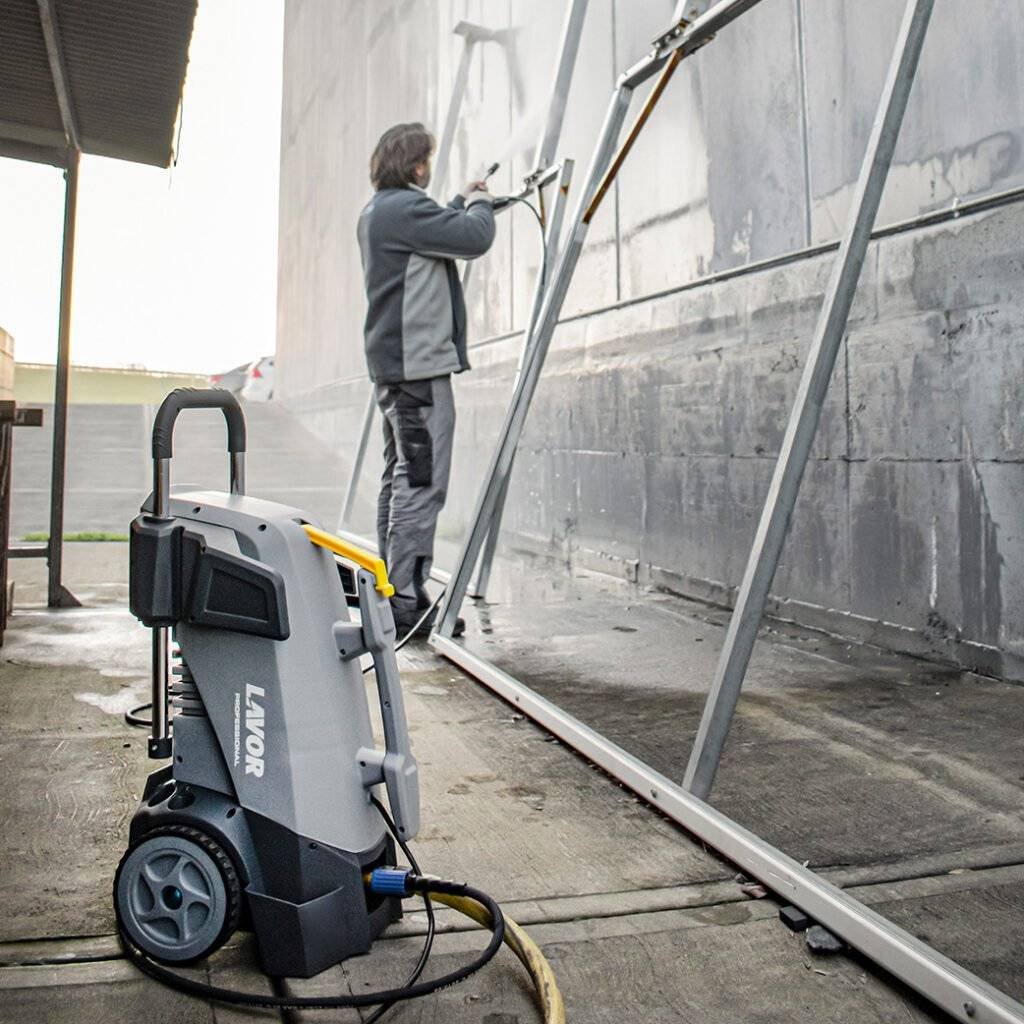
The fundamental difference between scrubber and buffer machines lies in their operational purpose and cleaning mechanism. Floor scrubbers are designed as aggressive cleaning tools that remove dirt, grime, and contaminants through a multi-step process. They apply cleaning solution to the floor, use rotating brushes or pads to mechanically agitate and lift soil, then vacuum up the dirty water—all in a single pass. This leaves floors not just clean but also sanitized and nearly dry for immediate use.
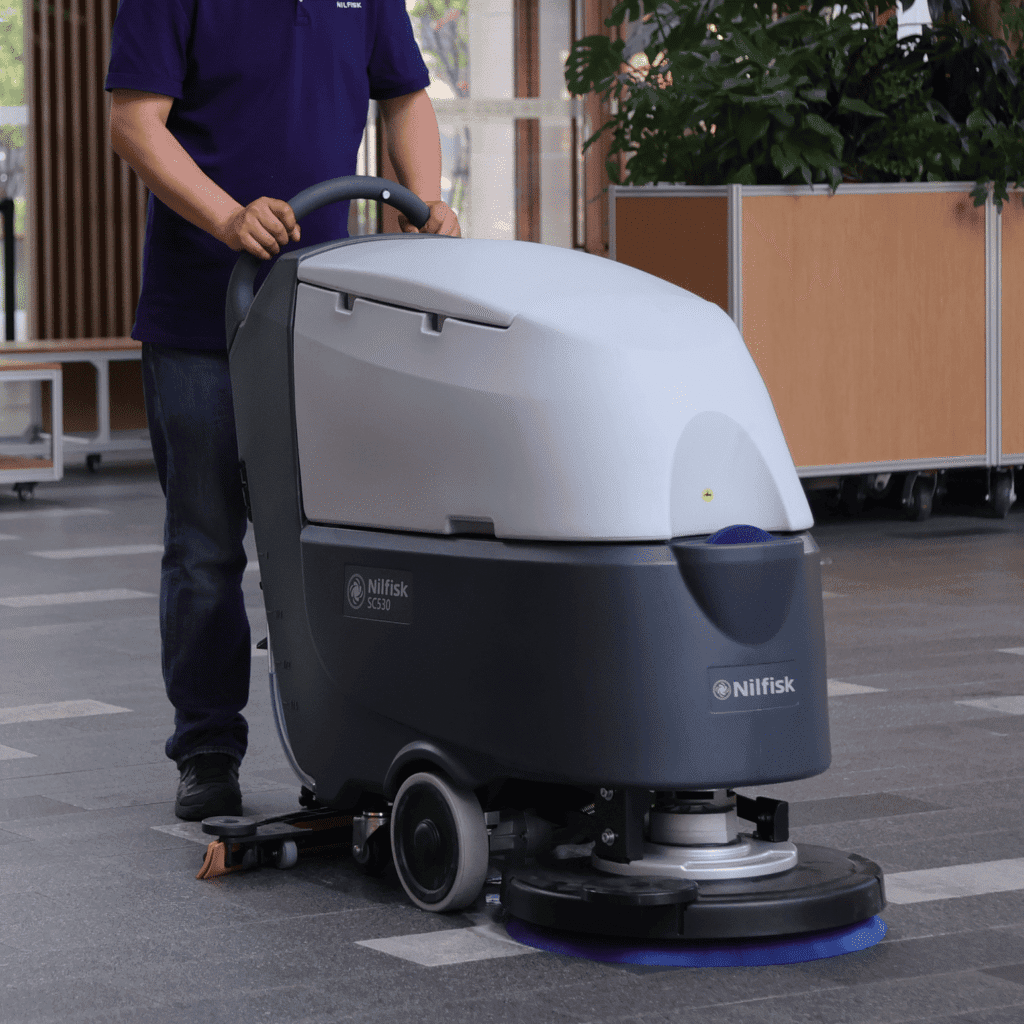
Floor buffers take a completely different approach. These machines work exclusively on already-clean surfaces, using high-speed rotating pads to polish and restore shine. Buffers create friction between specialized pads and the floor surface, which smooths minor scratches, removes scuff marks, and brings back the glossy finish that makes stone floors visually stunning. They cannot remove embedded dirt or perform deep cleaning tasks.
Both machines serve distinct purposes in professional floor maintenance programs, and understanding when to use each is crucial for facility managers. The difference between scrubber and buffer functionality directly impacts cleaning efficiency, labor costs, and floor longevity. Using the wrong machine for a particular task can waste time, damage floor surfaces, or fail to achieve the desired results.
For natural stone installations, this distinction becomes even more important. Marble, granite, and terrazzo surfaces require specific maintenance approaches that balance cleanliness with surface preservation. [Stone Floor Cleaning Machines: Complete Guide to Commercial Stone Cleaners] provides additional context on selecting appropriate equipment for various stone types.
Floor scrubber and cleaning machines combine three essential elements: water, chemical solutions, and mechanical scrubbing action. Modern auto-scrubbers automate what would traditionally require multiple manual steps—applying cleaning solution, scrubbing with mops or brushes, and extracting dirty water. This integrated approach delivers superior cleaning results while dramatically reducing labor time and costs.
The typical floor scrubber features separate tanks for clean solution and recovered dirty water. As the machine moves across the floor, it dispenses the cleaning solution while counter-rotating brushes or oscillating pads agitate the surface. The mechanical action breaks the bond between soil and the floor, suspending dirt in the cleaning solution. Immediately behind the scrubbing mechanism, a vacuum squeegee system extracts the contaminated water, leaving floors clean and nearly dry.
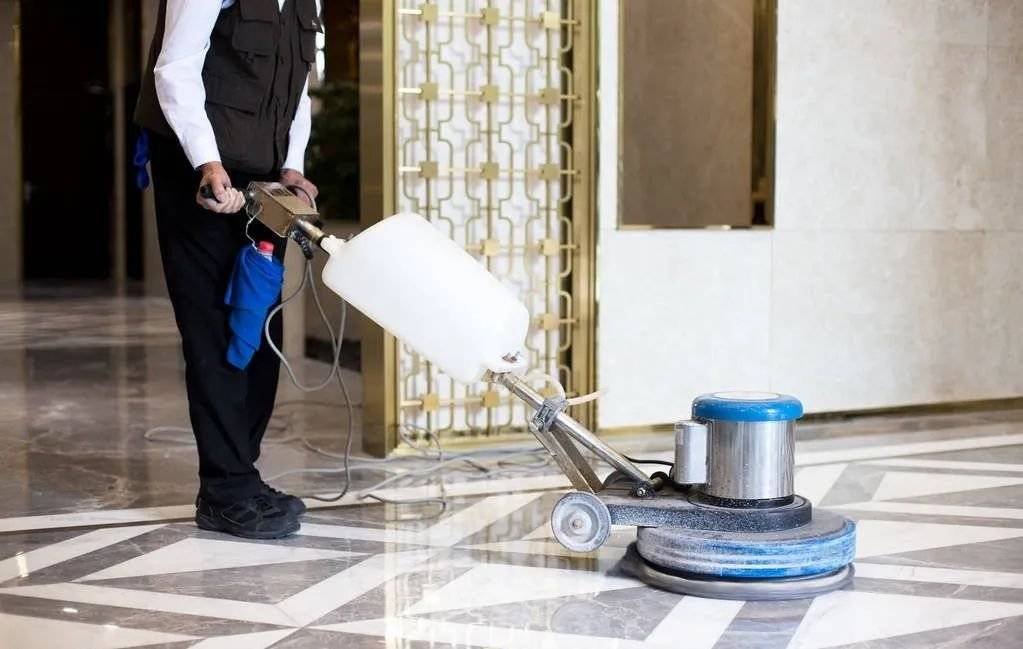
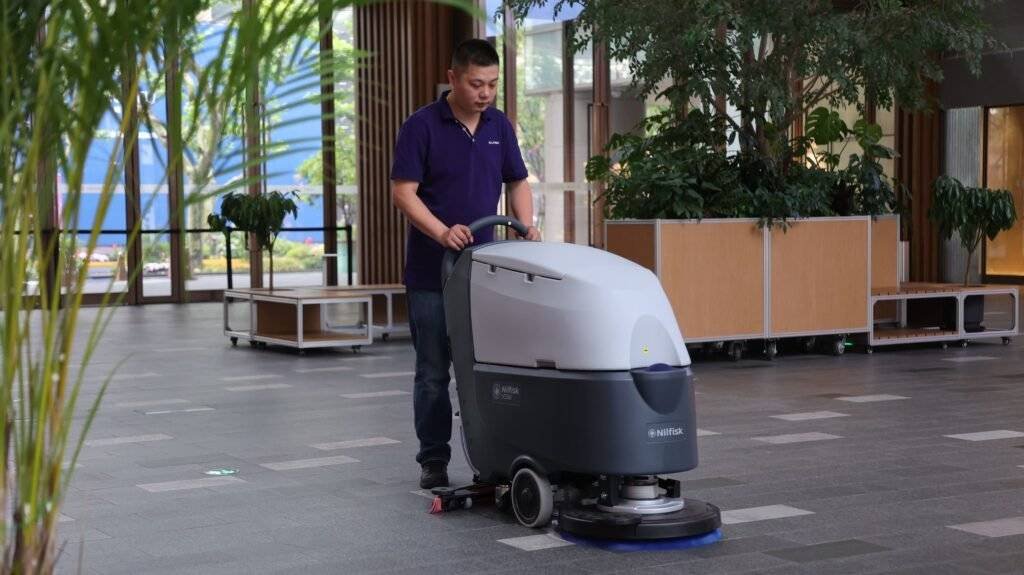
Walk-behind scrubbers are ideal for facilities with 5,000 to 20,000 square feet of floor space. These models require an operator to guide the machine but offer excellent maneuverability in spaces with columns, furniture, or other obstacles. Common applications include hotel corridors, restaurant dining areas, retail stores, and office buildings where controlled cleaning is essential.
Ride-on models suit larger facilities exceeding 20,000 square feet. Warehouses, manufacturing plants, convention centers, and expansive commercial lobbies benefit from the increased productivity these machines deliver. Operators can cover significantly more area per hour while reducing physical fatigue, making ride-on scrubbers ideal for facilities with extensive flooring to maintain.
Floor scrubber and cleaning machines excel at removing embedded dirt, stains, and contaminants from stone floor surfaces. Their mechanical action combined with appropriate cleaning chemistry can address everything from tracked-in mud to spilled beverages to industrial soil. The automatic water recovery systems leave floors safe for immediate foot traffic, eliminating the hazards and inconvenience associated with traditional mopping.
This capability makes scrubbers indispensable for high-traffic commercial spaces requiring regular sanitization. Healthcare facilities, food service environments, schools, and public buildings all benefit from the deep-cleaning power these machines provide. For stone surfaces specifically, selecting alkali resistant cleaning machines ensures equipment can handle the pH requirements of specialized stone restoration chemicals.
Floor buffers operate on an entirely different principle than scrubbers. Low-speed buffers, typically running at 175-300 RPM (revolutions per minute), are designed for general floor maintenance, light cleaning with appropriate pads, and applying floor finishes. These machines use a single rotating pad mounted beneath a motor assembly, with the operator controlling direction through a handle system.
High-speed burnishers represent a more specialized category, running at 1,500 RPM or higher. These machines create significant friction between the pad and floor surface, generating heat that helps create that signature high-gloss finish on polished stone and finished floors. Burnishers are the secret behind the mirror-like shine you see in upscale hotel lobbies, luxury retail environments, and prestigious office buildings.
Buffers use rotating pads combined with polishing compounds to restore surface luster. Different pad types—ranging from soft polishing pads to more aggressive stripping pads—allow operators to adjust the machine’s impact on the floor. For natural stone applications, specialized diamond-impregnated pads can actually refine the stone surface, progressively increasing gloss levels through a series of finer and finer abrasive grades.
These machines are primarily used on sealed hard surfaces including marble, granite, terrazzo, and vinyl composition tile (VCT). The key requirement is a smooth, sealed surface that can benefit from polishing without risking damage. Unsealed or textured surfaces generally aren’t suitable for buffing, as the machine cannot make consistent contact across an uneven plane.
Critically, buffers cannot remove deep dirt but excel at surface enhancement and scuff removal. Once you’ve properly cleaned a floor with a scrubber or traditional methods, a buffer can eliminate the dull, worn appearance that develops from foot traffic. This makes buffers essential maintenance tools between deep cleaning cycles, helping facilities maintain that “just refinished” appearance without the time and expense of complete restoration.
For stone surfaces, [Floor Machine Brushes & Scrubber Brushes: Professional Equipment Guide] offers detailed information on selecting the right pads and accessories to achieve optimal results without risking surface damage.
Stone floor cleaning machine selection depends critically on surface type and desired finish level. Natural stone encompasses a wide range of materials—from soft, porous limestone to extremely hard, dense granite—each with unique maintenance requirements. Understanding these differences prevents equipment misuse that could damage expensive flooring installations.
Granite cleaner machine requirements differ from marble equipment due to significant hardness variations. Granite ranks 6-7 on the Mohs hardness scale, making it one of the most durable natural stones. This hardness allows for more aggressive cleaning methods and higher-speed buffing without surface damage concerns. Granite can typically handle stronger cleaning chemicals and more abrasive polishing pads than softer stones.
Marble, conversely, ranks only 3-4 on the Mohs scale and is chemically sensitive to acids. This softness and reactivity demand gentler cleaning approaches. The best stone floor cleaning machine practices for marble prioritize pH-neutral cleaning solutions, softer brushes, and lower-pressure scrubbing to preserve the sealant integrity and prevent etching. Buffer speeds must also be carefully controlled to avoid heat buildup that could damage the surface.
Terrazzo presents unique challenges because it combines stone chips (usually marble) with cement or epoxy binders. This composite material requires both scrubbing for cleanliness and buffing for gloss restoration. The cement matrix can absorb stains and harbor bacteria, making regular scrubbing essential. However, the polished stone chips benefit tremendously from periodic buffing to maintain their lustrous appearance.
Commercial stone floors benefit most from a sequential scrubbing-then-buffing approach. Start with thorough scrubbing using appropriate stone-safe cleaning solutions to remove all soil and contaminants. Once the floor is clean and completely dry, follow with buffing to restore shine and create a smooth, sealed surface that resists future soiling. This two-step process delivers results that neither machine alone can achieve.
Property managers should also consider specialized equipment for specific applications. Medium roughening machines serve essential roles in surface preparation before sealing or re-polishing, while [Granite and Terrazzo Floor Cleaning Machines: Professional Solutions for Natural Stone] explores equipment optimized specifically for these demanding materials.
Floor scrubbers shine in situations demanding heavy soil removal. Kitchens, warehouses, hospitals, and industrial facilities generate significant floor contamination that manual cleaning methods cannot efficiently address. Grease, oils, tracked-in dirt, and industrial residues require the mechanical action and chemical cleaning power that only scrubbers deliver.
Regular maintenance cleaning in high-traffic commercial lobbies and hallways represents another prime scrubber application. Hotels, office buildings, retail centers, and transportation hubs experience constant foot traffic that deposits dirt, moisture, and contaminants. Daily or weekly scrubbing prevents soil accumulation that can permanently stain or damage floor surfaces while maintaining the clean appearance visitors expect.
Sanitization requirements make scrubbers indispensable where hygiene standards are critical. Healthcare facilities, food processing plants, restaurants, and educational institutions must meet strict cleanliness standards. Floor scrubbers combined with appropriate disinfecting solutions physically remove pathogens rather than simply spreading them around as traditional mopping often does. The mechanical action lifts bacteria and viruses from floor pores and texture, while the vacuum system removes contaminated water.
Unfinished or textured concrete floors that cannot be buffed require scrubber maintenance exclusively. Manufacturing facilities, parking structures, and outdoor loading areas typically feature rough concrete surfaces where buffers cannot operate effectively. Scrubbers equipped with appropriate brushes can clean these challenging surfaces, removing oils, tire marks, and embedded grime.
Post-construction cleaning or restoration projects always demand deep cleaning before any polishing work. New construction generates cement dust, adhesive residues, and construction debris that must be thoroughly removed. Renovation projects expose years of accumulated dirt beneath old finishes. Scrubbers prepare these surfaces for refinishing by removing all contaminants down to the bare floor.
Outdoor applications including parking structures and loading docks benefit from scrubber cleaning. These areas face weather exposure, vehicle traffic, and heavy soiling that no other equipment type can adequately address. Scrubbers designed for outdoor use feature robust construction and can handle the water volume and chemical requirements these tough environments demand.
For facilities managing diverse flooring types, versatile scrubber options from stone cleaner machine suppliers provide the flexibility to address multiple surface types with a single equipment investment.
Floor buffers excel at restoring shine to dull marble, granite, or terrazzo surfaces. Natural stone develops a cloudy, worn appearance over time as foot traffic gradually scratches the polished surface. Buffing with appropriate diamond polishing pads progressively refines these micro-scratches, restoring the mirror-like finish that makes stone flooring so attractive. This process extends the time between expensive professional refinishing services.
Maintaining polished concrete in showrooms and retail environments requires regular buffing. Polished concrete has become increasingly popular for its industrial aesthetic and durability, but it demands consistent maintenance to preserve its distinctive gloss. High-speed burnishing creates the dramatic shine that makes polished concrete visually striking while densifying the surface for improved stain resistance.
Removing minor scratches and scuff marks from sealed stone floors is perhaps the most common buffer application. Black heel marks, furniture scratches, and minor surface damage respond well to buffing with appropriate pads. This spot maintenance prevents the accumulation of visible damage that would eventually require complete floor refinishing.
Regular maintenance between deep cleaning cycles helps facilities maximize the interval between labor-intensive scrubbing operations. A quick buffing pass can refresh floor appearance in areas where soil accumulation isn’t severe but traffic has dulled the finish. This approach optimizes labor allocation by reserving scrubbing for areas and schedules where it’s truly necessary.
Hospitality settings where appearance and first impressions matter rely heavily on floor buffers. Hotel lobbies, upscale restaurants, luxury retail stores, and corporate headquarters use buffing as a daily maintenance ritual. The high-gloss floors these machines create signal quality, cleanliness, and attention to detail—critical factors in customer perception and satisfaction.
Buffers should always be deployed after the floor has been cleaned with a scrubber or traditional methods. Attempting to buff a dirty floor simply grinds soil into the surface, creating scratches and damaging both the floor and the buffing pad. The proper sequence is always clean first, then polish—never the reverse.
Professional polishing compounds and chemicals significantly enhance buffer effectiveness. Products like Beton Shine are specifically formulated to work synergistically with mechanical polishing, delivering superior results compared to buffing alone.
Floor type assessment forms the foundation of equipment selection. Rough, textured surfaces need scrubbers because buffers cannot maintain consistent contact across uneven planes. Smooth, sealed floors can be buffed provided they’re first cleaned properly. Natural stone adds complexity because it may require both machines in sequence—scrubbing for cleanliness, buffing for appearance.
Cleaning objectives clarify which machine suits your needs. If sanitization, soil removal, or deep cleaning is the goal, scrubbers are essential. No amount of buffing can remove embedded dirt or kill pathogens. Conversely, if aesthetic enhancement, scratch removal, or gloss restoration is the priority, buffers deliver results scrubbers cannot achieve. Understanding your primary objective prevents equipment mismatches.
Budget considerations influence both initial purchase and ongoing operational costs. Walk-behind scrubbers start around $1,500, with professional-grade models in the $3,000-$8,000 range. Large ride-on scrubbers for extensive facilities can cost $10,000-$30,000 or more. Floor buffers are generally more affordable, with capable low-speed models starting around $900 and high-speed burnishers ranging from $1,500-$4,000.
However, purchase price represents only part of the total cost equation. Scrubbers consume cleaning chemicals, water, and electricity while requiring regular brush and squeegee replacement. Buffers need pad replacement and polishing compounds. Labor efficiency often justifies higher equipment costs—a ride-on scrubber costing $25,000 might reduce labor hours enough to pay for itself within 18-24 months in a large facility.
Most commercial facilities benefit from owning both machines for complete floor care. Hotels, hospitals, corporate campuses, and retail centers typically need scrubbing capability for thorough cleaning and buffing capability for appearance maintenance. While this requires larger capital investment, it provides operational flexibility and ensures optimal results for every floor care task.
The decision framework should consider facility size, floor types, traffic patterns, and appearance standards. A 10,000-square-foot hotel with polished marble throughout needs different equipment than a 100,000-square-foot warehouse with sealed concrete. Budget adequate capacity and capability for your specific situation rather than making compromises that reduce effectiveness.
For facilities with particularly demanding environments, specialized equipment like high-pressure floor scrubbers addresses challenging applications that standard machines cannot handle effectively.
Alkali resistant cleaning machine features become critical when using high-pH stone restoration chemicals. Some stone cleaning and stripping applications require strongly alkaline solutions that can damage standard equipment components. Machines designed for these applications feature chemical-resistant tanks, hoses, and pump assemblies that withstand aggressive cleaning solutions without degradation.
Medium roughening machine capabilities serve essential roles in preparing surfaces before sealing or re-polishing. These specialized tools—often combining grinding and scrubbing functions—remove old sealers, level uneven wear patterns, and create the proper surface profile for optimal sealer adhesion. While not needed for routine maintenance, they’re invaluable for restoration projects.
Dry foam carpet cleaner alternatives address needs in mixed-surface facilities. Many commercial properties feature both hard flooring and carpeted areas. Equipment that can handle multiple surface types reduces the capital investment and storage space required for specialized machines. Some orbital floor machines can switch between hard floor maintenance and carpet cleaning by changing accessories.
Equipment compatibility with stone-specific cleaning compounds and polishes affects both performance and safety. Certain cleaning chemicals can damage rubber hoses, plastic components, or pump seals. Before selecting equipment, verify it’s rated for the chemicals you’ll use. Manufacturers should provide chemical compatibility charts listing approved cleaning solutions.
Professional-grade machines versus consumer models represents a critical distinction for commercial operations. Consumer floor care equipment lacks the duty cycle, durability, and performance characteristics commercial applications demand. A homeowner buffer might operate 2-3 hours monthly; a commercial machine may run 6-8 hours daily. This intensity requires commercial-grade motors, bearings, and construction that consumer products cannot provide.
Professional equipment also delivers productivity advantages through larger cleaning paths, faster speeds, and automated features. A 20-inch walk-behind scrubber cleans significantly more area per hour than a 13-inch consumer model. This productivity difference quickly justifies the higher equipment cost in commercial applications.
When evaluating specialized equipment needs, consult with suppliers experienced in stone care applications. Stone floor cleaning machine specialists can recommend equipment configurations optimized for your specific flooring types and maintenance requirements.
Daily pad and brush inspection prevents floor damage and maintains equipment performance. Worn or contaminated pads can scratch floors, reduce cleaning effectiveness, and strain machine motors. Before each use, visually inspect pads for damage, embedded debris, or excessive wear. Replace pads when bristles are worn below half their original length or when cleaning performance noticeably declines.
Proper chemical selection maximizes machine effectiveness and floor longevity. Using inappropriate cleaning solutions can damage floors, equipment, or both. Stone surfaces particularly demand pH-appropriate chemicals—acids can etch marble and limestone, while some alkaline cleaners may discolor granite. Always match cleaning chemistry to both floor type and equipment specifications for optimal results and surface preservation.
Stone-specific cleaning solutions prevent etching on sensitive marble and limestone. These formulated products maintain the pH balance natural stone requires while still delivering effective soil removal. Generic floor cleaners often contain acids or harsh alkalines that permanently damage stone surfaces. The modest additional cost of stone-appropriate chemicals prevents expensive restoration work later.
Regular professional servicing extends equipment lifespan and reliability. Annual maintenance by qualified technicians identifies developing problems before they cause failures. Technicians can replace wear items, adjust settings, update software on electronic models, and ensure all safety systems function properly. This preventive approach costs far less than emergency repairs or premature equipment replacement.
Operator training reduces user error and equipment misuse. Even simple floor care machines have learning curves—incorrect techniques can damage floors or reduce cleaning effectiveness. Invest time training staff on proper operation, including movement patterns, solution dilution, pad selection, and troubleshooting. Well-trained operators protect both flooring investments and equipment assets.
Cleaning solution tank maintenance prevents cross-contamination and buildup. Recovery tanks should be emptied and rinsed after each use to prevent bacterial growth and odor development. Solution tanks benefit from periodic deep cleaning to remove chemical residues that can reduce effectiveness or clog dispensing systems. This simple maintenance dramatically extends equipment life while ensuring consistent performance.
For comprehensive technical information on proper cleaning solutions, review detailed specifications like the Floor Deep Cleaner technical data sheet which provides proper dilution ratios and application guidelines.
Stone-specific cleaning solutions prevent etching on marble and limestone while delivering the cleaning power commercial applications demand. These specially formulated products balance effective soil removal with pH levels that won’t damage sensitive natural stone. For facility managers, this means choosing products explicitly labeled as safe for natural stone rather than generic all-purpose cleaners.
pH-neutral formulations protect natural stone sealants during scrubbing operations. Most stone sealers can be degraded by highly acidic or alkaline cleaning solutions. pH-neutral cleaners (typically pH 7-9) clean effectively without attacking sealers, extending the time between expensive resealing projects. This chemical selection directly impacts long-term maintenance costs and floor appearance.
Professional polishing compounds enhance buffer effectiveness on granite, marble, and terrazzo. These products work synergistically with mechanical polishing to refine the stone surface faster and to higher gloss levels than buffing with water alone. Polishing compounds contain fine abrasives, lubricants, and chemical agents that facilitate the polishing process while minimizing heat buildup and pad wear.
Chemical compatibility with machine materials prevents equipment damage and extends service life. Before using any cleaning solution in floor care equipment, verify compatibility with the machine’s tanks, hoses, pump components, and seals. Some aggressive chemicals can degrade plastic tanks, attack rubber seals, or corrode metal components. Manufacturers typically provide compatibility charts or can answer specific questions about chemical use.
Proper dilution ratios optimize cleaning power while controlling costs. Over-concentrated cleaning solutions waste expensive chemicals while potentially leaving residues that attract rapid re-soiling. Under-diluted solutions fail to clean effectively, forcing repeated passes and wasting labor time. Follow manufacturer dilution recommendations precisely, using measuring systems rather than estimating proportions.
The synergy between appropriate equipment and optimized chemicals delivers superior results compared to either element alone. A high-quality scrubber using inappropriate chemicals cannot achieve the same results as a properly matched system. Similarly, excellent cleaning chemistry cannot compensate for inadequate equipment. Facility managers should view equipment and chemicals as an integrated system rather than separate purchasing decisions.
For comprehensive stone floor maintenance programs, partner with suppliers offering both equipment and chemicals. This integrated approach ensures compatibility, simplifies procurement, and provides single-source technical support when challenges arise.
Understanding the difference between scrubber and buffer machines empowers commercial property managers and facility maintenance teams to make informed equipment decisions that protect flooring investments while optimizing operational efficiency. Floor scrubbers deliver deep cleaning and sanitization through integrated washing and water recovery, making them essential for routine maintenance and heavy soil removal. Floor buffers restore surface gloss and remove minor imperfections, preserving the prestigious appearance that natural stone installations demand.
For facilities managing marble, granite, terrazzo, and other premium flooring materials, both machine types typically play essential roles in comprehensive maintenance programs. The sequential approach—scrubbing for cleanliness, buffing for appearance—delivers results that neither machine alone can achieve. This integrated strategy extends floor lifespan, reduces long-term restoration costs, and maintains the visual impact that makes natural stone such a valuable architectural element.
Equipment selection should consider floor types, facility size, traffic patterns, cleaning objectives, and budget constraints. Professional-grade floor scrubber and cleaning machines represent significant investments, but their productivity advantages and durability typically justify costs within 18-36 months in commercial applications. Pairing appropriate equipment with stone-specific cleaning solutions and polishing compounds maximizes results while preventing damage to sensitive natural stone surfaces.
Whether you’re managing a hotel, overseeing corporate facilities, or providing professional cleaning services, the right equipment and chemical combinations transform floor maintenance from a challenging burden into a manageable routine. Invest in quality machines, train operators thoroughly, maintain equipment properly, and use stone-appropriate chemicals for optimal results that protect both your floors and your reputation.
Ready to optimize your stone floor maintenance program? Explore our complete range of floor care equipment and stone-specific cleaning solutions designed for commercial applications.
Floor scrubbers deep clean by applying cleaning solution, mechanically scrubbing dirt and contaminants, then vacuuming up waste water in a single pass. This process removes embedded soil and sanitizes floors. Buffers polish already-clean floors using rotating pads to restore shine and remove minor surface imperfections through friction and heat. Scrubbers clean; buffers polish. Using each machine for its intended purpose ensures optimal results and prevents floor damage.
No, buffers are designed exclusively for polishing and cannot remove embedded dirt or perform deep cleaning. They work only on already-clean surfaces to enhance appearance and restore gloss. Attempting to buff a dirty floor grinds soil into the surface, creating scratches and damaging both the floor and buffing pad. Always clean floors thoroughly with a scrubber or traditional methods before buffing. The proper sequence is clean first, then polish—never reverse this order.
Both machines are necessary for complete natural stone floor care. Use scrubbers with pH-neutral, stone-safe cleaning solutions for regular cleaning and dirt removal. Follow with buffers and appropriate polishing compounds to restore shine and refine the surface. This sequential approach delivers optimal results for marble and granite. Scrubbing alone keeps floors clean but dull; buffing alone cannot remove soil. The combination maintains both hygiene and the prestigious appearance that makes natural stone valuable.
Most commercial facilities benefit from both machines. Scrubbers handle routine cleaning, sanitization, and heavy soil removal—essential for hygiene and cleanliness. Buffers maintain appearance between deep cleanings, removing scuffs and restoring gloss that makes positive first impressions. High-end environments like hotels, corporate lobbies, and luxury retail spaces typically use both machines to achieve the cleanliness and appearance their brand requires. While representing larger capital investment, this dual approach optimizes both functionality and aesthetics.
Walk-behind auto-scrubbers with adjustable pressure settings work well for most stone applications. Choose models compatible with stone-safe, pH-neutral cleaning chemicals to prevent etching or damage to marble, limestone, and other sensitive natural stone surfaces. Look for machines with solution and recovery tanks, adjustable brush pressure, and chemical-resistant components. For large stone installations, ride-on scrubbers deliver productivity advantages. Always pair appropriate equipment with formulated stone cleaners rather than generic products to protect your flooring investment.
High-traffic commercial stone floors typically require daily or weekly scrubbing for cleanliness and sanitation, depending on traffic volume and soil accumulation. Buffing is performed monthly or quarterly to restore shine and remove accumulated minor scratches that dull appearance. Frequency depends on traffic levels, appearance standards, and floor type. Hotels and upscale retail may buff more frequently to maintain premium appearance. Industrial or back-of-house areas prioritize scrubbing frequency over buffing. Adjust schedules based on actual floor condition rather than arbitrary timelines.

