BIENVENIDO A KINGHOME
Obtenga un presupuesto gratuito
Le responderemos en un plazo de 8 horas

BIENVENIDO A KINGHOME
Le responderemos en un plazo de 8 horas
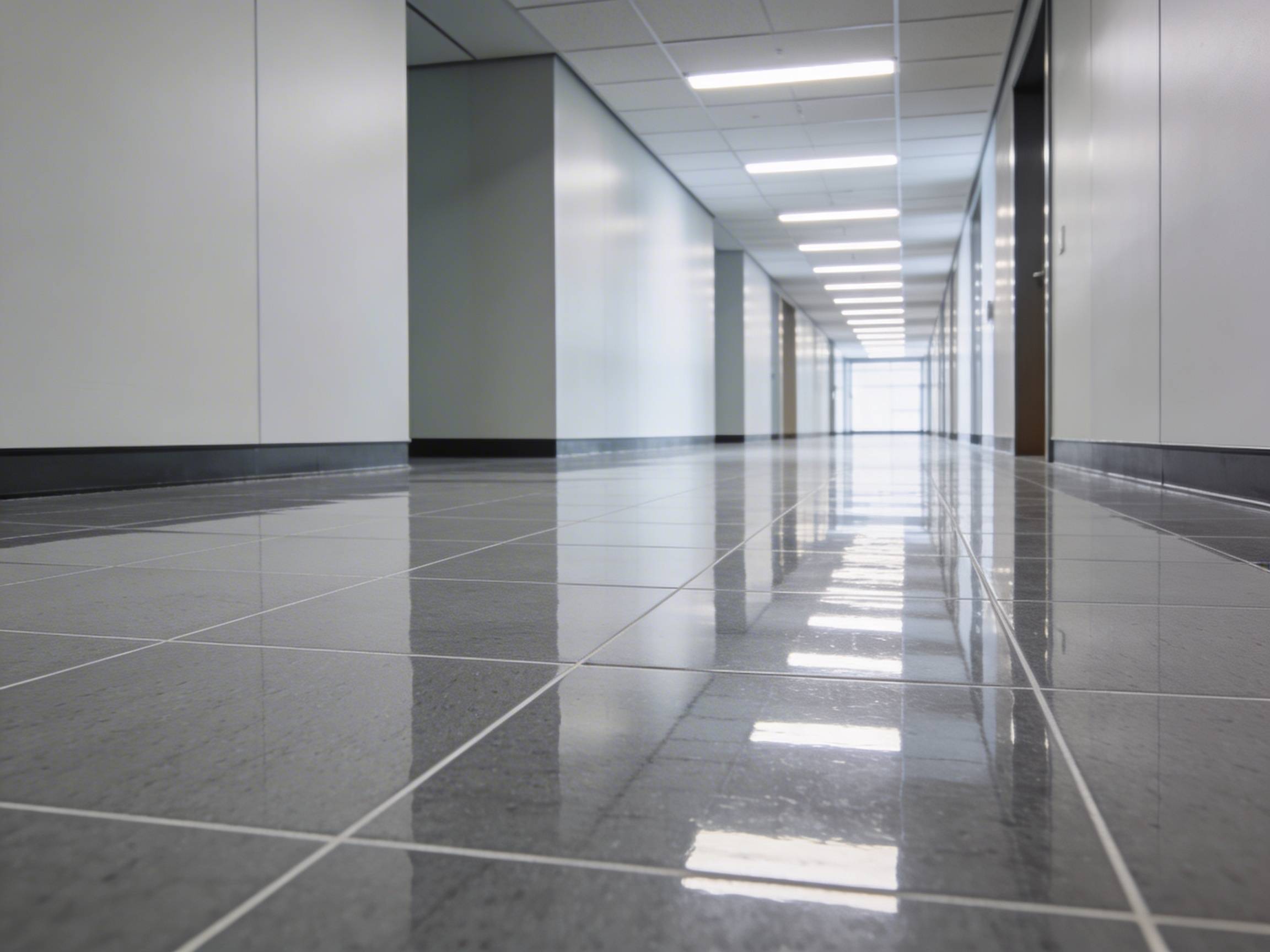
VCT (vinyl composition tile) is one of the most widely used commercial flooring materials in the world — and one of the most misunderstood when it comes to long-term maintenance. The tile itself is relatively inexpensive and durable. But without a structured polish program, VCT degrades fast: it absorbs dirt at the microscopic level, scuffs permanently, and becomes progressively harder to restore with each maintenance cycle that is skipped or done incorrectly.
This guide covers the complete VCT maintenance system — from initial finishing through daily, weekly, and annual care routines, coat application sequences, finish assessment, and the most common polish failures to avoid.

For a full comparison of floor polish versus floor wax and guidance on which product is appropriate for VCT, see our floor polish vs floor wax guide.
VCT tiles are manufactured from polyvinyl chloride (PVC) blended with limestone filler and pigment, pressed into dense 12×12-inch tiles. The limestone filler — which makes up a significant portion of the tile’s composition — gives VCT its characteristic hardness and dimensional stability, but also makes the tile surface microscopically porous.
This porosity is the central reason VCT requires a finishing program rather than simple cleaning. An unfinished VCT floor:
The finish coats — typically three to five layers of water-based acrylic or polymer floor polish — serve as the actual wear and appearance layer of the floor. The tile beneath is protected; all maintenance activity occurs on and within the finish system. When the finish is functioning correctly, VCT is easy to clean, maintains a consistent gloss level, and recovers quickly from normal use. When the finish system is neglected, degraded, or incorrectly applied, VCT requires far more labor to restore than any routine maintenance program would have required.
VCT is the primary use case for commercial floor polish. Unlike luxury vinyl tile (LVT), which has a factory-applied wear layer that requires no finishing, VCT depends entirely on the applied finish for its appearance and protective performance.
A structured VCT maintenance program operates on four distinct cycles, each with different objectives and equipment requirements. The more consistently the daily and weekly tasks are performed, the less intensive the periodic work needs to be.

The scrub-and-recoat cycle extends the life of the finish system without a full strip. It is appropriate when the finish is showing wear but has not fully degraded:
A properly maintained VCT floor can sustain several scrub-and-recoat cycles before requiring a full strip. The key limiting factor is total finish thickness: when coats have accumulated to the point where edges show visible layer ridges or the finish begins to crack and yellow, a full strip is necessary regardless of interval.
At least once per year — or when the scrub-and-recoat cycle can no longer restore an acceptable finish — the complete finish system must be stripped and reapplied from bare tile. For the full stripping process, see our guide on how to strip floor wax and polish.
After stripping, allow the floor to dry completely before applying the new finish system. In facilities with very high foot traffic or aggressive cleaning programs, the annual strip-and-recoat cycle may need to be shortened to every six to eight months.
On freshly stripped or new VCT tile:
New VCT tile arrives from the factory with a release agent applied to prevent tiles from sticking together during storage and shipping. This release agent must be fully removed before any finish is applied — it will prevent the first coat from bonding correctly and causes premature peeling. Strip or scrub the floor with a floor machine and appropriate pad before the first finish coat, even if the tile has never been finished before.

Recommended sequence for new or freshly stripped VCT:
Total coats for new or stripped VCT: four to five coats is the standard for most commercial floor polish products. Check the product technical data sheet for the manufacturer’s specific recommendation, as polymer density varies between formulations.
Compatibility between product applications:
Do not mix floor polish products from different manufacturers in the same finish system without verifying chemical compatibility. Incompatible polymer chemistries in successive coats can cause delamination, cloudiness, or adhesion failure. If switching products, complete a full strip before applying a different finish brand.
Avoid these application errors:
The finish system should be assessed at every monthly burnishing cycle, not only when problems become visually obvious. Waiting until failure is visible means the floor has already been without adequate protection for some period.
Visual inspection method:
Examine the floor in raking light from a low angle — ideally with a side-light source rather than overhead lighting. In raking light, finish wear patterns become clearly visible as matte or shadow-toned zones against the glossy field.
Indicators that a maintenance recoat (scrub and recoat) is needed:
Indicators that a full strip and recoat is needed:
Practical tile test:
In a worn area, apply a drop of clean water to the floor surface. On a properly maintained VCT floor with an intact finish, the water will bead or sheet off the surface. If the water absorbs into the surface within a few seconds, the finish in that area has been worn through to the tile substrate — the floor requires at minimum a recoat in that zone, and potentially a full strip if the condition is widespread.
The finish appears to be breaking apart, with a white powdery residue that spreads with mopping or burnishing.
Cause: Excessive coat accumulation without stripping, or individual coats applied too thick. The finish system has exceeded its total film thickness and is delaminating from within.
Prevention: Maintain a regular strip-and-recoat schedule. Apply thin coats. Count and record coat cycles so that buildup thresholds are managed proactively.
The finish has a yellow or amber cast, especially visible at room edges and in low-traffic areas.
Cause: Accumulated buildup reacting with UV light, cleaning chemicals, or age. Can also be caused by applying finish over residual stripper (insufficient rinsing after stripping) or by using wax products instead of or mixed with polymer polish.
Prevention: Rinse thoroughly after each stripping cycle (verify pH neutrality before recoating). Maintain the strip-and-recoat cycle before heavy buildup accumulates. Confirm all products used in the finish system are pH-compatible with the finished floor.
Finish coats separate from the tile surface or from each other in sheets or sections.
Cause: The most common causes are applying over a contaminated surface, applying over residual stripper (high pH inhibits polymer bonding), applying a new coat before the previous coat has fully cured, or mixing chemically incompatible products.
Prevention: After stripping, rinse until pH-neutral. Allow complete drying before the first coat. Apply only thin coats. Do not mix products from different manufacturers within the same finish system.
The floor shows applicator lines, mop streaks, or significant variation in gloss across the field.
Cause: Coats applied too thick; a dirty or previously used applicator mop carrying contamination; airflow from HVAC or open doors causing uneven drying rates; applying finish in direct sunlight.
Prevention: Use a clean microfiber flat mop for each new coat. Close HVAC vents and doors during application and for 30 minutes after. Apply thin coats with deliberate, overlapping strokes. Alternate mop direction between coats.
Heel marks and black scuff marks appear after normal use and do not respond to burnishing.
Cause: The finish layer is too thin to absorb and release normal foot traffic abrasion. This is not a product failure — it is a maintenance scheduling issue. The floor needs a maintenance recoat to restore a viable finish depth.
Prevention: Do not allow the scrub-and-recoat interval to extend beyond the point where burnishing stops being effective. A one-coat maintenance application early prevents the labor of a full strip later.

