BIENVENIDO A KINGHOME
Obtenga un presupuesto gratuito
Le responderemos en un plazo de 8 horas

BIENVENIDO A KINGHOME
Le responderemos en un plazo de 8 horas
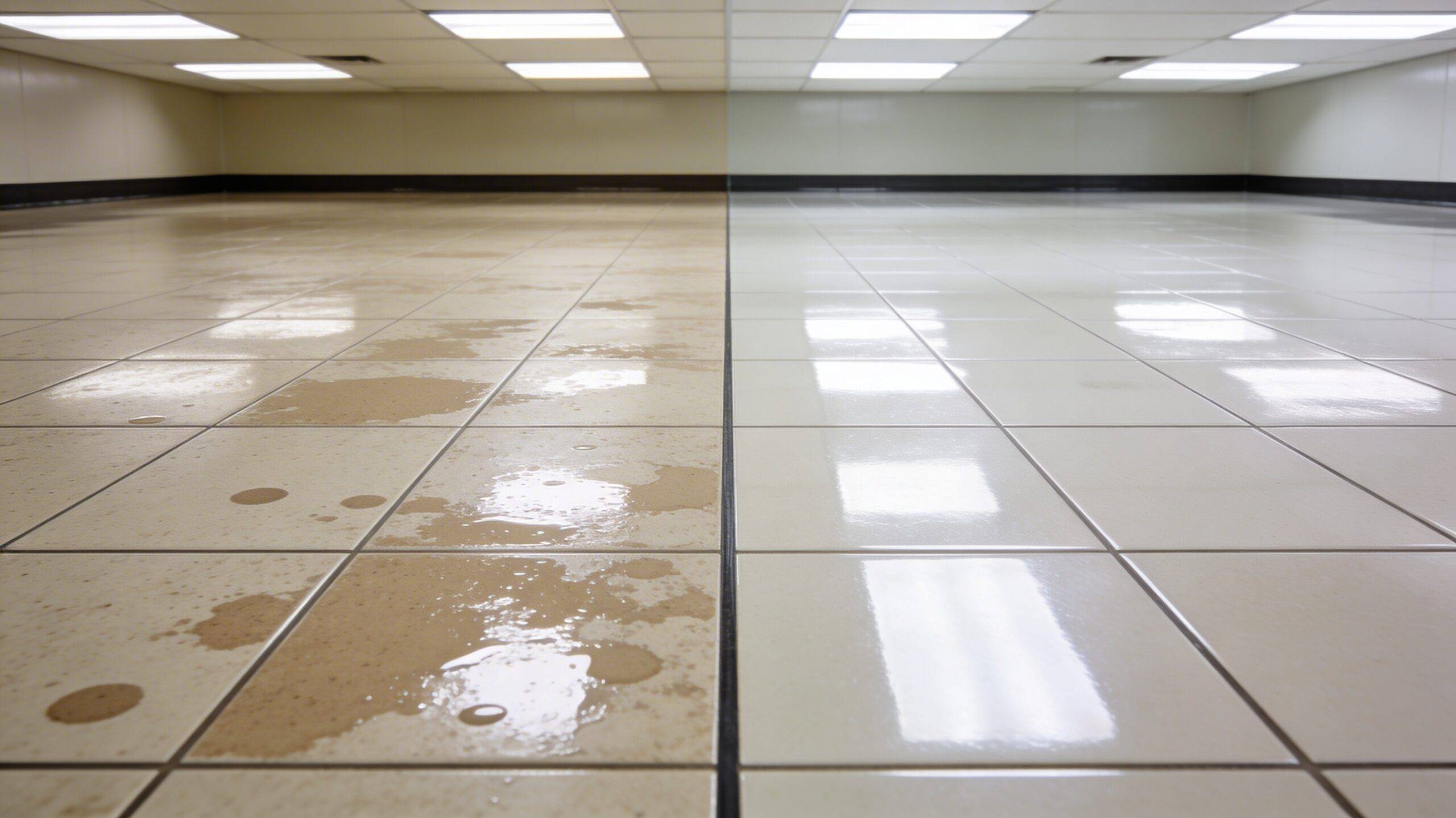
Floor polish and floor sealer are frequently confused with each other — and in many maintenance programs, they are used together without a clear understanding of what each one is doing. The confusion is understandable: both are applied to floors, both are clear or semi-clear liquids, and both contribute to the floor’s appearance and protection. But they serve entirely different functions, are applied in a specific sequence for a reason, and are not interchangeable.
Using the wrong product at the wrong stage — or skipping a sealer when one is needed — produces problems that no amount of additional polish coats will correct.

This guide explains what sealers and polishes each do, when to use them together, and the most common mistakes that result from combining them incorrectly.
For a full breakdown of floor polish and how it differs from floor wax, see our floor polish vs floor wax guide.
A floor sealer is applied directly to the bare floor substrate — before any finish coats — and its primary function is to prepare the surface for the finishing system that follows. Depending on the floor type and product, sealers work in two different ways:
In both cases, the sealer does not produce significant gloss on its own and is not intended to be the working surface layer. It stabilizes the substrate and creates the conditions under which finish coats perform correctly.
Floor polish (also called floor finish) sits on top of the sealed surface and provides everything the user sees and interacts with daily: the gloss level, the wear resistance, the ability to be burnished and maintained, and the protection against scuffs, spills, and abrasion. Polish is maintained routinely — burnished, recoated, and eventually stripped. Sealer is not.
The key functional distinction:
| Function | Floor Sealer | Floor Polish |
|---|---|---|
| Applied to | Bare floor substrate | Sealed surface (or existing finish) |
| Primary role | Adhesion base; substrate stabilization | Gloss; wear protection; daily performance |
| Film position | Foundation (first layer) | Working surface (top layers) |
| Produces gloss | Mínimo | Yes — primary gloss source |
| Routine reapplication | No — only after full strip | Yes — on a regular maintenance cycle |
| Number of coats | 1–2 maximum | 3–5 coats (initial); 1–2 (recoat) |
The sealer-first sequence is not arbitrary. On floors where sealer is needed, applying polish directly to the bare substrate creates several specific problems:

Bare VCT and linoleum surfaces have microscopic surface variation — some areas are more porous than others, and the first coat of polish is absorbed unevenly across the field. The result is a patchy, non-uniform gloss that no amount of additional coats fully corrects. A sealer coat closes this surface variation before the first polish coat is applied, giving every subsequent finish coat a consistent base to adhere to.
When polish is applied to an unsealed surface, a significant portion of the first coat disappears into the substrate rather than building the finish layer. Multiple additional coats are needed to achieve what a sealed floor would accomplish in fewer applications. Over successive recoat cycles, this adds material and labor cost without a corresponding improvement in performance.

On linoleum, the floor contains residual alkali compounds from the manufacturing process that can react chemically with some polymer finish products over time, causing discoloration or delamination. A sealer formulated for linoleum neutralizes this reactivity before the finish is applied. Skipping this step may produce no immediate problem but leads to premature finish breakdown that appears months into the program.
Rapid finish degradation on concrete.
On sealed concrete, the distinction is even more critical. An unscaled concrete floor is highly porous — applied polish is absorbed rapidly and unevenly, degrades under traffic without the structural support of a sealed base, and wears through to bare concrete in high-traffic zones far faster than the same finish on a properly prepared surface.
Sealer use is beneficial but not strictly mandatory on VCT, because the first two thin coats of a quality polymer floor finish function as a de-facto sealer coat when applied correctly. However, a dedicated film-forming sealer applied before finish coats:
See our VCT floor maintenance guide for the full coat sequence including sealer and finish application.
Concrete requires a dedicated concrete sealer before any polymer floor finish is applied. Penetrating concrete sealers harden the surface, reduce porosity, and prevent the concrete from drawing finish coats into the substrate. Without this step, finish applied to bare concrete wears out rapidly and requires far more frequent full maintenance cycles. The sealer used must be specifically formulated for concrete — film-forming floor sealers designed for VCT are not appropriate for bare concrete.
A sealer formulated for linoleum is strongly recommended before any finish program. Linoleum’s alkali content reacts slowly with some polymer finishes; the sealer creates a stable, chemically neutral base. One coat of linoleum-specific sealer before the first finish coat is sufficient.
No sealer is required. LVT has a factory-applied transparent wear layer that provides a uniform, sealed surface ready to accept finish coats directly. Applying a film-forming sealer over LVT adds unnecessary coat thickness and does not improve adhesion.
Standard film-forming VCT sealers should not be used on hardwood. These products do not penetrate wood grain and create a surface film that is prone to peeling as the wood moves seasonally. Hardwood floors use wood-specific primers, hardwood sealers, or the first coat of a dedicated hardwood finish as their base layer. This is a distinct product category from commercial floor sealers.
Natural stone requires stone-specific penetrating impregnating sealers — products designed to seal the microscopic pores of the stone from within without creating any surface film. Commercial polymer floor sealers should never be used on natural stone. The chemistry is incompatible: a film-forming sealer creates a surface layer on stone that traps moisture, hazes the natural appearance, and is difficult to remove without risking damage to the stone surface.
This is where most confusion occurs in ongoing maintenance programs.
Re-polish whenever:
Re-polishing is the normal, recurring maintenance activity. No stripping, no sealer work — simply prepare the surface and apply one to two fresh coats on top of the existing finish system.
Re-seal only when:
In the large majority of routine strip-and-recoat cycles, re-sealing is not necessary. The stripping process removes the finish system; a well-applied sealer coat beneath the finish typically survives routine stripping and remains intact as the foundation for the new finish program. After stripping, assess the bare floor: if polish absorption appears uniform and consistent when you apply a test coat, the sealer is still functioning. If absorption is uneven or the test coat disappears rapidly, apply a fresh sealer coat before restarting the finish system.
For the complete stripping process and guidance on preparing the floor for reapplication, see our floor stripping guide.
Sealer is not polish. Applying three coats of sealer will not produce the gloss or protection that three coats of polish would. Sealer coats stack without delivering the performance that finish coats provide. One to two sealer coats is the correct application; finish coats are the product that produces the visible result.
A sealer’s function requires direct contact with the floor substrate. Applied over existing finish coats, it cannot penetrate to the substrate and simply becomes an additional layer of incompatible chemistry between the existing finish and whatever is applied next. If re-sealing is needed, the floor must first be stripped to bare substrate before the sealer is applied.
A film-forming VCT sealer is not appropriate for concrete, stone, or linoleum. Each floor category has sealers designed for its specific substrate chemistry and porosity. Applying a product outside its intended floor type produces poor adhesion, discoloration, or surface damage that is difficult to reverse.
Sealers require a full cure cycle before the first finish coat is applied — not just surface dryness. Applying finish over an uncured sealer causes the sealer to re-emulsify slightly, resulting in adhesion failure between the sealer and the first finish coat. Check the product’s technical data sheet for cure time (commonly 30–60 minutes at normal temperature and humidity) and do not begin finish application before that window has passed.
The commercial floor maintenance category includes sealers, finishes, restorers, burnishing sprays, and scrub-and-recoat products — all of which may appear similar in the container. Using a burnishing spray restorer as a sealer coat, or applying a heavy-build finish product as a maintenance coat on an already-thick floor, produces problems that cannot be diagnosed without understanding what each product is designed to do. Read the product technical data sheet before applying any unfamiliar product to an existing finish system.

