BIENVENIDO A KINGHOME
Obtenga un presupuesto gratuito
Le responderemos en un plazo de 8 horas

BIENVENIDO A KINGHOME
Le responderemos en un plazo de 8 horas
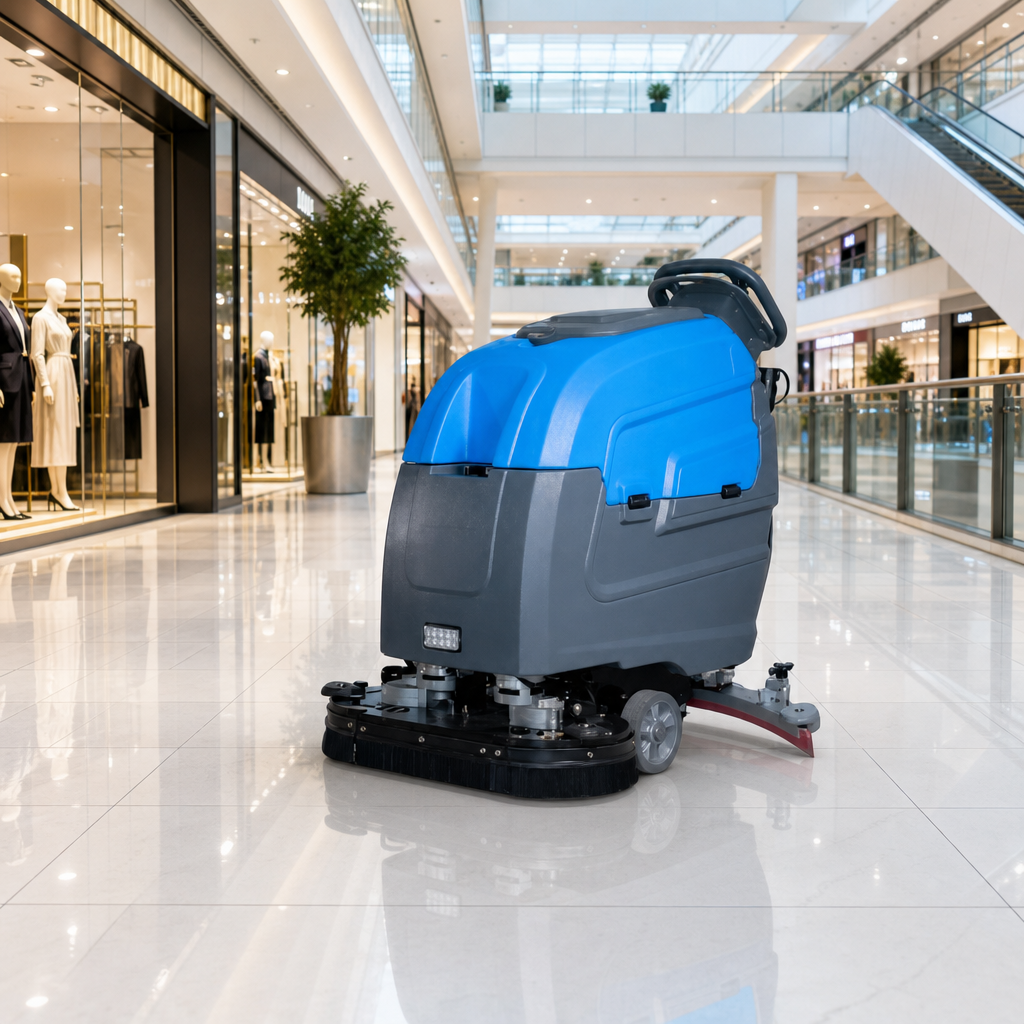
Foam in a floor scrubber recovery tank can come from an unsuitable detergent, incorrect dilution, cleaning-product residue picked up from the floor, or detergent left inside the machine. Before changing products, check what entered the recovery system and what changed before the problem began. KINGHOME’s floor scrubber buying guide identifies detergent selection, dilution, previous-product contamination and tank cleanliness as key foaming checks.
Treat rapidly rising foam as a reason to stop, not as something the tank’s full-level protection will necessarily control. The Tennant T5 Operator Manual, revision 08, October 2015 specifically warns that foam will not activate that model’s float shut-off screen and that allowing foam into the screen can damage the vacuum motor. Check the manual applicable to your machine and serial number rather than assuming every recovery system responds in the same way.
The recovery tank contains everything the machine has collected—not just the detergent currently being dispensed. A newly introduced low-foam cleaner may therefore be blamed for residue left by an earlier product.
Use the following checks to organize the investigation. The observations are diagnostic clues, not proof of a single cause.
| Possible source | Qué comprobar | What the finding may indicate |
|---|---|---|
| Unsuitable detergent | Whether the product instructions explicitly permit automatic scrubber use and specify low-foam performance | A product intended for another cleaning method may be unsuitable for the recovery system |
| Incorrect concentration | Actual water fill, measured concentrate, dosing setting and the product’s dilution instructions | The working solution may differ from the intended concentration |
| Previous cleaner on the floor | Recent mop cleaning, spot treatment, deep cleaning or a product change | The scrubber may be collecting a different formulation from the one in its solution tank |
| Residue inside the machine | Tank walls, permitted filters and screens, recovery hose and solution circuit where operator inspection is allowed | Remaining chemical may be carried into the next cleaning cycle |
These checks follow KINGHOME’s published foaming troubleshooting priorities. For detergent selection, equipment manufacturers also distinguish machine-compatible low-foam cleaners from general cleaning products; see Tennant’s detergent selection guidance.
Before opening the recovery tank or handling components:
The exact isolation procedure depends on the machine and task. For example, the Tennant T5 manual requires parking on a level surface, applying the parking brake if fitted, switching off and removing the key before leaving or servicing the machine; it also requires battery and charger disconnection before servicing. Do not substitute a generic shutdown sequence for the applicable instructions.
Do not operate with the recovery lid open simply to watch the foam, and do not remove or bypass a float, screen or level-protection device. Inspect only through the access and procedures permitted by the manufacturer.
Once the machine is safely shut down, inspect the accessible recovery tank for remaining liquid, detergent deposits and debris. Check the float assembly, screen, debris tray and other operator-serviceable components specified in the manual.
Clean and reinstall these parts using the approved method. The Tennant T5 manual, for example, instructs operators to drain and clean the tanks after use and to clean the recovery tank’s float shut-off screen and debris tray. That requirement is specific evidence for maintaining those components—not permission to dismantle another machine’s vacuum system.
If foam or liquid appears to have entered the vacuum intake, or the machine develops abnormal sound or pickup after the incident, keep it out of operation pending the manufacturer’s service advice.
If the problem began after a detergent change, establish whether the previous product was drained and the relevant circuit was rinsed according to the machine instructions. Also check any reusable measuring container or premixing vessel.
Do not pour a new cleaner into an unidentified remaining solution. Do not add an acid, solvent or stronger detergent to “clean out” the machine unless that procedure is explicitly approved.
Check the operating mode as well as the model. The cited Tennant T5 manual distinguishes conventional detergent scrubbing from FaST and ec-H2O operation and requires conventional cleaner to be drained and rinsed from the solution tank before those specialized modes are used. A detergent approved for conventional scrubbing is not automatically permitted in every mode.
Record the product name and code, batch if available, water fill, concentrate added, dosing setting and cleaning mode. Compare those records with the instructions for the exact product and application.
Check these points before deciding the formulation is at fault:
Follow the cleaner’s mixing instructions and the machine’s filling procedure. The Tennant T5 manual directs conventional-scrubbing users to add a recommended detergent according to the mixing instructions on its container; it does not establish one dilution for all cleaners.
Do not repeatedly increase or reduce concentration simply until the bubbles disappear. Foam control alone does not establish adequate cleaning or compatibility with the machine and floor.
A controlled comparison can help separate product behavior from contamination. Change one condition at a time, and record the result.
Where the product instructions permit handling a diluted sample, prepare separate clean, chemical-compatible containers containing:
Use comparable container sizes, liquid volumes, temperatures and gentle agitation. Record visible foam formation and how it changes after agitation stops. Keep samples separate; do not mix the old and new cleaners to test their compatibility.
This is an observation exercise, not a standardized foam test or machine-approval procedure. A container does not reproduce the scrubber’s airflow, soil load and recovery conditions. Persistent foam in the diluted-cleaner sample is a reason to consult the chemical supplier, not sufficient evidence by itself to condemn the product.
After cleaning the machine, conduct a supervised clean-water comparison only if the machine and flooring instructions permit it. Use a representative, controlled area and the approved brush or pad. Stop and inspect the recovery tank at intervals using the normal shutdown procedure; never continue until foam reaches the intake.
Interpret the observations cautiously:
| Observation | Next check |
|---|---|
| Foam returns during a clean-water pass on the affected floor | Investigate floor-borne cleaner residue and any remaining machine contamination |
| Foam appears when recovering water from an area known not to have received cleaner | Recheck the machine’s cleaning history and the water source |
| The clean-water trial is satisfactory, but foam returns with correctly diluted detergent | Reconfirm product approval, actual dosing and supplier guidance |
| Foam subsides, but water pickup remains poor | Follow the model-specific recovery troubleshooting procedure rather than changing detergent again |
These comparisons narrow the investigation; they do not identify the chemical composition of a residue.
Before testing detergent on stone, terrazzo, coated concrete or tile, confirm compatibility with the installed material, finish, grout and any sealer or coating. Low foam describes one aspect of machine suitability—it does not prove surface compatibility. KINGHOME’s stone floor cleaning machine guide explains why the cleaner, accessory and recovery method must be checked together on the actual floor.
A defoamer may control foam during an approved procedure, but it does not correct an unsuitable cleaner, inaccurate dosing or incomplete rinsing.
Use it only when:
For conventional scrubbing, the cited Tennant T5 manual permits a commercially approved foam-control solution in the recovery tank when excessive foam appears. That permission does not establish a universal dose or authorize the same practice in every scrubber.
Do not add a recovery-tank defoamer to the solution tank unless both the machine and chemical instructions explicitly allow it. If approval or dosing information is missing, obtain it before use rather than estimating an amount.
Restart on a limited area with the corrected setup. Check cleaning, foam and pickup together—not just whether the visible bubbles have collapsed.
| Acceptance check | Qué debes confirmar | What to record |
|---|---|---|
| Tank and components | Tank cleaned; required screens, float and other operator-serviceable parts correctly installed | Cleaning date and inspection findings |
| Product and dose | Correct product, permitted operating mode and label-based dilution | Product code, water volume, concentrate quantity or dosing setting |
| Foam behavior | No rapid accumulation threatening the intake or protection components | Where foam appeared and how it changed between checks |
| Water recovery | Pickup is consistent, without unexplained wet trails or loss of suction | Test area and observed recovery |
| Dry floor condition | No new haze, tackiness, visible residue or finish change | Inspection after drying under comparable lighting |
| Continued operation | The corrected setup remains acceptable as the trial proceeds | Any recurrence and the operating conditions |
Do not interpret a satisfactory visual check as a slip-resistance test or proof of long-term finish compatibility. Follow the site’s reopening and floor-safety requirements separately.
If foam remains controlled but pickup is still poor, the chemical investigation has reached its limit. Refer to the machine manual for recovery-system checks or arrange qualified service. A larger tank or different detergent is not a substitute for correcting a recovery fault.
Build prevention around a repeatable chemical and machine-care record:
For future equipment comparisons, KINGHOME’s floor scrubber buying guide connects recovery quality, tank-cleaning access, detergent compatibility and operator workflow. These are selection checks; changing machine size alone does not resolve the source of foam.
For a KINGHOME cleaner suitability enquiry, provide the scrubber’s exact model and operating mode, floor material and finish, current product label or TDS, actual dilution, recent product-change history, and observations from the controlled trial. Include foam photographs taken only after safe shutdown. This information supports a focused discussion about chemical compatibility and the next checks without assuming that a replacement detergent is automatically required.
 Spanish
 English