BIENVENIDO A KINGHOME
Obtenga un presupuesto gratuito
Le responderemos en un plazo de 8 horas

BIENVENIDO A KINGHOME
Le responderemos en un plazo de 8 horas
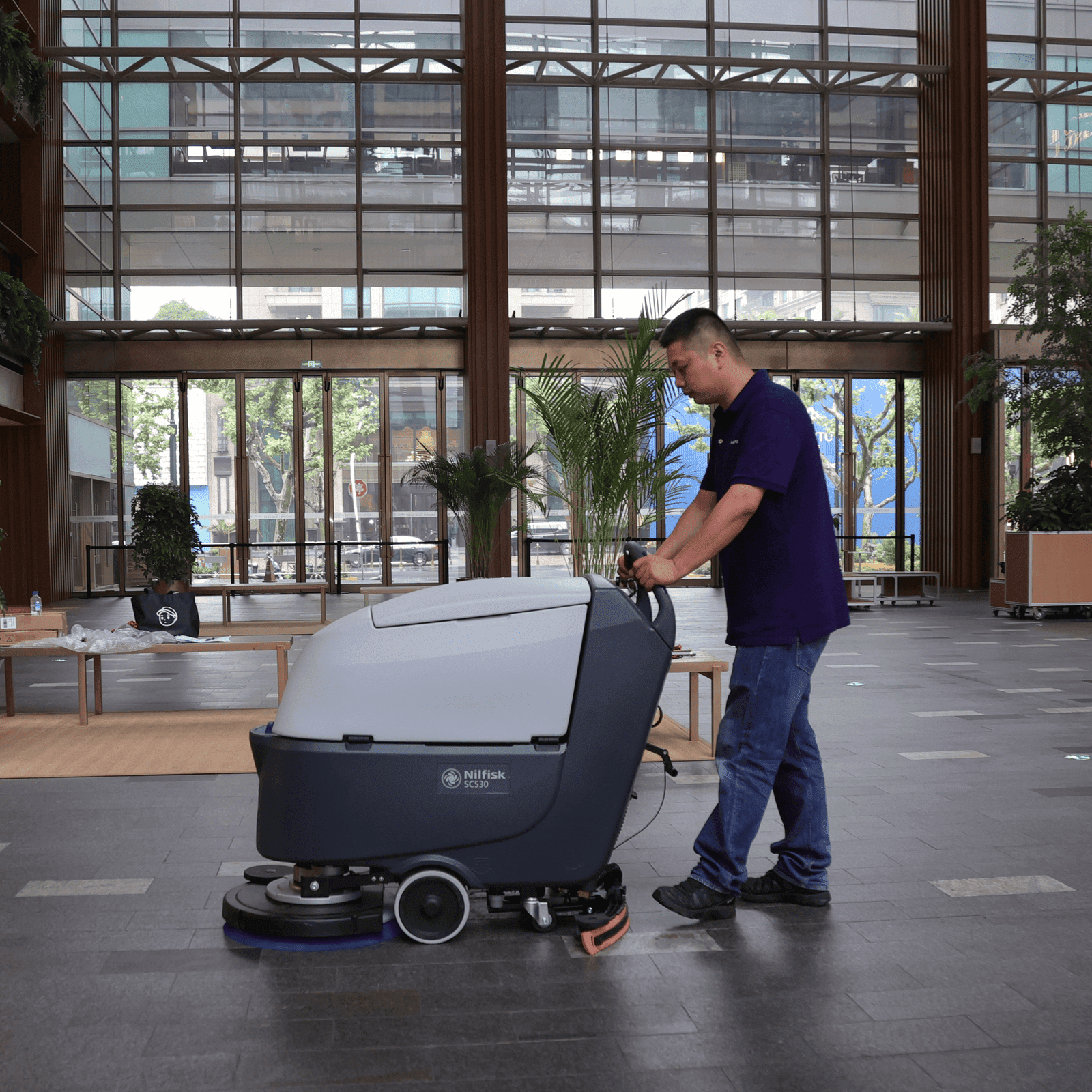
Specialized industrial cleaning machines are needed when the surface, chemical exposure or preparation target is outside routine scrubber work. Interlock paving, alkali-resistant cleaning, stone surface preparation and dry foam carpet cleaning each need different machine pressure, materials, recovery method and operator controls.
| Machine category | Uso recomendado | Selection risk |
| Interlock cleaner | Pavers, modular surfaces and exterior joints | Joint washout or uneven pressure |
| Alkali-resistant machine | High-pH cleaning around stone or industrial residues | Chemical damage to seals and components |
| Surface preparation machine | Roughening, coating prep and restoration setup | Too aggressive for finished stone |
For adjacent equipment decisions, see máquinas de limpieza, stone care toolsy industrial stone floor cleaning.
| Cleaning task | Specialized machine direction | Selection check |
|---|---|---|
| Interlock cleaning machine | Use equipment built for pavers, joints, uneven surfaces, and outdoor soil | Confirm brush reach, water pressure, recovery plan, and whether sand or joint material needs protection. |
| Alkali-resistant cleaning machine | Use chemical-resistant tanks, seals, hoses, and pumps for stronger detergents | Check cleaner pH, contact time, rinsing, and component compatibility before large-area work. |
| Surface preparation machine | Select preparation equipment for the specified profile or approved finish | Separate cleaning from profiling; a scrubber removes soil but does not create a controlled surface profile. |
| Dry foam cleaning machine | Use low-moisture cleaning where carpet zones, entrances, or quick reopening are priorities | Confirm drying time, residue control, and whether the area needs extraction, foam, or spot treatment. |
Rutas de planificación relacionadas: comparar floor cleaning machine options, review industrial stone floor cleaning guidancey utilice floor scrubber buying checks when deciding whether a standard scrubber is enough or a specialized machine is required.
| Job constraint | Specialized direction | Pre-selection evidence | Riesgo que evitar |
|---|---|---|---|
| Pavers, interlock surfaces, or uneven outdoor modular floors | Use equipment that can reach joints and recover loosened soil without scattering debris. | Surface profile, joint width, drainage, soil source, and edge conditions. | Using a smooth-floor scrubber where joint soil remains untouched. |
| Stone or tile areas requiring alkaline cleaning | Confirm machine, brush, and recovery compatibility with the cleaner and stone sensitivity. | Cleaner label, dilution, stone type, test area, and rinse/recovery method. | Leaving alkaline residue or damaging acid-sensitive stone with the wrong process. |
| Surface preparation before coating or restoration | Choose roughening, grinding, or prep equipment only after confirming the target surface profile. | Coating type, adhesion goal, dust or slurry control, and power access. | Using cleaning equipment for a preparation task that needs mechanical profiling. |
| Carpeted commercial zones with fast reopening needs | Evaluate dry-foam or low-moisture cleaning only when soil level and drying expectations match. | Fiber type, soil load, odor concern, drying window, and ventilation. | Choosing low-moisture cleaning for soils that require extraction or deeper recovery. |
For machine selection, provide the surface type, soil source, chemical plan, access limits, power and water availability, recovery requirement, and reopening window. Related resources include industrial stone floor cleaning, commercial tile cleaning machinesy buffer vs scrubber workflow.

| Specialized job risk | Machine direction | Ruta de producto o guía |
|---|---|---|
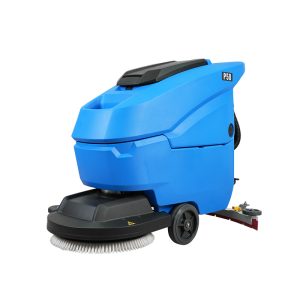
| Daily industrial soil, mixed hard floors, or compact service routes | Use a walk-behind scrubber dryer with controlled detergent, brush pressure, and water recovery. | P50 Walk-behind Scrubber Dryer, floor scrubber buying guidey floor scrubber vs buffer. |
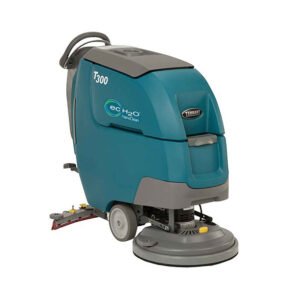
| Larger commercial routes or replacement brush planning | Check scrubber deck width, tank size, runtime, operator pace, brush supply, and maintenance support. | Tennant T300, floor scrubber brush selectiony stone floor cleaning machines. |
| Interlock, textured pavers, outdoor masonry, or joint-sensitive surfaces | Use specialized cleaning equipment only after checking joint material, pressure, brush reach, and whether recovery water can be controlled. | Revisar industrial stone floor cleaning before scaling the method. |
| Alkali-resistant cleaning machine work or stronger chemical routes | Confirm tank, hose, pump, seal, and rinse compatibility before choosing stronger chemistry. | Use the machine selection checklist together with stone-safe chemical and recovery checks. |
| Dry foam cleaning machine, carpet-adjacent areas, hotel corridors, or fast reopening | Control moisture and airflow, and inspect dryness, residue, and adjacent hard floors before reopening. | Kärcher Air Blower AB 28 y hotel floor cleaning protocols. |
A standard scrubber dryer can handle many routine hard-floor cleaning tasks when its brush or pad, cleaner, and recovery system suit the floor. Specialized equipment is justified by a specific requirement, such as outdoor joints, chemical compatibility, surface profiling, or carpet care. A specialized label alone does not establish that a machine is safer for stone.

Check what the machine actually does. Paver-cleaning equipment may use brushes, pressurized water, or other methods; preparation machines remove or texture the substrate; carpet systems use methods selected for the fiber and soil. Confirm the intended application and limits in the manufacturer’s instructions.
Interlock cleaning equipment is used on modular pavers in driveways, walkways, patios, and similar areas. Select the cleaning method for the paver material, surface finish, joint filler, installation condition, and drainage. Both specialist equipment and pressure washers can damage joints if used incorrectly.
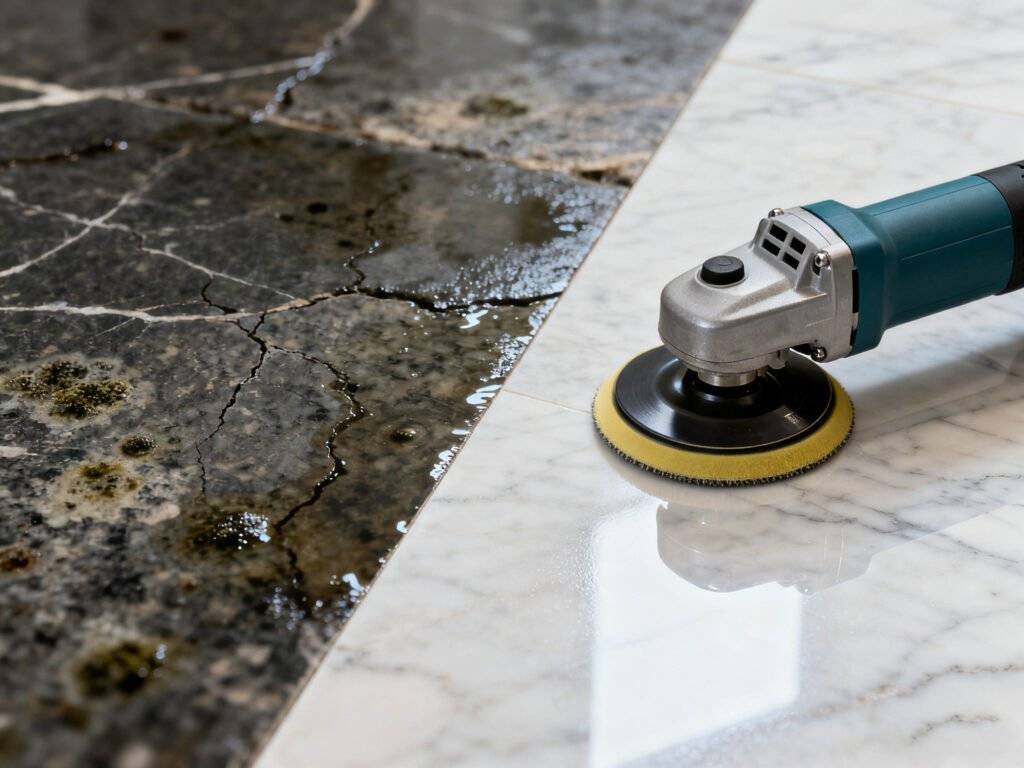
Assess the contamination before choosing pressure, heat, brushes, or chemistry. Oil, algae, loose soil, and weeds may need different treatment. Cleaning cannot reverse material loss, weathering, or structural movement in the paving.
Look for controls that let the operator adjust the treatment and contain runoff. Confirm nozzle or brush suitability, approved water temperature, flow, and recovery arrangements. A test area should show whether cleaning erodes the surface, removes joint material, or changes the finish.
There is no universal pressure range that cleans pavers without damage. Follow the paving and equipment suppliers’ instructions and agree any joint-sand inspection or reinstatement required after cleaning. Include runoff collection and local disposal requirements in the work plan.
Chemical resistance describes the machine’s components, not the stone’s resistance to the cleaner. Marble, limestone, travertine, and some terrazzo systems are acid-sensitive. Alkaline cleaners can also affect finishes, sealers, or adjacent materials, so confirm the complete installation before selecting chemistry.
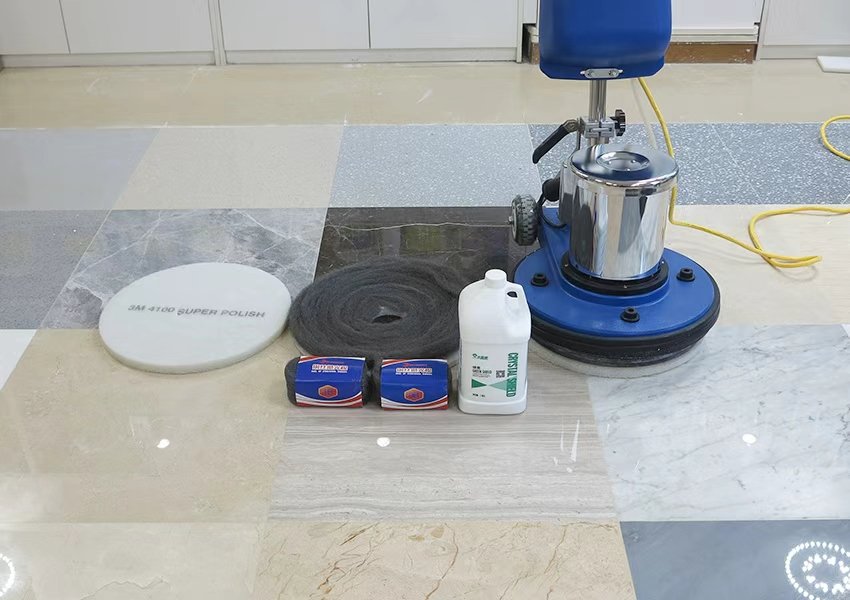
If alkaline detergent is required, ask the equipment supplier to confirm compatibility of the tank, pump, hoses, seals, recovery system, and brushes with that specific formulation at its working dilution and temperature. An “alkali-resistant” description is not a guarantee against every high-pH or solvent-containing product.
Cylindrical and disc brushes suit different surface profiles and debris loads. Compare actual brush contact, agitation, and recovery in a test area rather than assuming a fixed pressure advantage for one design. Follow the manual’s pre-sweeping requirements; a debris tray does not make every machine suitable for unswept grit.
Whether to scrub and recover in one pass or use a separate contact-time pass depends on the approved cleaner, soil load, floor, and machine. Acid sensitivity alone does not determine this choice. Do not let the solution dry or leave the floor unattended during the approved contact period.
Use the selected cleaner’s labelled dilution and the machine manufacturer’s dosing instructions. There is no common heavy-duty or maintenance dilution that applies across stone cleaners. Check metering calibration and the result on a test area.
Choose an alkaline cleaner only when it is approved for the stone, any sealer or coating, and the soil to be removed. A compatible pH-neutral cleaner is often a starting point for routine maintenance. Neither alkalinity nor neutral pH alone proves that a formulation is suitable.
Coating removal is a separate task from routine cleaning. Identify the wax or coating before choosing a remover, and check compatibility with the underlying stone and the machine. Do not combine alkaline and solvent products or improvise a neutralization step; follow the specified removal, rinse, and recovery process.
Use a low-foam cleaner approved for the machine’s recovery system. Foam can interfere with recovery and reach components not intended for liquid or foam exposure. Correct dilution, clean tanks, and maintained recovery parts are still needed; a low-foam label does not guarantee complete cleaning in one pass.
Surface preparation changes the substrate to meet a coating, bonding, or restoration requirement. Determine the required profile and allowable material removal with the next treatment’s supplier before choosing grinding, shot blasting, scarifying, or other equipment. This work can permanently alter finished stone.
Shot blasting and grinding are different preparation methods with different effects on the substrate. Their suitability depends on the required finish, coating removal, substrate condition, and access. Confirm dust or slurry containment and the method for verifying the finished profile.
Bush hammering uses dedicated impact tooling to create a textured stone finish. It is not interchangeable with ordinary grinding or cleaning. Approve a sample and assess stone suitability, appearance, and the required slip-resistance performance before treating an installed floor.
Specify preparation by the required result, not a generic grit range. ISO 8503-2 concerns blast-cleaned steel surface profiles and should not be presented as a stone or concrete preparation standard. For concrete coatings, agree the applicable surface-profile specification and verification method with the coating supplier.
Use tooling rated for the machine, mounting system, operating speed, substrate, and wet or dry method. A grinder’s speed and abrasive sequence must come from the approved tooling and task specification; there is no shared RPM or grit recipe for all preparation machines.
Inspect the prepared surface for remaining contamination, weak material, defects, and the specified profile before applying the next treatment. Roughening does not by itself guarantee adhesion or compliance with a slip-resistance requirement.
Dry foam is a carpet-cleaning option where controlled moisture and a practical reopening window matter. Drying time varies with the machine, product, fiber, application rate, humidity, and ventilation. Confirm the carpet manufacturer’s approved method and inspect the cleaned area before reopening it.
Dry foam systems work cleaning solution into the carpet with controlled foam and agitation. Soil and residue removal may involve immediate recovery or vacuuming after drying, depending on the system. Follow the specific process; do not assume every foam machine includes extraction.
Keep the work area controlled until the carpet and transitions are suitable for traffic. A low-moisture method does not remove the need for signs, ventilation, or inspection. Moisture tracked from carpet onto adjacent hard flooring can create a slip risk.
Compare working width, tank capacity, brush suitability, recovery method, handling, and service access on the actual route. Do not assume a shared capacity or that a carpet machine converts to hard-floor use; confirm any attachment and application approval in its manual.
Decide whether the task is interim appearance maintenance or deeper soil removal. Heavily soiled areas may need another approved cleaning method. Test whether the chosen foam system removes the soil rather than relying on a claim of extraction-equivalent performance.
Compare foam, encapsulation, bonnet cleaning, and extraction against the carpet manufacturer’s guidance and the actual soil. Measure residue, appearance, and drying under site conditions. These methods do not have fixed comparative drying times across carpets and buildings.
Selecting appropriate specialized cleaning equipment requires matching machine capabilities to specific surface types, facility scale, and operational requirements. Incorrect equipment choices result in inadequate cleaning, potential surface damage, or inefficient operations that fail to justify equipment investment.
Match the method to the installed surface: protect joint material on pavers, verify both stone and machine compatibility for alkaline cleaning, agree a preparation profile before removing material, and use carpet-approved cleaning methods. Confirm whether existing equipment can meet those requirements before buying a specialist unit.
Measure the usable cleaning route, access widths, turning space, obstructions, power and water points, and available work window. Include setup, refilling, recovery, and cleanup when comparing capacity. Published theoretical coverage is not the actual production rate in an occupied facility.
A scrubber dryer agitates soil and recovers dirty solution. A single-disc rotary buffer may also scrub with the correct brush or pad and chemistry, but commonly needs separate wet recovery. A high-speed burnisher is primarily for compatible finished floors. Confirm the actual functions rather than treating buffer and burnisher as synonyms.
Key evaluation criteria when specifying specialized cleaning equipment include:
Compare acquisition, consumables, training, servicing, setup, and repeat-work costs for the same task. A site trial should demonstrate any benefit over the existing equipment; specialization alone does not establish a return on investment.
Specialized cleaning equipment delivers optimal performance and longevity only when properly maintained and operated with compatible chemistry. Equipment neglect or improper chemical selection undermines the investment in specialized machines and may damage the surfaces they were purchased to protect.
Set dilution from the specific cleaner label and dosing-system instructions. Check calibration and operator practice periodically. Automated dosing can improve consistency, but it does not eliminate loading, calibration, or product-selection errors.
Use only detergents approved for the machine and the surface. If foam affects pickup, check dilution, contamination from previous products, and tank cleanliness before considering an approved foam-control method. Never add a product to the recovery system without the machine supplier’s approval.
Inspect brushes and pads for wear, embedded grit, damage, and secure mounting. Replace them according to condition and supplier limits. Match the material and abrasiveness to a test area; greater brush aggression is not automatically appropriate for heavily soiled floors.
Safety protocols for alkaline and acidic cleaning solutions protect operators and surfaces. Personal protective equipment including gloves and eye protection proves mandatory when handling concentrated cleaning chemicals. Adequate ventilation prevents vapor accumulation in enclosed spaces. Most critically, never mixing alkaline and acidic products—the resulting reactions may generate heat, hazardous fumes, or neutralize cleaning effectiveness.
Equipment lifespan optimization through preventive maintenance includes regular inspection of seals and gaskets (particularly in alkali-resistant machines), vacuum system cleaning to prevent clogs, tank rinsing after each use to prevent chemical buildup, and battery maintenance for cordless equipment. Establishing maintenance schedules and documentation systems ensures long-term equipment reliability and maximum return on investment.
Proper chemical storage prevents degradation and safety hazards. Cleaning chemistry should remain in original containers with intact labeling, stored in temperature-controlled environments away from extreme heat or freezing conditions. Material Safety Data Sheets (MSDS) should be readily accessible to all operators, with emergency response procedures clearly established.
Choose specialized equipment when a demonstrated job requirement exceeds the capability of the available machine. Document the surface, soil, chemical plan, recovery needs, access, and reopening criteria, then verify the proposed setup in a controlled trial.
It is used to clean modular paver surfaces. Depending on the installation, the method may use brushes, controlled water pressure, or approved chemistry. Check surface and joint-filler compatibility, contain runoff, and inspect joints afterwards; no equipment category guarantees that joint sand will remain undisturbed.
You need confirmed chemical resistance when the selected cleaner could affect machine components. That confirmation does not protect the stone from an incompatible cleaner. Check the floor, sealer, grout, machine, and product together; strong alkaline chemistry is not a requirement for every stone floor.
It changes the substrate texture or removes material to meet a preparation requirement. Select the method and tooling for the specified profile and substrate, and verify the result before coating or bonding. Bush hammering, shot blasting, and grinding are distinct processes.
There is no fixed drying-time advantage that applies to every foam or extraction system. Compare approved methods on the actual carpet, with the intended product and ventilation. Inspect dryness, residue, and transitions before opening the area to traffic.
Scrubber dryers combine agitation with dirty-water recovery. A single-disc buffer can also scrub with approved accessories and chemistry but often needs separate recovery. A high-speed burnisher maintains compatible finishes; it is not a substitute for soil removal.
 Spanish
 English