WELCOME TO KINGHOME
Get A Free Quote
We will get back to you within 8 hours

WELCOME TO KINGHOME
We will get back to you within 8 hours
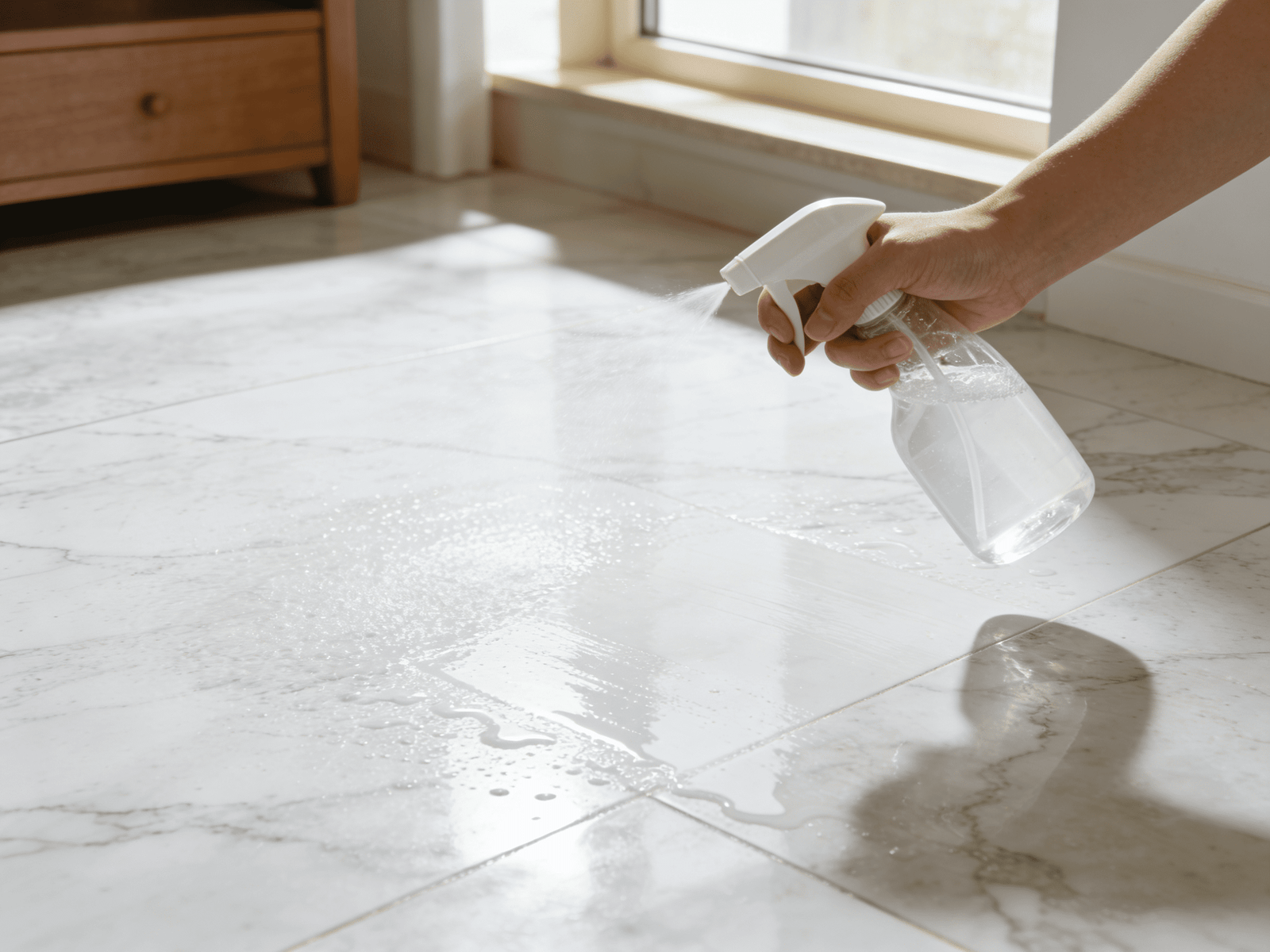
When marble lobbies start showing dull patches after just six months, or when granite corridors develop an inexplicable haze despite daily cleaning, procurement directors face a costly problem. The culprit is usually hiding in plain sight—inside the cleaning chemical bottle. Most commercial facilities unknowingly use cleaners with pH levels that actively damage the stone they’re meant to protect, triggering an expensive cycle of restoration work that could have been avoided entirely.
The chemistry is straightforward but often misunderstood. Natural stone floors, particularly marble, limestone, and travertine, consist primarily of calcium carbonate. When you introduce an acidic cleaner (anything below pH 6), you’re essentially pouring a slow-acting solvent on your investment. The chemical reaction looks like this in WordPress format: CaCO3+2H+→Ca2++CO2+H2O. What that equation means in practical terms is that your expensive Italian marble is literally dissolving, molecule by molecule, every time someone mops the floor.
Strong alkaline cleaners aren’t much better. While they won’t dissolve calcium carbonate directly, they attack the polymers in sealers and create a soap-scum buildup that leaves floors looking worse after cleaning than before. Facility managers then blame the cleaning staff or the stone quality, when the real problem is chemical incompatibility.
Here’s where the procurement process often goes wrong. A supplier labels something “stone-safe” or “neutral formula,” and the purchasing department checks the box and moves on. But pH measurement reveals a different story. True pH neutrality sits at 7.0, and for stone care, the safe working range is 6.5 to 8.0 when diluted for actual use. Many products marketed as neutral measure 9.5 or higher once you test them properly.
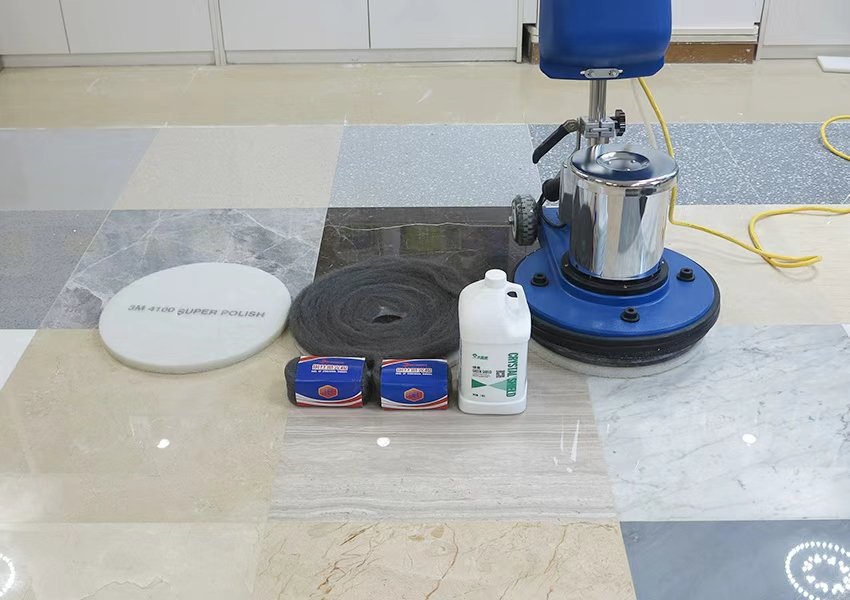
The challenge is that concentrate pH and working-solution pH can be dramatically different. A product might ship at pH 10 but claim to be neutral because it supposedly hits 7.0 when diluted 1:128. The problem? Nobody actually dilutes it correctly in the field. Maintenance staff eyeball the ratio, automatic dispensers malfunction, and suddenly you’re running pH 9 solution across your marble every single day.
Testing is straightforward—pH strips cost pennies—but almost nobody does it. The facilities that do implement pH verification as part of their standard operating procedures see immediate improvements in floor longevity. A five-star hotel chain in Southern China started randomly testing their cleaning solutions and discovered their “neutral” product was running at pH 10.2. Switching to a verified neutral formula (Kinghome’s Crystal Shield line maintains pH 7.0–7.5 at working dilution) and enforcing dilution protocols extended their crystallization cycle from every five months to every fourteen months. The annual maintenance budget dropped by 31% in year one.
When procurement evaluates cleaners, the analysis typically stops at price per gallon. A pH-neutral specialty stone cleaner might cost $45 per gallon versus $18 for a generic all-purpose product. At face value, the generic wins. But that analysis ignores 80% of the actual cost structure.
Stone floor maintenance has five major cost buckets that interact in ways most facilities don’t track:
Daily cleaning chemical cost is the smallest bucket, typically under 3% of total stone floor expenses. Whether you spend $0.08 or $0.12 per square meter annually on chemicals barely registers.
Labor for routine cleaning represents 40–45% of costs. This is where pH choice starts mattering. Aggressive cleaners require more frequent spot-treatment, extra rinse passes to prevent residue, and constant troubleshooting of streaking or hazing issues. A neutral system that cleans properly on the first pass reduces labor needs measurably. One shopping mall in Bangkok tracked labor hours before and after switching to pH-neutral protocols and documented an 11% reduction in total cleaning hours—not because staff worked faster, but because they stopped doing remedial work.
Periodic maintenance (crystallization, sealing, burnishing) accounts for 25–30% of spend. This is where the math really changes. Crystallization creates a hardened protective layer through a chemical reaction between acidic metal salts and calcium carbonate in the stone, increasing surface hardness from approximately Mohs 3 to Mohs 4.5–5.0. But if you’re running acidic or high-alkaline cleaners daily, you’re stripping away that protective layer faster than it can cure properly. Instead of crystallizing every 18–24 months, you’re doing it every 6–8 months. At $35–60 per square meter for professional crystallization, that frequency difference represents serious money.
Major restoration (grinding, honing, full refinishing) makes up 15–20% of lifecycle costs. This is the intervention you want to defer as long as possible, ideally beyond a decade. Deep restoration requires diamond abrasive pads progressing from 50-grit to 3000-grit, removes 0.5–1.0 mm of stone surface, and costs $80–150 per square meter depending on complexity. pH-incompatible cleaning accelerates the need for restoration by allowing surface degradation that can’t be fixed with crystallization alone.
Machine maintenance and replacement (the remaining 5–10%) also connects to pH choice. Acidic solutions corrode tank welds, seals, and pump components. Alkaline solutions leave mineral buildup that clogs spray jets and reduces suction efficiency. Auto-scrubbers operating on neutral chemistries simply last longer—field data from equipment service companies consistently shows 20–30% longer intervals between major repairs when neutral solutions are standard protocol.
A hospital facility in Singapore tracked these five buckets meticulously across their 8,200 square meters of terrazzo flooring. Before implementing a verified pH-neutral program (using Revontulet daily cleaner and scheduled crystallization with Crystal Shield products), their three-year cost totaled $287,000. After the switch, the same three-year period cost $196,000—a 32% reduction driven almost entirely by longer crystallization intervals and deferred restoration work.
| Checkpoint | Frequency | Measurement tool | Acceptance criterion | Action if out-of-spec |
|---|---|---|---|---|
| Gloss uniformity | Monthly (high-traffic zones) | 60° gloss meter | ≥ 80 GU (polished marble); ≤ 15% variation across zone | Spot crystallization if 70–79 GU; full crystallization if < 70 GU fabritec |
| Slip resistance | Quarterly | DCOF AcuTest (ANSI A326.3) | 0.55–0.65 (dry); ≥ 0.42 (wet) | Adjust crystallization powder type or pad selection fabritec+1 |
| Cleaning residue | Weekly (random audit) | ATP luminometer | < 500 RLU on high-touch surfaces | Verify dilution ratio; check pad condition elitecoatings |
| pH verification | Daily (first use) | pH test strips | 6.5–8.0 in diluted solution | Adjust dilution or investigate water chemistry stonephyoutube |
| Machine performance | Weekly | Visual + telematics | No leaks; solution flow ±10% of setpoint | Service seals/pumps; recalibrate flow klindex |

Crystal Shield products include formulations specifically matched to stone types. Green Shield targets marble, artificial marble, terrazzo, and concrete. Blue Shield handles granite, quartz, and microcrystalline tiles. Golden Shield addresses mixed-stone environments. This specialization matters because the crystallization chemistry needs to match the mineral composition of the substrate. Marble (calcium carbonate) requires different metal-salt ratios than granite (silicate-based), and using the wrong crystallizer either fails to form a proper protective layer or creates an overly brittle surface prone to spalling.
Revontulet products include the Marble Kristallux line and high-speed polishing compounds designed for rotary machine application. The “high-speed” designation is critical—traditional crystallization happens at 150–175 RPM with steel-wool pads under 60–80 kg of machine weight, generating localized heat that triggers the chemical reaction. High-speed formulations work at 1000–3000 RPM with softer buffing pads, achieving similar results faster and with less aggressive mechanical abrasion. For facilities that can’t afford extended downtime, high-speed systems cut crystallization time from 12–15 minutes per square meter down to 3–5 minutes.

The technical challenge in formulating any pH-neutral stone cleaner is achieving adequate soil removal without alkaline boosters. Traditional degreasers rely on high pH (10–12.5) to saponify oils and emulsify proteins. Neutral formulations substitute this with carefully balanced surfactant blends—typically non-ionic and mild amphoteric surfactants—combined with chelating agents that sequester hard-water minerals without aggressively binding calcium from the stone itself. The formulation window is narrow, which is why cheap “neutral” products often perform poorly; they’ve diluted active ingredients to hit a price point and sacrificed cleaning effectiveness.
Stone care isn’t just about the liquid in the bottle. The interaction between chemistry, machine mechanics, and operator technique determines actual outcomes. This is why Kinghome positions itself as a “rigid surface solution supplier” rather than just a chemical vendor—they distribute Klindex floor machines from Italy alongside their proprietary chemistry, creating a system-level approach.
Klindex single-disc machines deliver controlled head pressure and variable RPM that crystallization chemistry requires. Cheaper machines fluctuate in speed under load, create uneven pressure distribution, and overheat if you’re trying to polish a 2,000 square meter lobby. The KROMA series (one of Klindex’s workhorse models) maintains consistent 175 RPM under load variation and distributes weight evenly across a 17-inch pad, preventing the streaky, uneven finish you get from wobbling low-end equipment.
Why does this matter for pH-neutral programs? Because neutral daily cleaning preserves the crystallized layer, which means your machine isn’t fighting through degraded, etched stone every time you polish. With proper neutral maintenance, crystallization becomes a true protective treatment rather than an emergency repair. Machine operators report that well-maintained neutral-protocol floors crystallize in 60% of the time required for degraded acidic-protocol floors, simply because the surface hasn’t been compromised.
One luxury hotel in Guangzhou documented this precisely. Their 2,400 square meter Carrara marble lobby required 38 labor-hours for crystallization when the marble was in poor condition (after months of acidic cleaning). After six months on a verified neutral program using Crystal Shield daily cleaner, the same space required 24 labor-hours for crystallization to achieve identical gloss readings (82–85 GU measured with a 60-degree gloss meter). The marble wasn’t being restored during crystallization anymore; it was genuinely being protected.
The RFP process for stone care products is usually broken. Procurement issues a spec for “pH-neutral floor cleaner, 5-gallon pails, delivered quarterly,” vendors submit pricing, and the low bidder wins. This guarantees suboptimal outcomes because the specification ignores every factor that drives actual performance.
A properly structured evaluation starts with a current-state audit. Before you talk to any vendor, document your existing maintenance costs in all five buckets: daily chemical spend, labor hours for routine cleaning, periodic maintenance frequency and cost, major restoration history, and equipment replacement cycles. Most facilities don’t have this data organized, which is precisely why they make poor buying decisions.
Next, demand performance demonstrations with measurable outcomes. A credible stone-care supplier should be willing to run a pilot program in a representative 500–1,000 square meter area for 60–90 days. Establish baseline metrics: gloss readings using a gloss meter (target 80+ GU for polished marble, 60+ GU for honed finishes), slip resistance using a tribometer or DCOF AcuTest (target 0.55–0.65 on dry surfaces), and ATP bioluminescence readings if infection control matters (target under 500 RLU on high-touch surfaces). Measure these weekly during the pilot.
The pilot should include actual training for maintenance staff, not just chemical delivery. A two-day structured program covering stone identification, pH testing, proper dilution, machine operation, pad selection, and troubleshooting makes the difference between success and failure. Kinghome offers technical training as part of their system approach, though specifics vary by region and customer size. The investment in training pays back immediately through reduced chemical waste (staff who understand dilution ratios stop over-concentrating solutions) and fewer callbacks (properly trained operators don’t create new problems while trying to fix old ones).
Evaluate vendors on their diagnostic capability. Can they identify your specific stone types and match chemistry appropriately? Can they explain why crystallization intervals might differ between your lobby (8,000 daily visitors) and your executive floor (200 daily visitors)? Do they have documented experience in your facility type—hospitality, healthcare, retail, commercial office—with verifiable references?
Finally, insist on lifecycle cost modeling, not unit pricing. A vendor who only quotes chemical cost per gallon is telling you they don’t understand the economics of stone care. A vendor who presents a three-year TCO analysis broken down by the five cost buckets, showing projected savings in restoration frequency and labor efficiency, is demonstrating professional-level competence.
Technical specifications matter, but so does troubleshooting capability when things go wrong. Over decades of working with stone installations globally, certain problems recur constantly:
Rapid gloss loss (floors look dull within 3–4 months of crystallization) typically signals pH incompatibility. Either the daily cleaner is too acidic or alkaline, or there’s cross-contamination from other cleaning products. The solution isn’t more frequent crystallization—that’s treating symptoms. The solution is pH testing of all cleaning solutions actually being used (including window cleaners, restroom products, and tenant-supplied materials), dedicated equipment for stone areas (no shared mop buckets or auto-scrubbers used elsewhere), and enforcement of dilution protocols. One retail plaza solved this by color-coding their equipment: blue buckets and blue-handled mops for pH-neutral stone care only, red for alkaline restroom cleaning, never mixed.
Streaking and haze after cleaning usually indicates residue buildup from over-concentration, incompatible products layered over time, or hard water. The diagnostic test is simple: clean a test area with nothing but deionized water and a clean pad. If the haze disappears, you have residue problems. Strip the floor completely using a diluted neutral cleaner (1:20 ratio for stripping versus 1:100 for maintenance), rinse thoroughly, allow to dry completely, then re-establish proper protocols. Some facilities need to install deionization systems for their cleaning equipment, particularly in regions with extremely hard water (above 300 ppm calcium carbonate equivalent).
Uneven crystallization (some areas glossy, others patchy) stems from inconsistent technique, contaminated pads, or insufficient surface preparation. Crystallization fails when the stone surface has residual oils, soaps, or silicone-based polishes that block the chemical reaction. The solution is meticulous deep-cleaning before crystallization (neutral cleaner at 1:30–1:40 dilution, aggressive agitation with a brush, thorough rinse), clean pads for each job (steel-wool pads load up with debris and lose effectiveness fast), and systematic coverage using overlapping passes at consistent RPM and dwell time. Experienced operators mark their progress with chalk lines to ensure complete coverage.
Slippery floors after treatment happens when excess crystallization product remains on the surface. The chemical reaction converts metal salts and calcium carbonate into a thin, hard crystalline layer, but unreacted product creates a slick film. Proper buffing with a white pad and a light pass with neutral cleaner (1:100 dilution) removes this. If slip resistance remains problematic, you may need to adjust your crystallization product choice—some formulations prioritize maximum gloss at the expense of slip resistance, while others balance both. DCOF testing (using ANSI A326.3 protocols) should guide product selection, especially in high-liability areas like hospital corridors or hotel lobbies.
Yellowing or discoloration on white marble indicates over-heating during crystallization (surface temperature exceeded 60°C) or iron contamination from worn steel-wool pads. The fix requires either reducing machine RPM, using lighter pad pressure, switching to stainless steel-wool pads, or moving to high-speed polishing compounds that work at higher RPM with less heat generation. Revontulet’s high-speed formulations specifically address this issue, allowing faster coverage without thermal damage.
Sustainability considerations increasingly drive procurement decisions, and stone-care chemistry sits squarely in this conversation. Traditional crystallization systems often contain high-VOC solvents and phosphate-based cleaners that conflict with LEED requirements and corporate ESG commitments.
Verified low-VOC formulations (under 50 grams per liter, preferably under 25 g/L) support LEED Indoor Environmental Quality credits and align with stringent regulations in California (CARB), Europe (EU VOC directives), and other jurisdictions. pH-neutral cleaners typically achieve low-VOC status more easily than alkaline degreasers because they don’t require aggressive solvents to boost performance.
Biodegradability matters for facilities with water-reclaim systems or those discharging to sensitive waterways. Non-ionic and amphoteric surfactants (common in quality neutral stone cleaners) generally meet OECD 301 biodegradability standards (60%+ degradation in 28 days), while phosphate-free formulations avoid nutrient-loading issues in municipal water treatment systems.
The larger environmental benefit of pH-neutral stone care is less obvious but more significant: extended asset life reduces embodied carbon. Every time you avoid a major restoration—with its diamond abrasives, water consumption, chemical use, and waste generation—you’re deferring the environmental impact of those processes. Every year you delay full floor replacement saves the embodied carbon of new stone fabrication, transportation, and installation. A well-maintained stone floor can last 50+ years; a poorly maintained one requires major intervention every 5–7 years. The carbon difference over a building’s lifetime is substantial.
You can specify the perfect chemistry and purchase state-of-the-art equipment, but outcomes still depend on the person holding the mop or operating the crystallization machine. This is why stone-care suppliers who offer comprehensive technical training deliver measurably better results than those who just drop off chemicals.
Effective training covers stone identification first. Maintenance staff need to recognize marble versus granite versus terrazzo versus engineered stone, because treatment protocols differ. Many facilities have mixed flooring (marble in the lobby, granite in corridors, terrazzo in service areas), and staff who don’t understand these differences apply the wrong products constantly.
pH theory and practical testing should be hands-on. Staff need to understand why pH matters, how to use test strips correctly, what acceptable ranges are, and how to troubleshoot when readings fall out of spec. This takes 30 minutes to teach properly but prevents thousands of dollars in damage.
Dilution calculations and mixing procedures prevent the most common failure mode: over-concentration. Staff who understand that “more isn’t better” stop wasting chemicals and stop creating residue problems. Automated dispensing systems help, but they malfunction, and staff need to know how to mix correctly when the dispenser is broken.
Machine operation goes beyond “turn it on and push it around.” Proper training covers pad selection (when to use steel-wool versus synthetic pads, how to recognize a loaded pad that needs replacement), pressure and RPM settings, systematic coverage patterns, and safety procedures. For crystallization, understanding that the chemical reaction requires specific temperature ranges (40–50°C surface temp) and dwell times (3–5 minutes per section) determines success or failure.
Kinghome’s approach—positioning itself as a solution provider rather than just a chemical supplier—inherently includes training as part of system integration. Their distribution of Klindex machines alongside Crystal Shield and Revontulet chemistry means they’re involved in the full implementation, not just chemical delivery. While I don’t have specific curriculum details from their current training programs, the company’s 30-year history operating in over 30 countries suggests they understand that customer success requires technical support, not just product sales.
If you’re a facility director, procurement manager, or maintenance supervisor responsible for stone floors, here’s the practical action sequence:
Start with a pH audit this week. Buy a pack of pH test strips (under $15) and test every cleaning solution actually being used on your stone floors—not what the label claims, but what’s in the bottles after dilution. Document what you find. If anything reads below 6.5 or above 8.0, you’ve found your problem.
Calculate your current total cost of ownership. Pull invoices for the past three years covering chemicals, labor (use time-tracking data or survey your staff), crystallization frequency and cost, any restoration work, and equipment purchases. Organize these into the five cost buckets. This baseline is essential for evaluating any proposed changes.
Identify your most problematic 500–1,000 square meters. Every facility has that one area—the lobby that always looks dull, the corridor that streaks constantly, the executive floor that’s been re-polished three times in two years. Make this your pilot zone.
Request pilot programs from 2–3 qualified vendors. Specify that proposals must include pH-verified neutral daily cleaner, appropriate crystallization products matched to your stone types, training for your maintenance staff, and 60–90 days of technical support. Require weekly gloss and slip-resistance measurements. Evaluate based on measured outcomes, not sales presentations.
For vendors specifically interested in Kinghome’s Crystal Shield and Revontulet lines, contact Foshan Jinjinghong Environmental Technology Co., Ltd. (they operate internationally under the Kinghome brand name) and request technical data sheets, case study documentation, and pilot program details. As a distributor of Klindex machines, they can also evaluate whether your current equipment is adequate or needs upgrading.
Document everything throughout your pilot. Take before-and-after photos, record gloss readings, track labor hours, note maintenance staff feedback. This documentation becomes your business case for full implementation if the pilot succeeds, and it’s your evidence for rejecting proposals that fail to deliver.
pH-neutral stone care isn’t a luxury specification or a marketing gimmick. It’s a straightforward application of chemistry that aligns cleaning protocols with material properties. When your cleaning solution doesn’t attack the substrate, the substrate lasts longer. When protective treatments remain intact between maintenance cycles, you perform those cycles less frequently. When equipment isn’t corroded by aggressive chemicals, it operates reliably longer.
The documented cost reductions—20% to 35% in total stone maintenance spending over 3–5 years—come from this alignment. Facilities that verify pH, train staff properly, and implement systematic protocols achieve these results consistently. Those that continue buying cheap “all-purpose” cleaners or trusting unverified “stone-safe” claims keep spending money on restoration work that shouldn’t be necessary.
Stone floors are expensive to install but should be low-cost to maintain if you protect them properly from day one. pH-neutral cleaning is the single most cost-effective intervention available, requiring only modest changes to procurement specifications, cleaning protocols, and staff training. The return on investment appears within months and compounds over years as you defer or eliminate restoration cycles.
For procurement directors focused on ROI, this isn’t a difficult decision. It’s a matter of measuring the right things and structuring evaluations properly. Price per gallon is the wrong metric. Total lifecycle cost, measured across chemicals, labor, periodic maintenance, restoration frequency, and equipment life, tells the real story. When you optimize for TCO rather than purchase price, pH-neutral stone care systems win decisively.

