WELCOME TO KINGHOME
Get A Free Quote
We will get back to you within 8 hours

WELCOME TO KINGHOME
We will get back to you within 8 hours
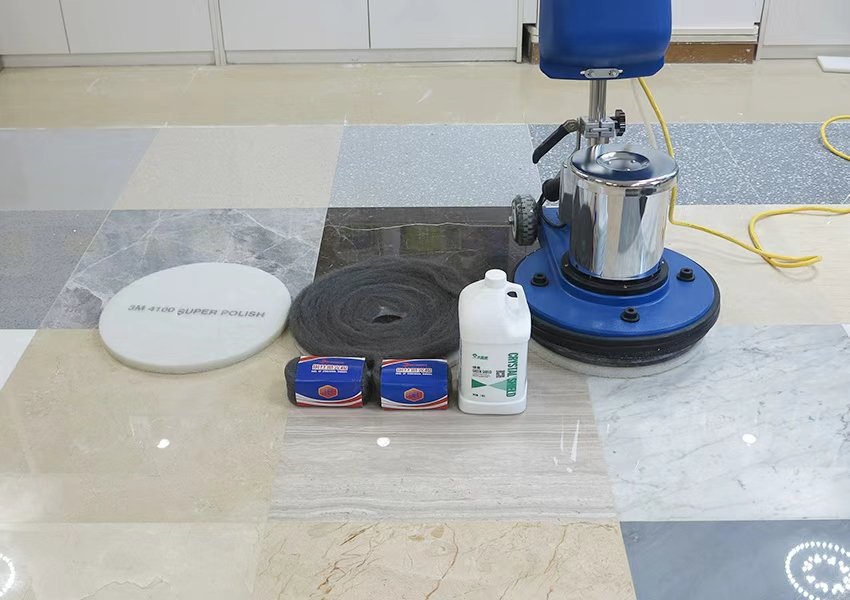

Many people who are not familiar with stone restoration do not know what kind of stone needs restoration or when it should be done. This article explains it in detail so you can fully understand when marble surfaces require renovation.
The first type of stone that needs restoration is marble that has been used for a long time. Normal wear and friction reduce its gloss. When you plan a new interior renovation or want to upgrade the image of the space, the original stone usually does not need to be replaced. Instead, you should hire a professional company to carry out marble restoration so that the existing stone can regain its original shine.
The second situation is when all the stone tiles have just been installed. There will be joints between the slabs, and these gaps must be filled with a color that closely matches the stone. After filling, the filler needs to be ground and polished. This leveling and polishing of the filled joints is also a form of stone restoration.
The third situation is related to construction damage. During renovation, workers frequently move equipment such as scaffolding and ladders, and they cannot always protect the stone surface. As a result, the stone may be scratched or, in severe cases, structurally damaged. Sometimes the installation quality is poor, leaving lippage or uneven tiles. In these cases, the misaligned or uneven stone surfaces must be professionally restored to bring them back to a flat, attractive finish.
Marble Renovation Procedure
Step 1
Thoroughly clean the floor. First remove cement slurry from the stone joints with a scraper, then use a brush and vacuum cleaner to remove all dust. Protect finished surfaces in the work area with appropriate tools and equipment.
Step 2
After overall cleaning, use dry diamond pads and professional machines to grind the stone surface, remove lippage or the old crystallized layer, and open the pores. Repair small chips and joint gaps with color‑matched marble glue. Use a special cutting machine to re‑cut the original joints to a uniform width, then refill them with marble glue of a similar color. Proceed to the next step only after the glue is fully cured.
Step 3
When the glue is dry, use renovation diamond pads and professional equipment to finely grind the stone. If high‑quality dry pads are available, dry grind; otherwise perform wet grinding. Pay special attention to the joints, edges along walls, decorative details and irregular shapes to keep the floor flat. After the first grinding pass, redo the joint filling if needed, then grind again. Use a marble renovation machine with metal‑bond or resin‑bond water grinding pads from coarse to fine, for a total of about seven passes, until the floor is flat and smooth. Finally polish with steel wool until the gloss reaches the design requirement and there are no visible gaps between tiles.
Step 4
After grinding, remove residual water from the floor with a wet vacuum and use air blowers to dry the entire marble surface. If time permits, you can also allow it to air‑dry naturally, but the surface must be completely dry.
Step 5
Spray crystallization chemical evenly on the floor while polishing with a marble polishing machine. Use a floor machine with a red pad, apply the chemical mixed with an equal amount of water to the surface, and start polishing. The heat and friction cause the crystallizer to react with the stone and form a new crystallized layer.
Step 6
Overall floor protection: for stones with high porosity, apply a marble sealer or protective agent and then polish again to further increase the hardness of the crystallized surface.
Step 7
Final cleaning and maintenance: after the surface has formed a crystal mirror finish, use a vacuum cleaner to remove all remaining residue and moisture. Then use a polishing pad to buff the floor until it is completely dry and bright like a mirror. Local damage can be treated by spot maintenance, and the area can be opened to traffic immediately after completion. After drying, perform crystallization and hardening until the surface meets the sample standard. Renovated travertine should reach a gloss of over 60 degrees with no lippage between tiles; granite should reach over 80 degrees with no visible glue lines.

