WELCOME TO KINGHOME
Get A Free Quote
We will get back to you within 8 hours

WELCOME TO KINGHOME
We will get back to you within 8 hours
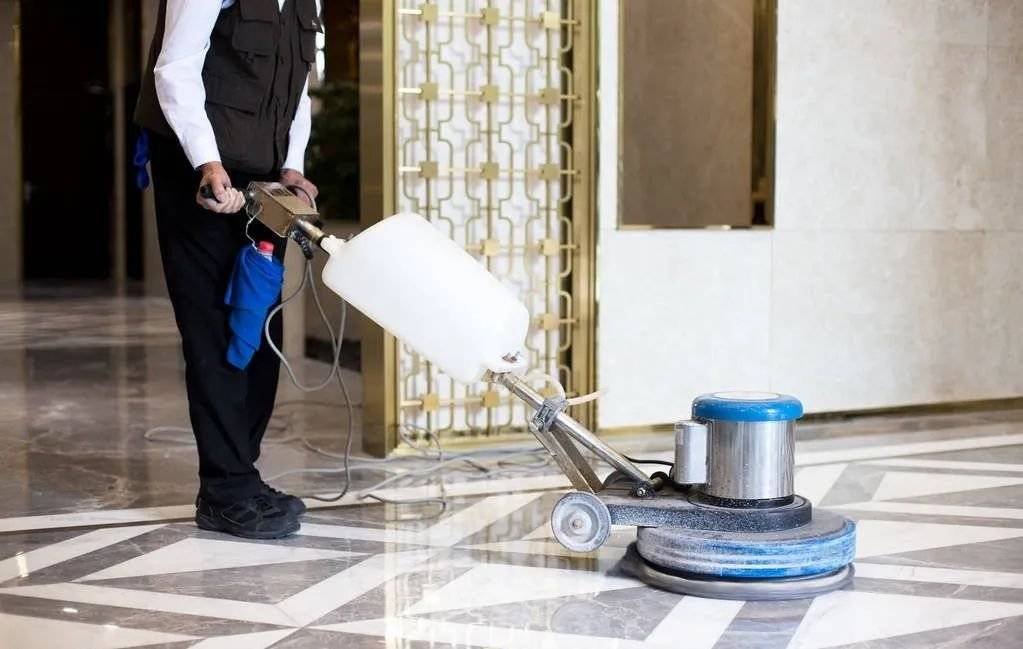
Newly installed marble should be cleaned gently, allowed to cure, inspected for grout haze and construction residue, then maintained with neutral cleaning before any crystallization work. Use marble crystallization powder only after the surface is stable, clean and ready for gloss refinement; do not use crystallization to hide installation defects or deep scratches.
Newly installed marble should not be treated like an old dull floor that simply needs polishing. The first maintenance decision is whether the floor is still curing, whether construction residue remains, and whether the visible issue is soil, haze, etching, lippage, or a true loss of gloss. Those conditions change the cleaning, crystallization, and restoration path.
| Installation stage | Primary maintenance action | What to avoid | Evidence to collect |
|---|---|---|---|
| Immediately after handover | Remove loose grit, construction dust, adhesive residue, and grout haze with marble-safe cleaning steps. | Do not crystallize or polish over residue that has not been cleaned and rinsed away. | Photos of haze, residue location, grout condition, and cleaning chemical history. |
| First traffic period | Set entrance matting, dust control, pH-safe cleaning, and a traffic-lane inspection schedule. | Do not wait until abrasive soil creates visible dull lanes before changing the routine. | Entrance soil pattern, traffic routes, mop or scrubber process, and water recovery quality. |
| Early dullness or uneven shine | Diagnose whether the issue is residue, etching, scratch marks, or poor previous crystallization timing. | Do not apply gloss-restoration chemistry before confirming surface compatibility in a test area. | Small test area, lighting angle, surface feel, and whether dullness follows traffic or installation seams. |
| Before crystallization or restoration | Confirm the marble is clean, dry, and suitable for the planned crystallization or restoration process. | Do not use crystallization as a substitute for grinding, honing, stain treatment, or lippage correction. | Stone type, scratch depth, stain type, moisture condition, and the desired maintenance cycle. |
For a project review, share photos from several angles, the installation date, stone type, grout and adhesive status, cleaning history, traffic level, and the expected appearance target. If the surface is already stable but dull, compare the professional marble maintenance guide; if crystallization is being considered, review the marble crystallization powder guide.
Newly installed marble maintenance is a timing problem. The floor may look ready for polishing, but construction residue, grout haze, moisture, unsettled joints, and dust can all interfere with marble restoration crystallization. GSC visibility for newly installed marble maintenance, marble crystallization process, and marble restoration crystallization shows that searchers need a clear sequence: clean and stabilize the new installation first, then decide whether gloss refinement or crystallization is appropriate.
| Timing stage | What to check | Best next action |
|---|---|---|
| Immediately after installation | Loose dust, cement residue, adhesive marks, and grout haze | Use dry removal and neutral cleaning before any gloss work; avoid acidic cleaners on marble. |
| After the floor has settled | Moisture, joint height, surface flatness, and whether scratches are installation defects or normal traffic marks | Correct defects first; crystallization should not be used to hide lippage, deep scratches, or trapped residue. |
| Before crystallization | Surface cleanliness, stable curing, stone type, pad choice, and machine control | Run a small test zone, then use the marble crystallization process only when the floor is clean and ready for gloss refinement. |
| Early maintenance period | Daily soil load, entrance matting, neutral cleaner dilution, and spot damage | Protect the finish with routine neutral cleaning and schedule restoration only when cleaning no longer restores the expected appearance. |
The key distinction is maintenance versus restoration. New marble normally needs gentle cleaning, residue control, and inspection first. Crystallization or polishing becomes appropriate when the surface is stable, free of construction contamination, and ready for controlled gloss refinement. Starting too early can lock in haze or create uneven gloss; waiting too long can let construction grit scratch the new surface.
Related planning paths: use marble crystallization powder guidance when powder selection is the main question, compare professional marble floor maintenance for facility programs, and review stone crystallization vs crystal plating before choosing a finish method.
| Stage | Recommended action | Goal |
|---|---|---|
| Immediately after installation | Remove dust and residue with neutral cleaning | Prevent grit from scratching the new marble. |
| Before gloss work | Check curing, grout haze, moisture and surface flatness | Avoid sealing or crystallizing over trapped problems. |
| Initial maintenance cycle | Use dust control, neutral cleaner and walk-off mats | Protect the finish during early traffic. |
| Gloss recovery stage | Use crystallization powder only when the floor is ready | Improve shine without over-processing the stone. |
For powder selection and process control, see the marble crystallization powder guide. For the difference between crystallization and surface films, compare stone crystallization vs crystal plating.
Nowadays, if you visit a marble restoration job site, you will see that a large number of projects are carried out with crystallization powder, which has become the first choice for stone restoration works.
However, even an excellent product must be matched with improved application techniques to achieve the best results. There is a crucial detail in the use of crystallization powder that directly affects working efficiency and finish quality, yet few people truly understand it. In this issue, we will share this key point.
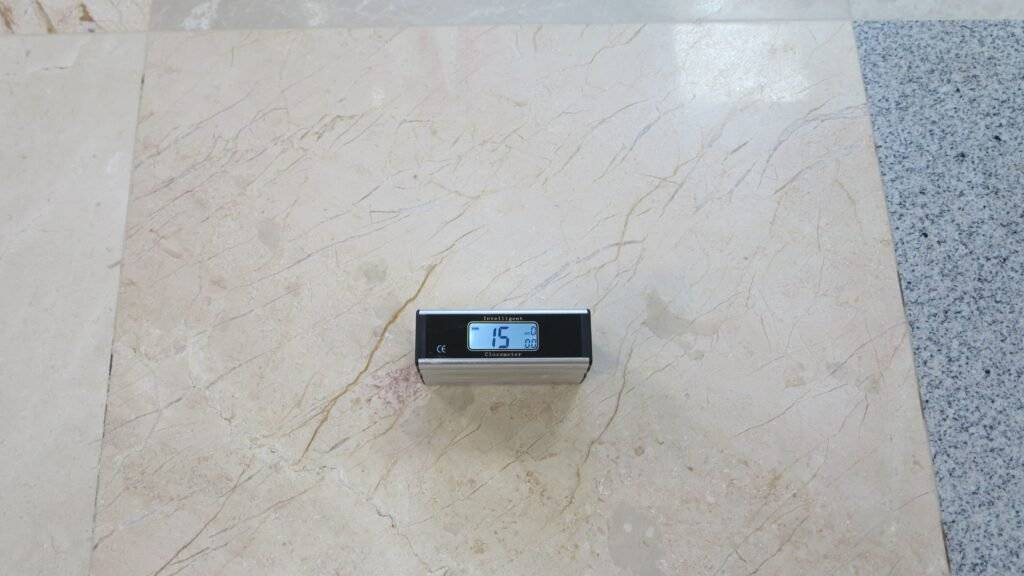
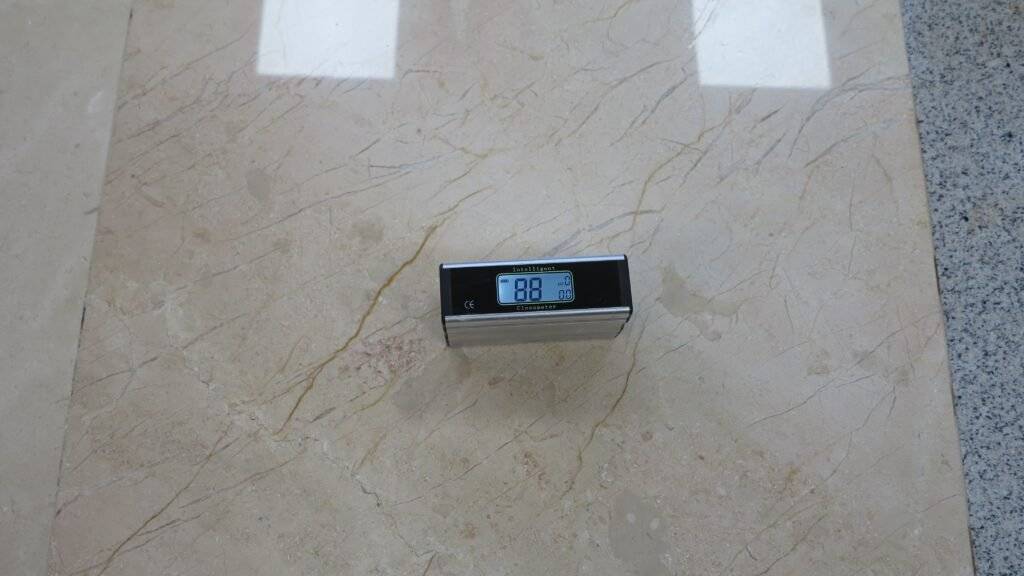
Crystallization powder delivers high polishing efficiency. The above images show the floor gloss comparison before and after using RV-82 powder.
The Role of Crystallization Powder
1.What is marble crystallization powder?
Marble crystallization powder is a specialized product for marble surface treatment. By combining a crystallizing agent with a heavy-duty floor machine, it uses both chemical reaction and mechanical friction to form a hard, compact crystalline layer on the surface. This layer protects the stone from damage and staining while preserving its natural properties.
2.Functions of crystallization powder
After treatment, the marble shows its original natural color with a clear, mirror-like finish, and the surface hardness is increased so it is less likely to be scratched. The nano‑based formula enhances gloss, strengthens the surface, and provides anti-slip and protective effects. Proper use can solve many common stone problems, extend service life, and offer a cost-effective alternative to replacing stone. Treated marble appears fuller in color, crystal-clear, with gloss levels above 95°, and the surface becomes more wear-resistant, less prone to fading, smooth and even, and easier to keep clean.
3.What problems arise from improper use of crystallization powder?
If the powder is used incorrectly, several problems can occur. Uneven distribution wastes time and still leaves areas where the powder cakes on the pad. If water is applied first and the stone absorbs it before the powder is fully dissolved, the etching reaction between the acidic components and the calcium in the stone is greatly weakened. Incompletely dissolved powder can cause localized over-etching (“burning”) while surrounding areas remain weak, and filling components also distribute unevenly. As a result, operators may polish for a long time without achieving good gloss, with local white burn marks and an overall hazy appearance. This completely undermines the key advantage of crystallization powder: high-efficiency, uniform shine.

Correct Use of Crystallization Powder: Pre‑Mix with Water
1.Select an Appropriate Area
As mentioned earlier, the chemical etching, grinding refinement and filling effects of crystallization powder must work together within a suitable time window. Therefore, each application should be limited to an area of about 2–3 m², and not more than 5 m² at a time. Within this 2–5 m² area, select the section you want to treat, then add water and mix the appropriate amount of powder into a uniform slurry according to the area.
2.How to Use Crystallization Powder
It is also important to mix only what you will use immediately. Prepare enough slurry for just 2–5 m² and use it at once, then mix a new batch as needed. Do not dilute a large bucket of powder with water and let it sit, because—unlike liquid crystallizers—the active components in powder will gradually lose effectiveness after dissolving in water.
Always ensure the crystallization powder is fully and evenly mixed before use.
3.Polishing Techniques
As with all polishing materials, crystallization should be performed evenly and delicately, achieving the finish in one uniform process. For each 2–5 m² rectangular area, start polishing along the edge of the rectangle. Using the diameter of the machine pad as the working width, move horizontally back and forth three times (for example, left→right→left, or right→left→right). Then move the machine down by half a pad width and repeat the three passes. Continue until the entire 2–5 m² area has been polished horizontally. Next, polish the same area vertically in the same three‑pass, half‑overlapping pattern. When the whole area has been polished in a cross‑hatch pattern, you can obtain an excellent final finish. In practice, treating a 2–5 m² area usually takes about 2–5 minutes. In simple terms, each new pass should overlap half of the previous one.
After one area is polished, the remaining slurry can be pulled to the next area with a squeegee and combined with freshly mixed slurry to continue polishing. When adding new slurry, slightly increase the powder ratio to compensate for dilution and quickly spread it evenly with the squeegee. However, this reused slurry should not be transferred more than 2–3 times. When you notice excessive foaming during polishing, it means the active components have been fully reacted and the slurry should be removed with a wet vacuum rather than reused.
Once the entire floor is polished, there will still be residual slurry on the surface that continues to react. If it is not cleaned off in time, the freshly finished surface may be over‑etched and lose gloss. You can clean it in one of the following ways:
Method 1: Use an automatic scrubber to wash the floor once.
Method 2: Use a single‑disc machine with a clean, dry pad to buff off the residue.
Method 3: At minimum, use a clean dust mop to thoroughly remove remaining material from the surface.
If local areas have already been burned or turned white, lightly hone the affected spots with a 1000‑grit pad, then re‑apply crystallization powder to those areas.
Newly installed marble maintenance should start with timing, not just shine. Before marble restoration crystallization, the surface needs to be free of construction residue, grout haze, excess moisture, loose dust, and unstable joint conditions. If a new floor is crystallized too early, the process can lock in haze or produce uneven gloss. If maintenance waits too long, construction grit can scratch the surface before the first proper care cycle.
| New marble stage | Decision to make | Product or guide path |
|---|---|---|
| Immediately after installation | Remove loose dust, grout haze, adhesive marks, and construction residue before any crystallization work. | Use neutral cleaning discipline and compare with professional marble floor maintenance. |
| After curing and moisture checks | Confirm the floor is settled enough for gloss refinement, especially around joints, lippage, and repaired areas. | Review marble revival steps before selecting the restoration path. |
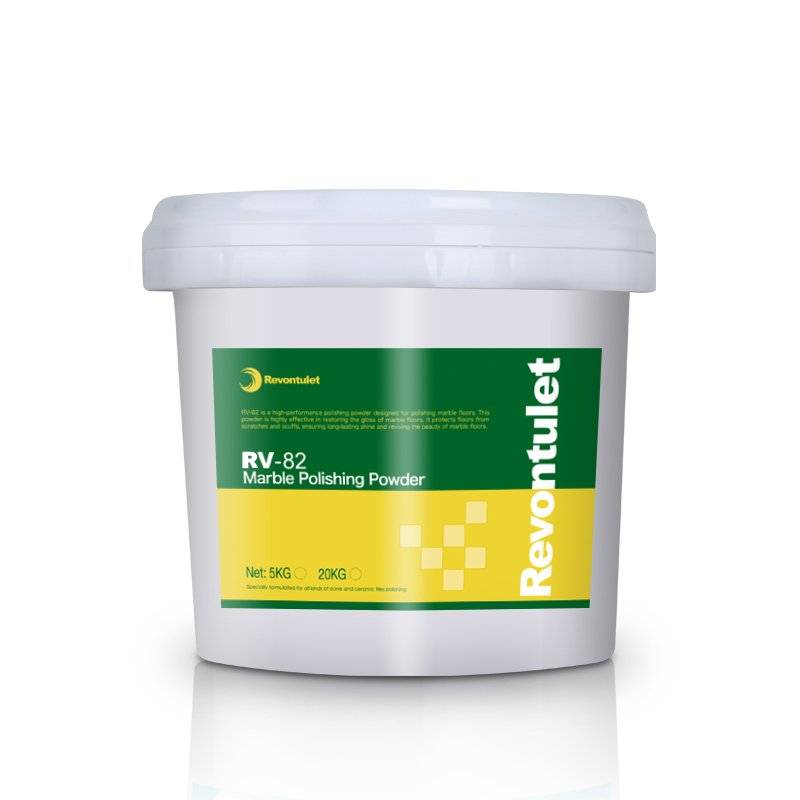
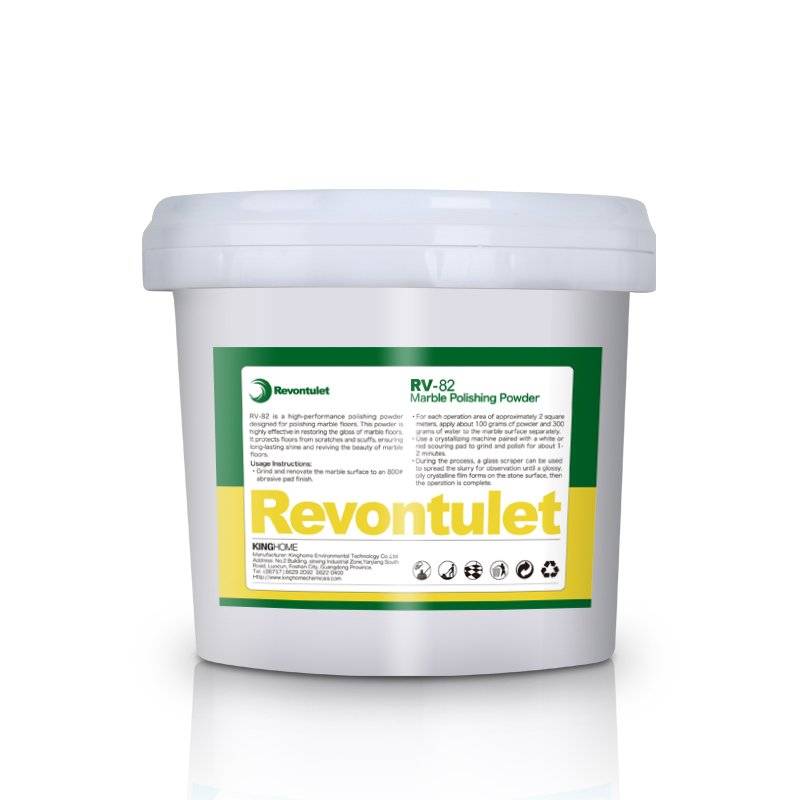
| Before marble restoration crystallization | Run a small test area and choose powder, pad, machine speed, and water control based on stone response. | RV-82 Marble Polishing Powder, RV82 Marble Polishing Powder TDS, and the marble crystallization powder guide. |
| When shine is dull but the surface is not deeply damaged | Choose maintenance restoration instead of full grinding if the floor is already flat and clean. | MR Marble Gloss Restorer and stone floor cleaning machines. |
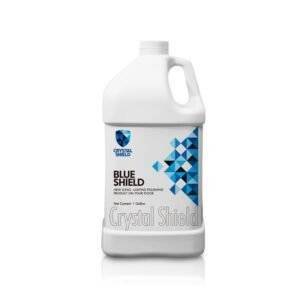
| After the finish direction is confirmed | Decide whether the job needs crystallization, crystal plating, or protection rather than mixing systems casually. | stone crystallization vs crystal plating and Blue Shield. |
The safest sequence is simple: clean the new marble, let the installation settle, verify moisture and residue control, then choose the marble crystallization process or a lighter restoration path. Product choice should follow the floor condition rather than the other way around.
Related: Professional marble maintenance plan · Marble crystallization guide
 English
  Spanish