WELCOME TO KINGHOME
Get A Free Quote
We will get back to you within 8 hours

WELCOME TO KINGHOME
We will get back to you within 8 hours
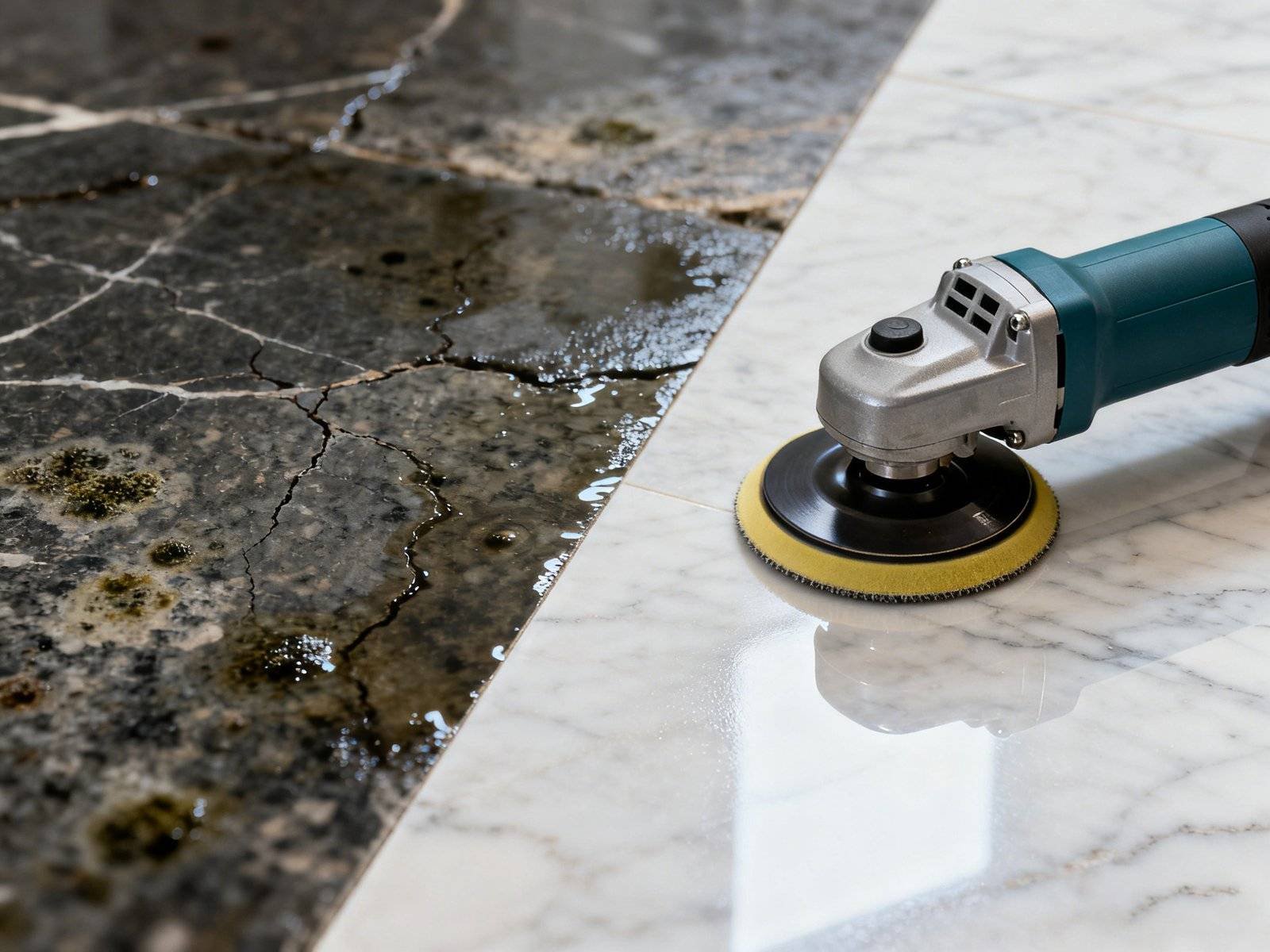
1.Invisible Killers of Stone Care: Spread of New Rust
There is a saying: “The more knowledge, the more reactionary.” Many people think this saying itself is reactionary, but in reality, it holds some truth to a certain degree.
Those truly “ignorant” who follow expert advice sincerely and use ready-made rust removers according to instructions generally can clean stone rust well without causing new rust. However, those with some knowledge know that rust (mainly Fe₂O₃·nH₂O) reacts with hydrochloric acid (HCl) producing ferric chloride (FeCl₃, yellow) or ferrous chloride (light green). They believe rinsing with water removes the rust, leaving the stone surface clean and shining.
In fact, water cannot completely remove the ferric or ferrous chloride dissolved in it, leading to widespread yellow or light green stains. Over time, iron in the stone reacts with acid to form ferrous ions which, combined with moisture and oxygen from air, oxidize back to rust (Fe₂O₃·nH₂O). This explains why rust removal sometimes causes more rust and why acids speed up iron surface corrosion.
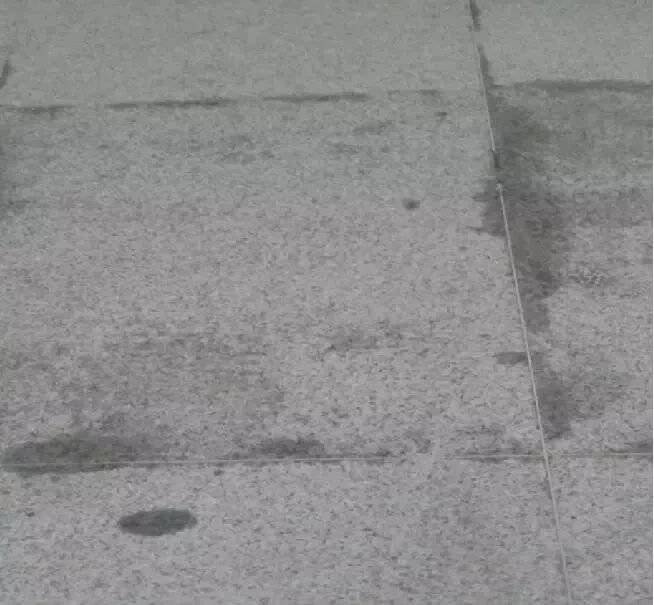
Marble rust removers—or simply acids—are mostly acidic, even strongly acidic. While removing surface or internal rust from stone, they simultaneously damage the stone surface. Marble’s main component, calcium carbonate (CaCO₃), reacts with acids like hydrochloric acid.This dissolves stone material, causing surface roughness and whitening.
Acid cleaning of cement residue on marble surfaces damages the stone through the same mechanism as acid rust removal. Cleaning granite or tiles with exterior wall cleaners or toilet bowl cleaners (containing hydrofluoric acid) dissolves the main component silica (SiO₂), causing material loss that results in porous, rough, whitened surfaces prone to staining.
Organic Solvent Damage: Solvents like thinner used on organic artificial stone dissolve or age the resins, creating porosity, roughness, whitening, and staining. Glue removers on dry-hang stone may compromise adhesive bonding, posing safety risks.
Alkaline Cleaning Issues: Strong alkalis on tiles or granite—especially at high temperatures—dissolve surface components. On artificial organic stone, they age resins, causing whitening and roughness.
Everyone knows protection is better than no protection—but that’s not always true. Wrong protectant selection, improper process, incorrect dosage, etc., can turn sealants into invisible killers.
Polishing has four deadly “bullets”:
Bullet 1: Wet polishing introduces excessive water that penetrates stone and even cement layers, potentially causing efflorescence or other pathologies.
Bullet 2: Using soft pads on mixed-hardness stones like granite with softer inclusions (ma-gang stone) causes deformation under pressure. Soft areas grind down deeply while hard areas remain untouched, making holes permanent or larger no matter how much polishing.
Bullet 3: Uneven machine movement creates wavy, uneven surfaces.
Bullet 4: Dry polishing causes joint subsidence and other defects.
This killer is the most insidious—working invisibly, like boiling a frog slowly. The number one culprit is polishing steel wool:
Harm to workers: The acids in the crystallizing agent volatilize during high-temperature steel wool polishing, harming onsite workers.
Main source of external rust: Steel wool, essentially iron wool, reacts with acid to form iron salts, which in contact with oxygen and water form rust, polluting the stone.
Enlarging pores and cracks: On stones with existing pores and cracks such as Jin Bi Hui Huang and gray net stones, steel wool polishing enlarges these defects and accelerates weathering.
Steel wool use requires great caution to avoid these hidden damages.
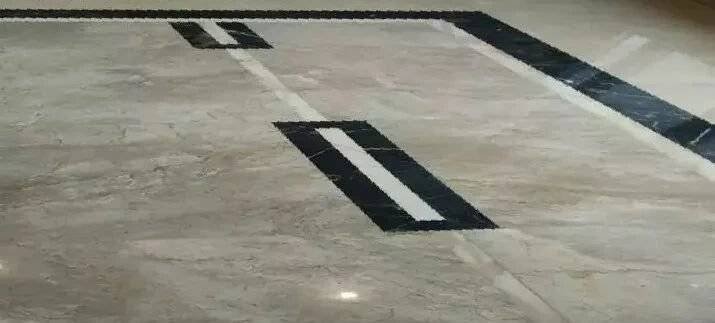
Traditional or low-grade crystallization materials still rely on wax for organic film formation and shine. If liquids don’t shine enough, add wax; if pastes fail, add wax.
How wax becomes a killer:
Inorganic penetrating fillers represent the new trend in stone maintenance. However, wrong material selection turns “allies” into ruthless killers. Viscous sodium- or potassium-based water glass (sodium silicate) can re-dissolve upon water exposure—surface water penetration or bottom evaporation reopens pores and causes massive efflorescence.
Water glass works in cement curing due to reactive calcium ions forming insoluble calcium silicate. Stone lacks active calcium ions; it only reacts with atmospheric CO₂ to form silicic acid. Despite silicic acid’s insolubility, excess sodium/potassium ions make it water-soluble.
Scraping glue from stone surfaces—whether AB resin or UV-cured resin—is a historical mistake.
Resin glues are impermeable. Stone always contains or develops subsurface moisture; evaporation lifts and delaminates the resin. Natural resin aging causes powdering or detachment. This “treatment” provides no real protection and ultimately damages stone long-term.
2.The Unsung Heroes
In stone care or maintenance, many improvements in quality and function are invisible to the eye, but more valuable than surface aesthetics. When you appreciate this value, you have moved beyond mere stone care into genuine stone maintenance.
Stone maintenance enhances both the natural character of the stone and its external beauty and internal functions. It is a process like a youth’s growth, nourishing knowledge and wisdom while strengthening physical form with dual oars.
This understanding differentiates simple cleaning from true preservation and care that prolongs the life and elegance of natural stone.
This unsung hero works silently, unseen and unfelt.
Proper protection maintains external beauty while greatly extending lifespan. Use penetrating (not topical) sealants—ideally fluorinated with strong weather resistance and oil repellency.
Stone is highly porous, and smaller pores mean denser stone with stronger structure. “Magic Silicon”—a highly penetrative hard inorganic material—works internally to deliver these benefits:
Traditional repairs using marble glue or resins (AB or UV-cured) have these flaws:
Inorganic polymer adhesives offer superior penetration, bonding, and weather resistance with excellent inorganic stone compatibility.
Spray 103° A/B or “magic silicon” during grinding to wet and press stone powder into old/new pores/cracks, achieving glass-smooth texture. Polished with wax-free crystallizer, durability matches the stone’s lifespan.
Superior crystallization materials are inorganic surface formers—true unsung heroes with these hidden benefits:

