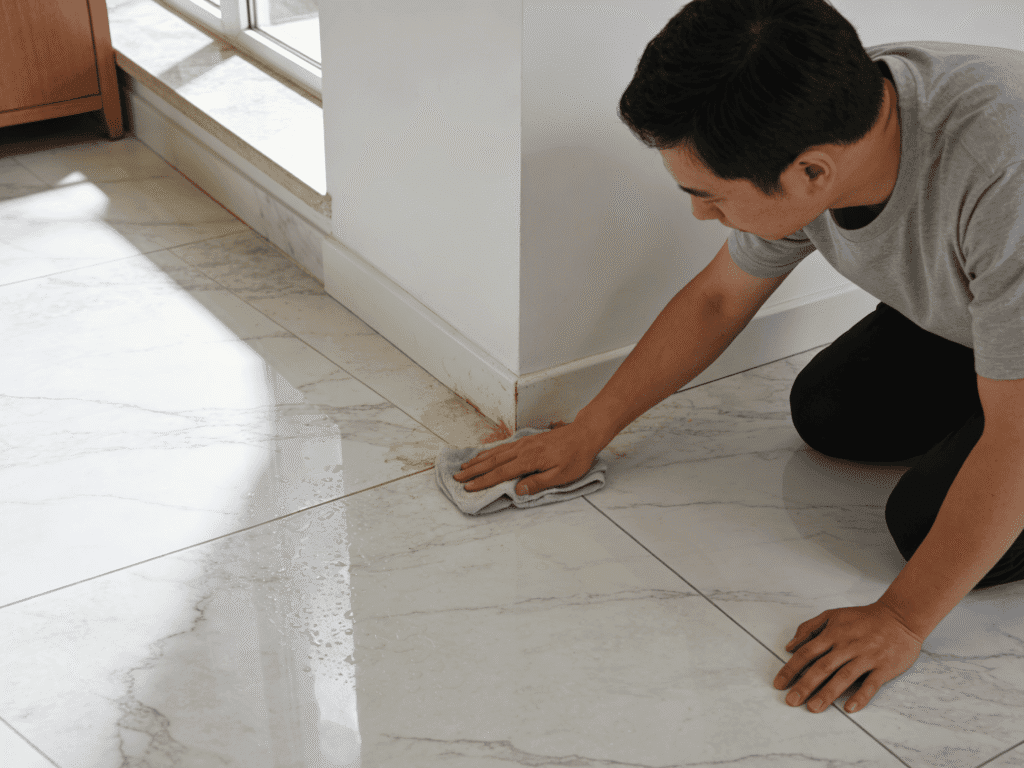
Many homes have marble or granite floors that look elegant and high-quality, but cleaning them can be challenging. Many people mistakenly use tile cleaners or steel wool to remove stubborn stains, only to make the surface dull and scratched. However, cleaning stone floors is not that complicated—using the right 3 tools plus 1 bottle of cleaner, even beginners can achieve a mirror-like shine without damaging the stone.
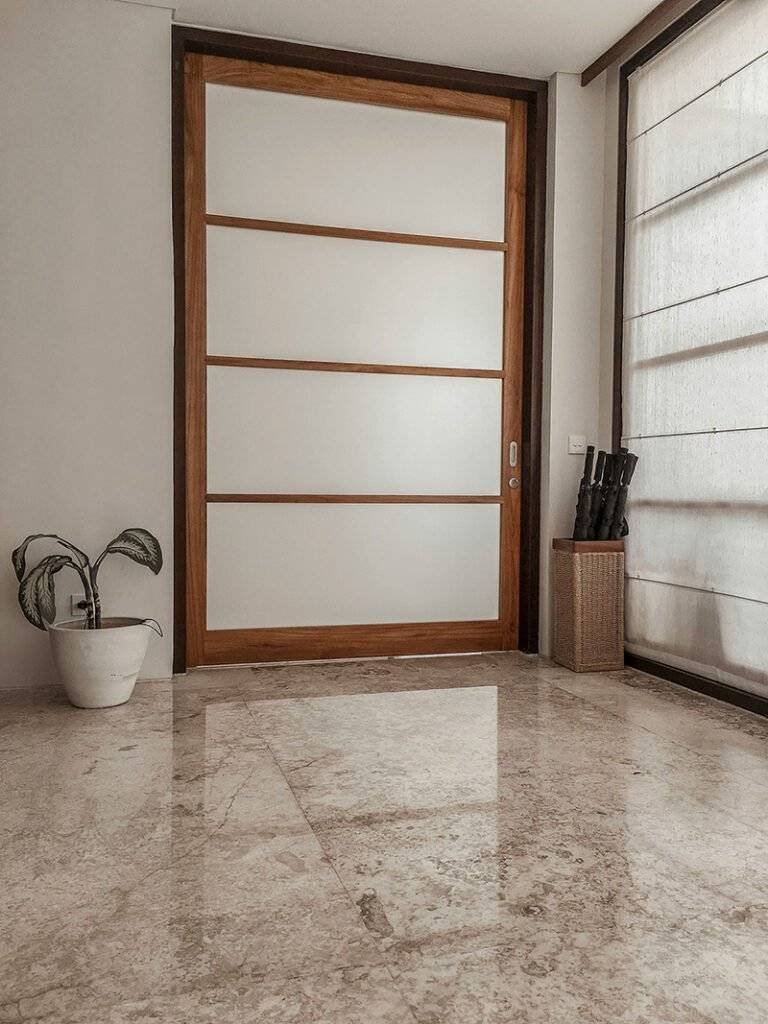
Image courtesy of Erica Indriana, Unsplash
Avoid these 3 cleaning habits that are ruining your stone floors
Many people treat stone floors like tile or wood floors when cleaning, but stone (especially marble) is delicate, so avoid these mistakes:
Mistake 1: Using toilet cleaner or tile cleaner on marble Toilet and tile cleaners are often acidic, but marble is a carbonate stone that acid can corrode—this causes roughness, tiny pits, and yellowing over time.
Mistake 2: Scrubbing stains with steel wool or hard brushes Steel wool scratches the softer stone surface, trapping dirt in the scratches which can never be fully cleaned later.
Mistake 3: Mopping with water only and leaving floors wet Water left on the surface seeps into gaps, causing black spots, mold, and efflorescence (white marks) on the stone over time.
These habits are damaging your stone floors and should be avoided.
Image generated by AI
Right Tools for Stone Floors
Choose these 3 “stone-friendly” cleaning tools—they’re affordable and effective for 90% of household needs without expensive pro gear.
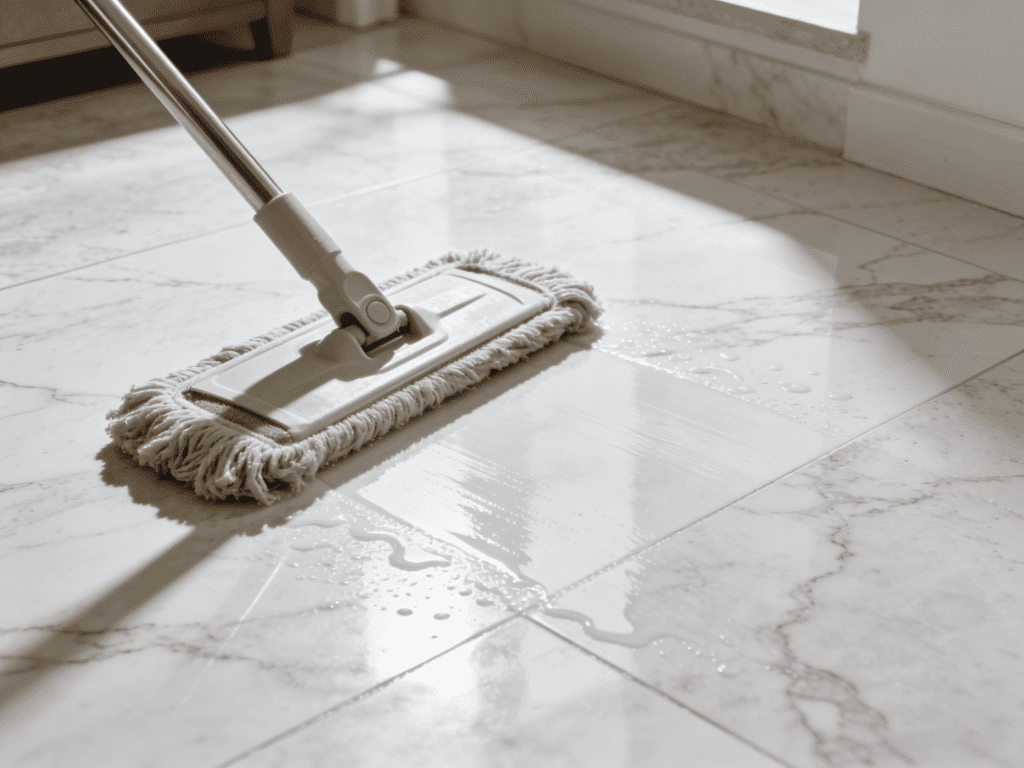
1. Microfiber Flat Mop: Dusting Essential
Why choose it: Unlike cotton mops that shed fibers and push dust around, microfiber mops have ultra-fine fibers that attract dust and hair like a magnet; the flat head reaches under furniture without bending.
How to use: Dry mop daily to prevent dust buildup; for light dirt, mist with water then wipe dry with a cloth to absorb moisture.
Pitfall: Avoid spin-dry models—their heads tangle hair and leave excess water streaks on stone.
2. Ultrafine Fiber Soft Cloth: Spot Cleaning Pro
Why choose it: Use only soft cloths like eyeglass or baby cotton cloths, or dedicated microfiber ones—they shed no lint, won’t scratch stone, and absorb water thoroughly.
How to use: For spills like soup under the table or shoe marks at the door, dampen with cleaner (detailed later), press gently without rubbing to avoid grinding dirt into seams.
3. Soft Bristle Crevice Brush: Gap Cleaner
Why choose it: Gaps trap dust and blacken easily; mops can’t reach them, hard brushes scratch edges, but soft bristle brushes have gentle, narrow heads that clean without damage.
How to use: Dry brush gaps weekly to sweep out dust; for dirtier spots, use diluted cleaner, then blot with dry cloth to prevent moisture residue.
Image generated by AI
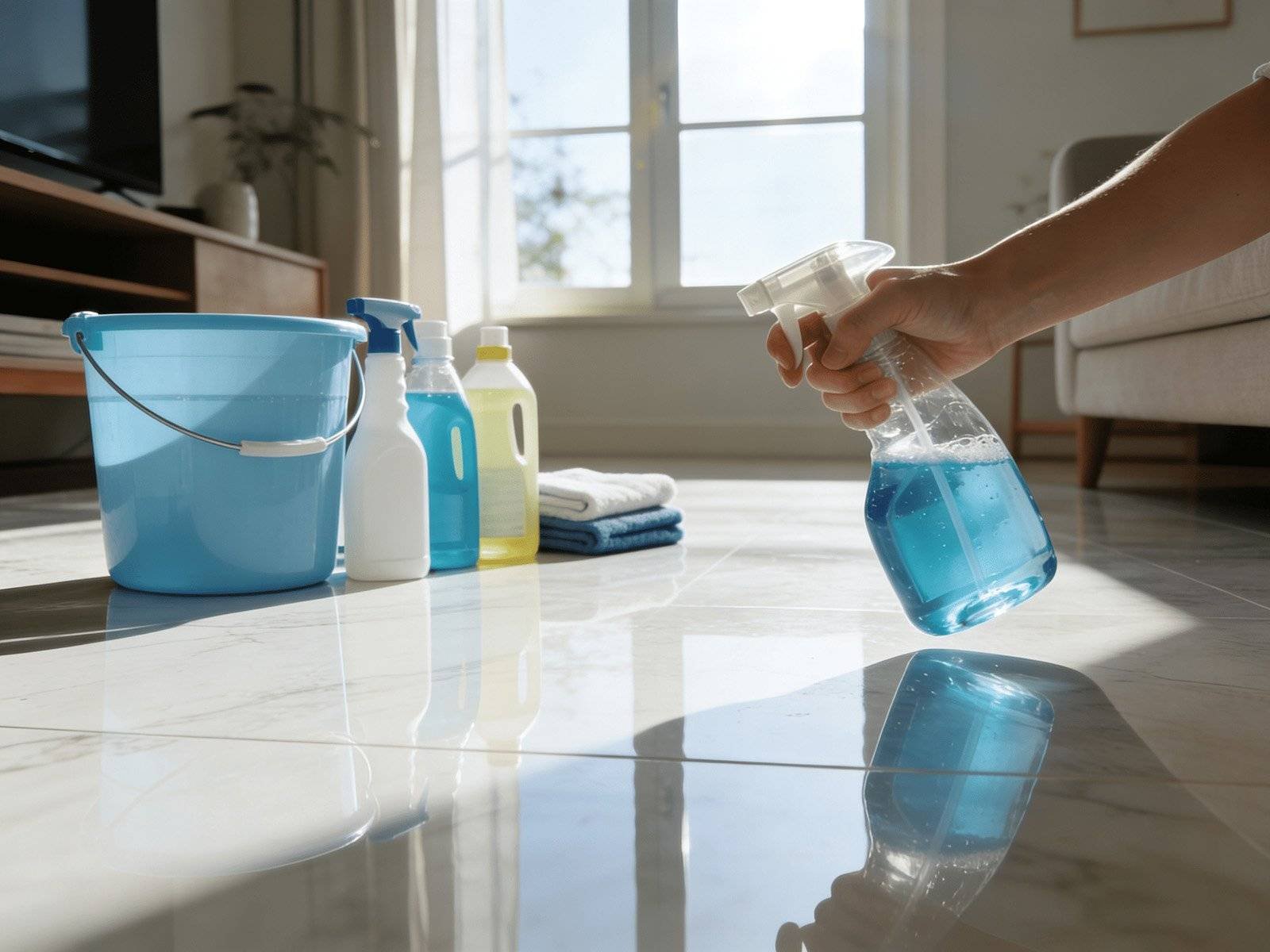
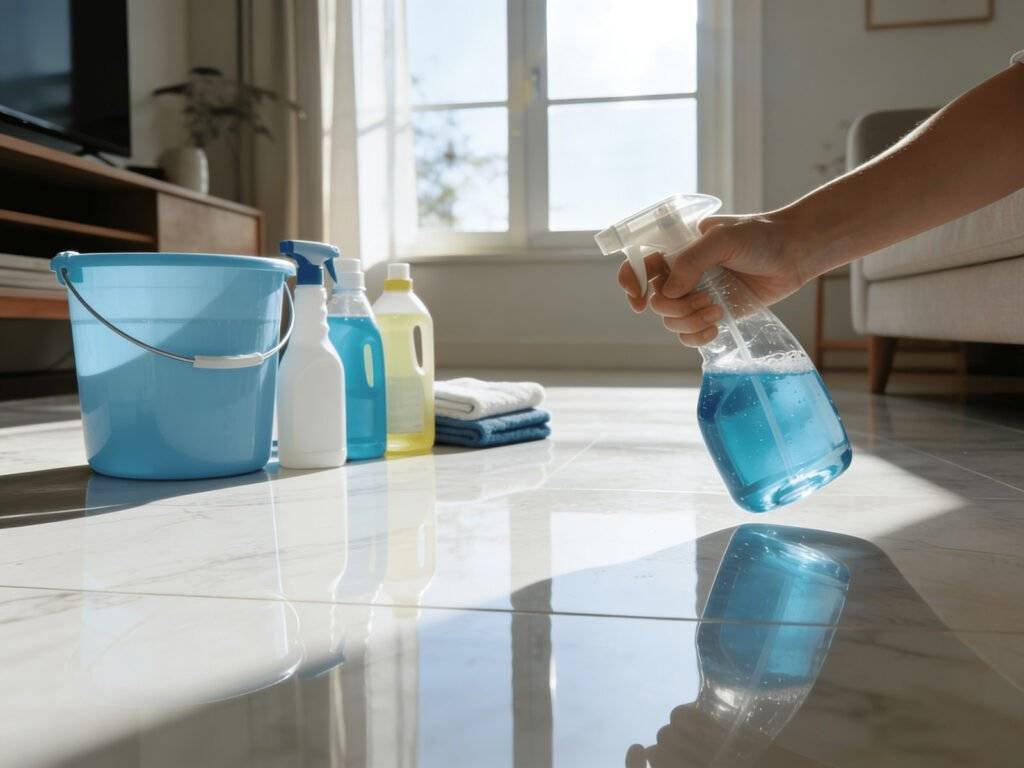
One “All-Purpose Cleaner”: Choose This Bottle, Safe for All Stone Types
The key to cleaning stone floors is choosing a neutral cleaner—neither acidic nor alkaline, so it won’t corrode stone. It works on marble, granite, quartz, and more, perfect for beginners to buy without worries.
How to pick: Watch for two labels to avoid hidden pitfalls
Check pH: Packaging showing pH 7-8 indicates neutral; steer clear of “strong descaling,” “acidic formula,” or “alkaline formula.”
Check suitability: Buy clear labels stating use for marble, granite and other natural stones. Avoid “tile only” or “wood floor only” cleaners, as tile cleaners tend to be acidic and wood cleaners often contain wax making stone slippery.
Scene-by-Scene Cleaning: Step-by-Step for 3 Common Situations
Different dirt levels require different methods to clean well without damage:
Scenario 1: Daily Dust Removal (do daily)
Tool: Microfiber flat mop (dry mop)
Steps:
Sweep large debris (snack crumbs, paper scraps).
Attach microfiber mop head, mop from inside the room outward in one direction, gathering dust and hair at the exit.
Remove mop head, rinse with clean water, air dry (avoid hot water to protect fibers).
Scenario 2: Post-Meal Oil/Stains (clean after meals)
Dilute cleaner per instructions (e.g. 1 liter water + 20 ml cleaner), spray evenly.
Wet mop floor with microfiber mop, applying moderate pressure; after each section, dry mop with cloth.
Brush debris from gaps with crevice brush, wipe dry with cloth.
Image generated by AI
Final Tips: 3 Don’ts & 2 Dos for Beginners
3 Don’ts: No acidic/alkaline cleaners, no steel wool/hard brushes, never leave floor wet—always dry promptly.
2 Dos: Use neutral cleaner, use microfiber/soft cloth tools.
Stone floors aren’t so hard to care for. With the right tools and cleaner, spending just 5 minutes daily and 30 minutes weekly keeps floors glossy and fresh like new—no more heartbreak over scratched, dull surfaces!