WELCOME TO KINGHOME
Get A Free Quote
We will get back to you within 8 hours

WELCOME TO KINGHOME
We will get back to you within 8 hours
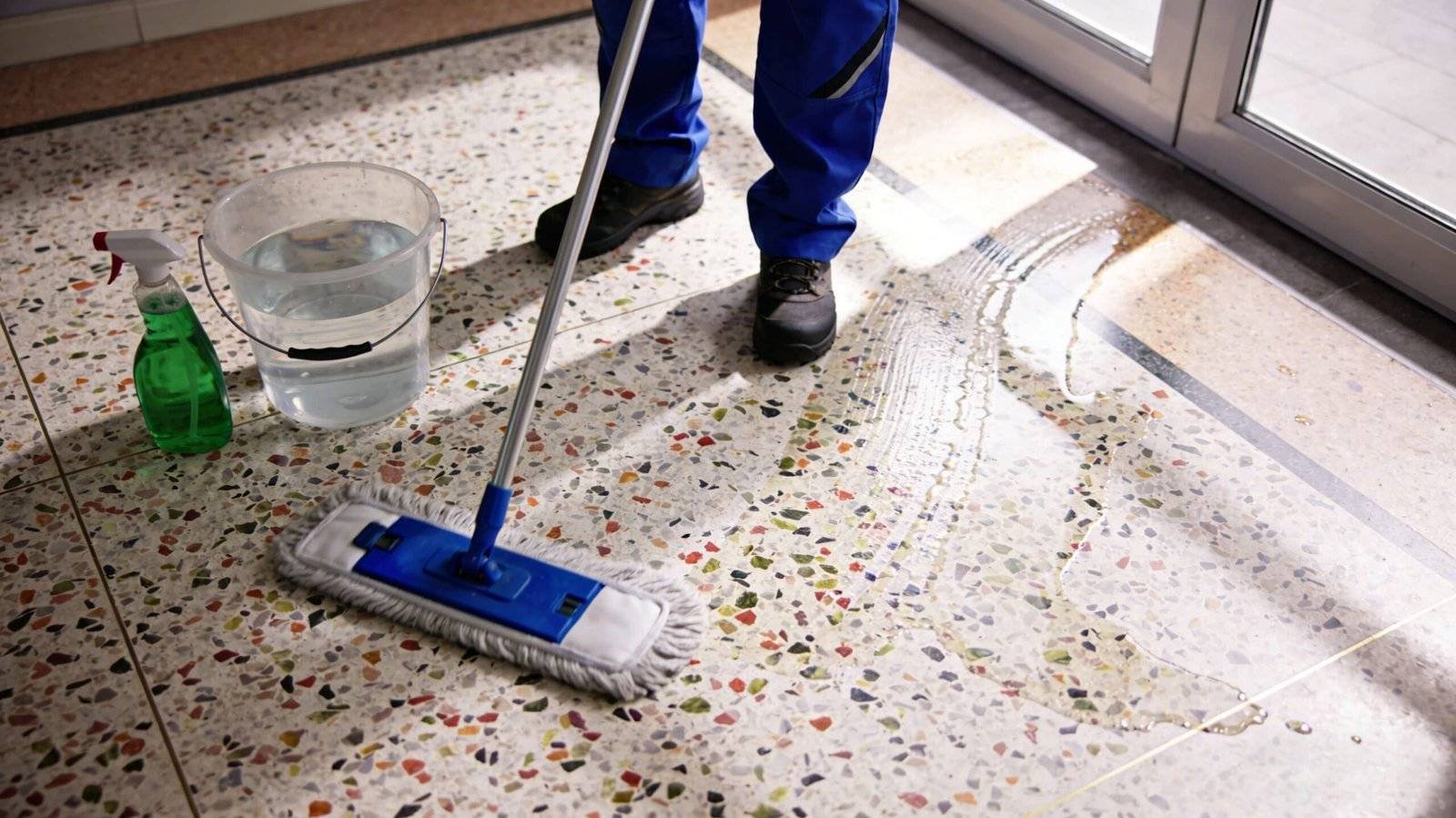
Stone floors often look worse after cleaning because the wrong pH, pad, brush, rinse process or chemical residue reacts differently with marble, granite and terrazzo. Marble can etch from acid, granite can dull from abrasive grit or residue, and terrazzo can show dirty grout or film. The fix is to identify the stone first, remove dry soil, use a compatible cleaner, rinse fully and inspect whether the issue is dirt, damage or worn protection.
| Stone type | Common reason cleaning fails | Safer correction |
| Marble | Acid etching or harsh cleaner marks | pH-neutral cleaning and polishing diagnosis |
| Granite | Abrasive soil, residue or sealer wear | Dust removal, rinse control and sealer check |
| Terrazzo | Dirty grout, film or wrong machine setup | Controlled machine cleaning and residue removal |
Useful follow-up guides include stone floor cleaning tools, seal-safe granite floor cleaning, and stone floor cleaning machines.
Last time we covered general stone cleaning methods, giving you a basic grasp of daily stone floor maintenance. But stones like marble, granite, and terrazzo each have their own ‘temperament’—marble fears acids, granite hates abrasion, terrazzo dreads dirty grout—so target these specifics for effective cleaning that extends floor life.
When a stone floor looks worse after cleaning, the safest next step is diagnosis rather than stronger chemistry. Acid etching, alkaline residue, abrasive scratches, sealer haze, trapped moisture, and dirty-water redeposit can all create a dull or cloudy result, but each one needs a different correction path.
| Visible symptom after cleaning | Likely root cause to check | Safer first response | Evidence to collect |
|---|---|---|---|
| White dull spots or splash marks on marble | Acid etching from an unsuitable cleaner or spill. | Stop acidic products and inspect whether polishing or restoration is needed. | Cleaner label, dwell time, affected stone type, and angled-light photos. |
| Sticky, streaky, or cloudy traffic lanes | Cleaner over-dosing, poor rinsing, or dirty solution left on the floor. | Use stone-safe cleaning, controlled rinse, and full recovery before judging gloss. | Dilution, mop or scrubber process, rinse water condition, and drying pattern. |
| Fine swirl marks after machine cleaning | Pad, brush, grit, or soil abrasion that was too aggressive for the finish. | Remove loose grit, pause the tool setup, and test a less aggressive pad or brush. | Brush or pad type, machine speed, soil load, and scratch direction. |
| Dark areas that remain after drying | Moisture, oil, dye, or sealer-related absorption difference. | Let the area dry fully and identify the contaminant before sealing or polishing. | Drying time, moisture source, stain history, and previous sealer use. |
For support, provide the stone type, cleaner name, dilution, tool or pad used, rinse method, drying time, and photos before and after cleaning. Related guides include stone floor cleaning mistakes, professional marble maintenance, and granite seal-safe cleaning.
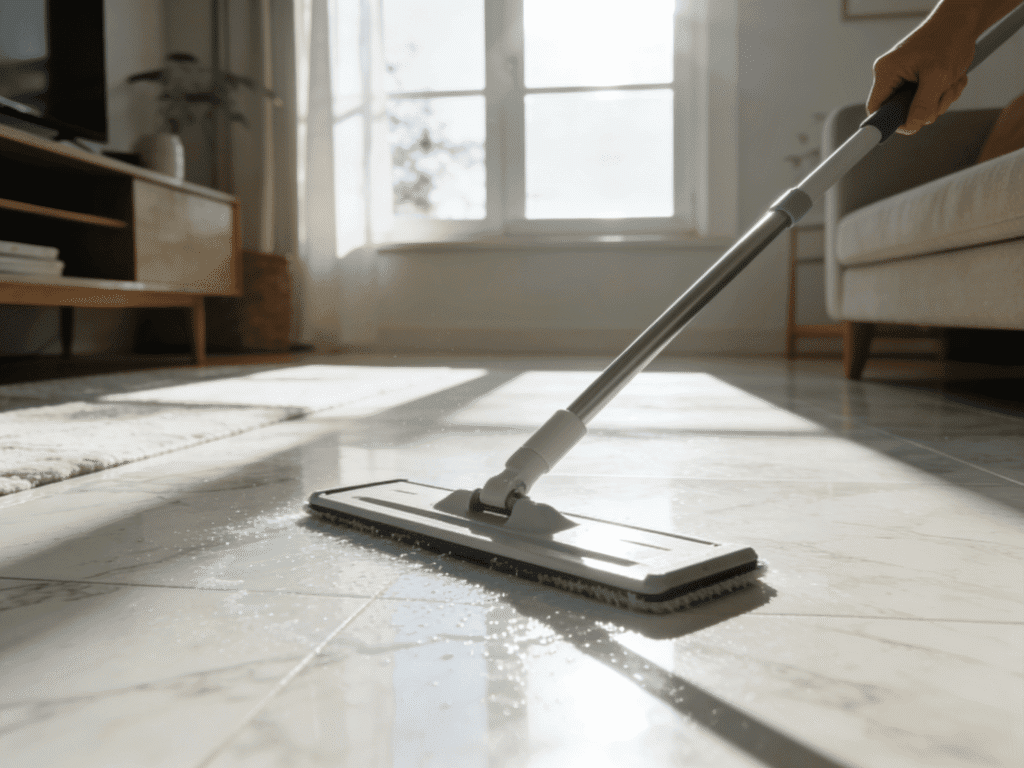
Marble, a carbonate stone, has a delicate polished surface; cleaning focuses on avoiding acids and gentle handling, with 3 key details.
Skip toilet cleaners or tile agents; everyday weak acids like kitchen splashes of vinegar, lemon juice, tomato juice, or spilled soda/fruit juice in living areas corrode marble. Avoid “natural hacks” like diluted vinegar water or lemon slices, as they dull the shine over time. Correct method: Blot acid spills instantly with dry paper towels (no rubbing), wipe twice with water-dampened soft cloth, then dry with a clean cloth.
Polished layers scratch easily, so avoid abrasive cleaners like scouring powders or creams that dull the surface. For dull spots, mix marble-specific polishing powder 1:5 with warm water into a paste, apply with soft cloth in clockwise circles for 30 seconds per area, rinse with water, and limit to monthly.
Marble absorbs stains easily, so apply water-based, non-filming marble sealer every 3 months: Wipe evenly with soft cloth, let sit 10 minutes, buff off excess. Treated surfaces bead water/oil for easy wipe-up, ideal for kitchens or dining areas.
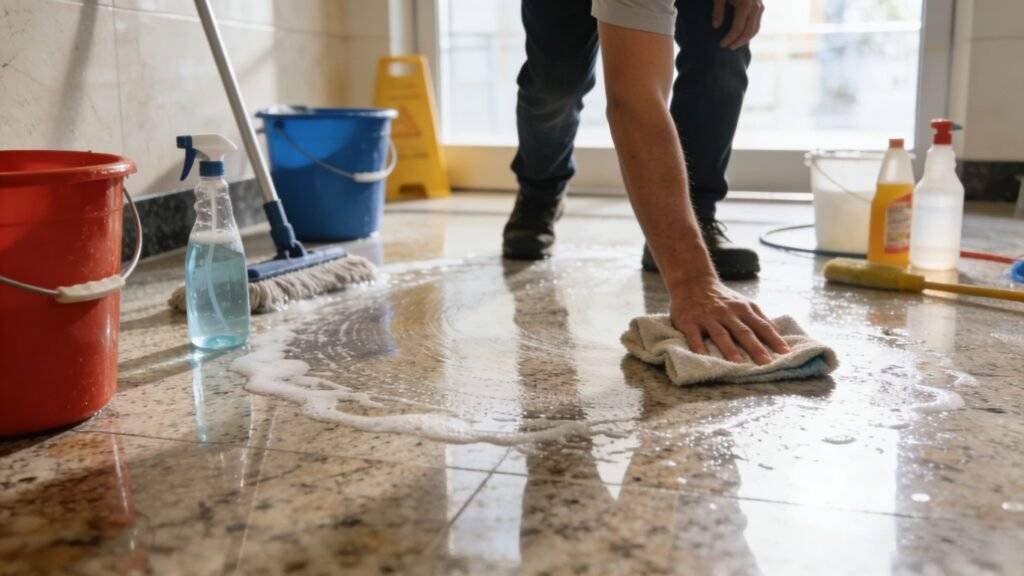
Granite, a silicate stone with high hardness (Mohs 6-7), resists acids/alkalis but scratches from hard particles; focus on removing debris first and grout care, with 3 details.
Small stones or sand from shoes or balcony dust easily cause fine scratches, so vacuum daily with soft-bristle attachment (avoid hard brushes), especially at entrances/balconies. Use microfiber mop wrung nearly dry (no dripping) to prevent trapped grit from sliding and abrading.
Avoid steel wool or blades on oil/ink stains; apply diluted 3% hydrogen peroxide (pharmacy grade) with cloth, cover with plastic wrap for 2 hours, then rinse—it oxidizes stains safely. For grout stains, wrap toothpick in peroxide-damp cloth to clean, then dry.
Though finer than terrazzo, grout darkens over time; use 0.5cm soft-tip grout brush with neutral cleaner monthly, gently to avoid edge damage. Wipe dry after; seal lingering dark spots with clear granite grout sealer.

Terrazzo, a cement-aggregate mix, has wide gaps and cement prone to staining/efflorescence; focus on sealing gaps and anti-alkali care, with 3 key details.
Cement in terrazzo fears strong alkalis (causing whitening/powdering), so avoid soap, laundry powder, or dish detergent—these lead to efflorescence (persistent white frost). Use only neutral cleaner with half-dry mop, followed by immediate dry cloth wipe to prevent water seeping into cement gaps.
Wide 2-3mm gaps trap dirt heavily; for new or blackened terrazzo, apply epoxy color-matched caulk (tutorials online, ~$5 kit) to fill—sealed gaps need only surface wiping. Unsealed: Weekly brush with soft-tip grout brush and neutral cleaner, then dry thoroughly to avoid wastewater buildup.
For white frost, skip acids like vinegar/HCl (they etch aggregates); dilute terrazzo-specific neutral efflorescence remover, apply with cloth for 5 minutes, rinse, and dry. Follow up every 2 months with water-based cement hardener to reduce absorption and prevent recurrence.
When stone floors look worse after cleaning, the first response should be diagnosis, not a stronger chemical or heavier stone cleaning machine. GSC queries for stone cleaning machinery, stone cleaning machine, marble cleaning machine, and stone cleaning equipment show that many readers are trying to solve a visible problem with equipment. The real cause may be chemical residue, acid etching, alkaline cleaner damage, trapped grout soil, excess water, or machine pressure that is too aggressive for marble, granite, terrazzo, or other common stone types.
| After-cleaning symptom | Likely cause | Safer next check |
|---|---|---|
| White haze, sticky film, or dull mop paths | Chemical residue, over-dosed cleaner, or dirty rinse water | Rinse with neutral cleaner, improve water recovery, and verify that the floor dries clear before changing products. |
| Light spots or rough patches on marble | Acid etching or abrasive pad damage | Stop acidic cleaners, inspect the polish layer, and decide whether mild polishing or restoration is needed. |
| Terrazzo becomes cloudy or grout lines darken | Alkaline cleaner residue, wet grout soil, or efflorescence risk | Use pH-safe cleaning, controlled moisture, and grout sealing checks before increasing machine pressure. |
| Granite or hard stone still looks dirty after machine cleaning | Soil trapped in texture, grout, or old coating rather than the stone face | Match the brush, pad, dwell time, and vacuum recovery to the surface instead of scraping or over-polishing. |
The practical order is to identify the stone type, check pH risk, confirm whether the residue is on the surface or in the grout, then choose the cleaning chemistry, pad, brush, and recovery method. A marble cleaning machine or stone cleaning equipment package can help only when the floor condition, chemical risk, and machine pressure are already controlled.
Related planning paths: use commercial stone floor maintenance for schedule planning, compare stone floor cleaning machines when equipment is the main constraint, and review stone floor cleaning mistakes before changing to a stronger cleaner.
Each stone has unique weaknesses—avoiding pitfalls matters more than aggressive cleaning for lasting cleanliness and durability.
 English
  Spanish