WELCOME TO KINGHOME
Get A Free Quote
We will get back to you within 8 hours

WELCOME TO KINGHOME
We will get back to you within 8 hours
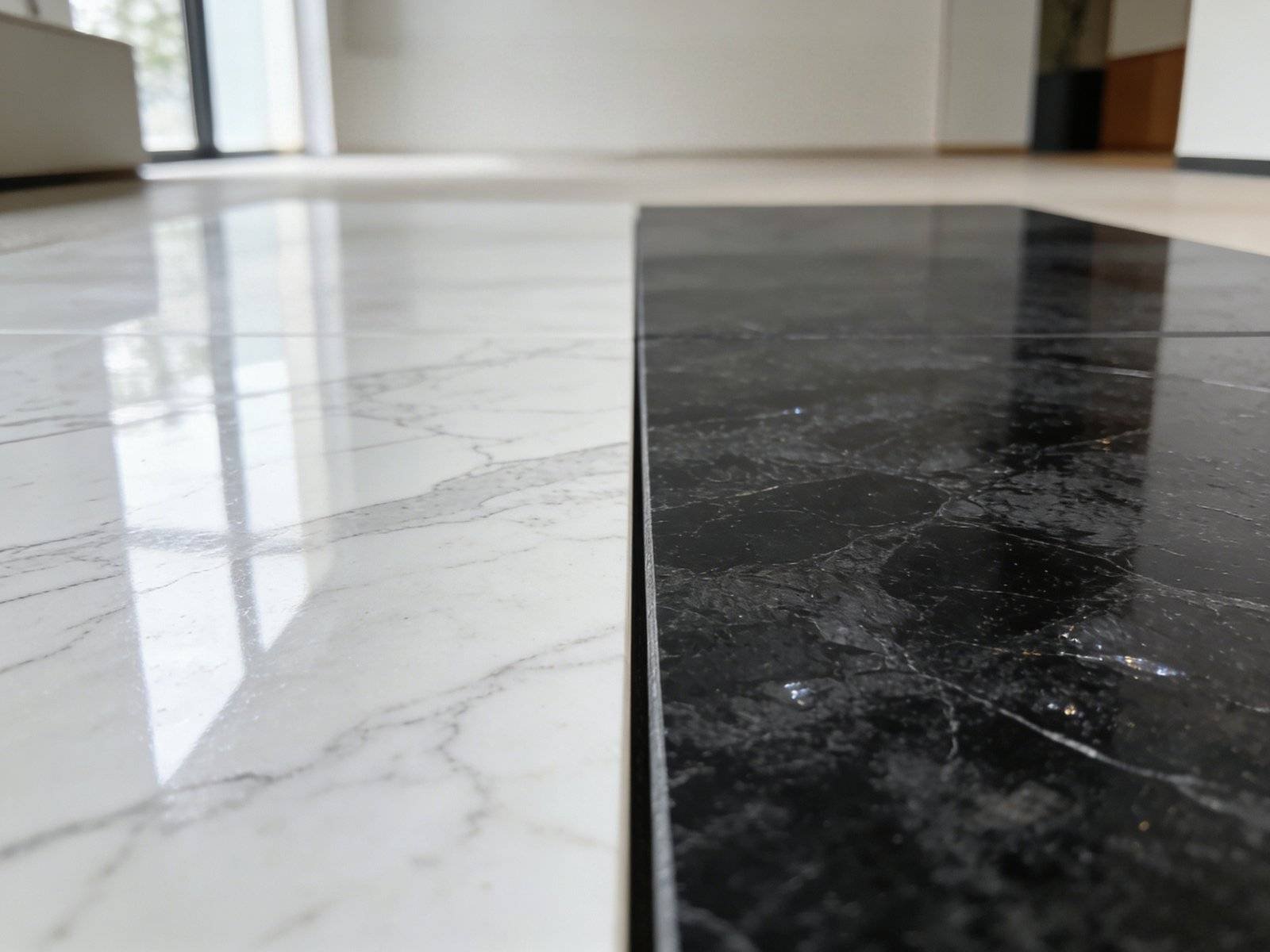
Stone crystallization is a chemical-mechanical polishing process that reacts with calcium-based stone to improve gloss and surface density. Crystal plating is a protective coating process that forms a film on top of the stone. Use crystallization when marble or terrazzo needs gloss recovery; use crystal plating when the priority is short-term stain resistance, visual uniformity or easier daily maintenance.
| Process | Primary effect | Best use case |
| Crystallization | Chemical reaction plus machine polishing | Gloss recovery on marble, terrazzo and calcium-rich stone |
| Crystal plating | Surface film protection | Short-term protection where staining and easy cleaning matter most |
| Combined maintenance | Gloss plus protection planning | Hotels, malls and commercial floors with both appearance and traffic pressure |
For related decisions, see Crystal Shield stone protection, new marble maintenance and crystallization, and professional marble floor maintenance.
Stone crystal plating and crystallization are two core surface protection and beautification processes for stone. Though differing by just one word, they vary significantly in technical principles, protection effects, applicable scenarios—especially for short-term optimization versus long-term protection in stone maintenance. Today, we compare them across 7 key dimensions with real-world application advice, helping you master the differences for smarter future stone care choices.
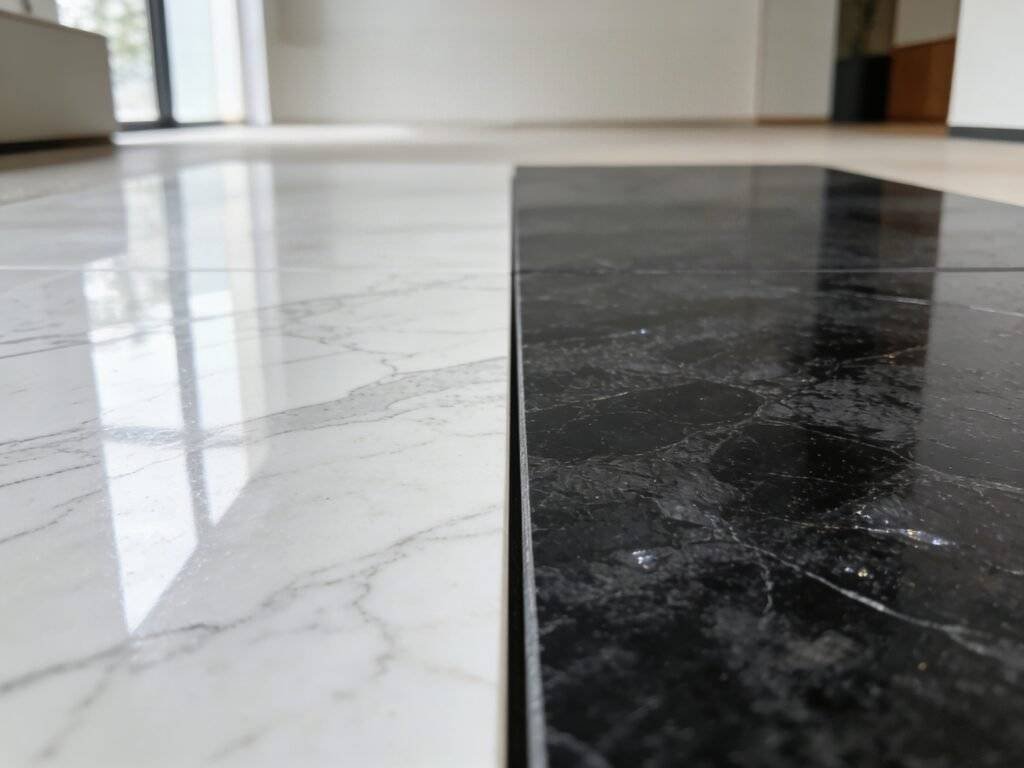
The fundamental difference lies in how each process affects the stone surface:
Crystallization Treatment:
A “physical hardening + surface optimization” process. Specialized crystallizing agents (mainly fluoro silicate and organic acids) react chemically with minerals on stone surfaces (especially carbonate stones like marble and limestone), forming a hard microcrystalline glass layer (typically 5-10μm thick). High-speed polishing machine friction heat fuses this layer with the stone, filling micro-pores and boosting hardness.
In simple terms: Activates the stone’s own surface minerals to create a new hardened layer, without adding extra coverage.
Crystal Plating Treatment:
A “chemical coating + sealing protection” process. Specialized plating agents (mainly nano-silica (SiO₂) and siloxanes) form a transparent, dense polymer protective film on the stone (20-50μm thick). This independent film bonds via chemical keys, acting like “transparent armor” to block external contaminants.
In simple terms: Adds an artificial synthetic protective film on top, focusing on “sealing” rather than hardening the stone itself.
| Comparison Dimension | Crystallization Treatment | Crystal Plating Treatment |
|---|---|---|
| Surface Hardness | Significant boost (marble from Mohs 3-4 to 5-6), strong scratch resistance | Medium film hardness (Mohs 4-5), scratch resistance relies on thickness, inferior to crystallization |
| Protection Ability | Basic: Mild water/stain resistance, can’t block oily/pigment stains (coffee, soy sauce) | Comprehensive: Water-repellent (>110° contact angle), oil/stain/UV resistant (some with UV blockers), blocks stubborn stains |
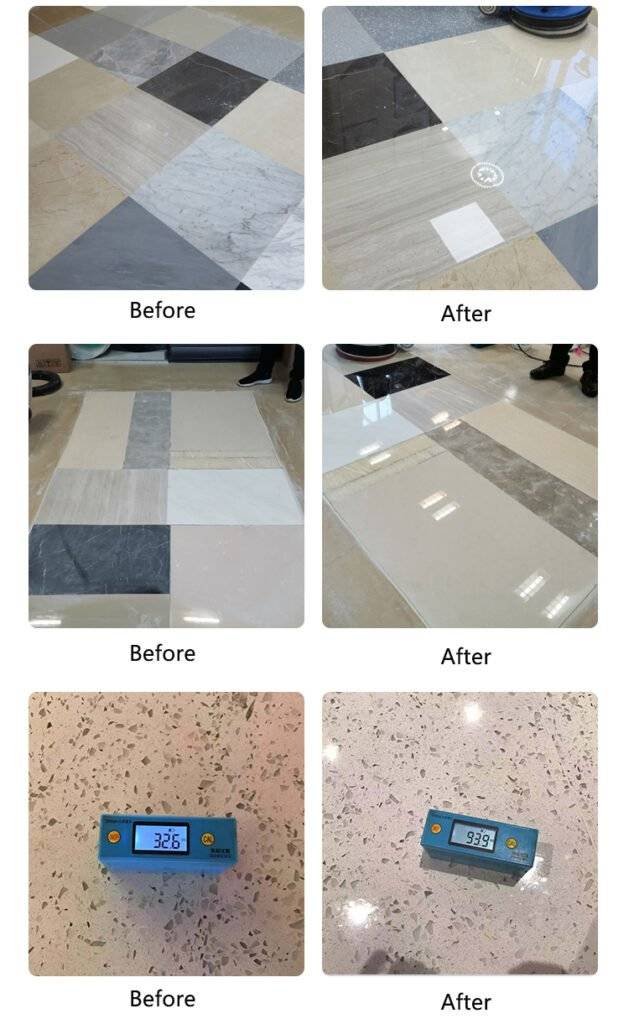
| Gloss Level | High shine (80-90°), natural “stone glow” | Medium (60-80°), “filmy mirror shine,” some feel artificially slick |
| Film Durability | Short-term: 3-6 months indoors dry, 1-3 months high-traffic, needs regular reapplication | Long-term: 1-3 years indoors, 6-12 months outdoors (UV-resistant), 3-10x longer than crystallization |
| Application Difficulty | High: Relies on technician skill, precise polishing speed (1500-2500 RPM), pressure, agent amount—risk of “burning” (yellowing) | Medium: Standardized (clean → dewax → plate → cure), no heat/pressure, beginner-friendly if base is clean |
| Repair Ease | Local wear fixable locally (re-polish), but may show gloss mismatch needing full blend | Local damage requires full strip and re-plate (no spot fixes), high repair cost |
| Applicable Stone Types | Carbonates only (marble, limestone, travertine); silicates like granite react poorly | Universal: Marble, granite, quartz, tiles, microcrystal stone, all stone/tile bases |
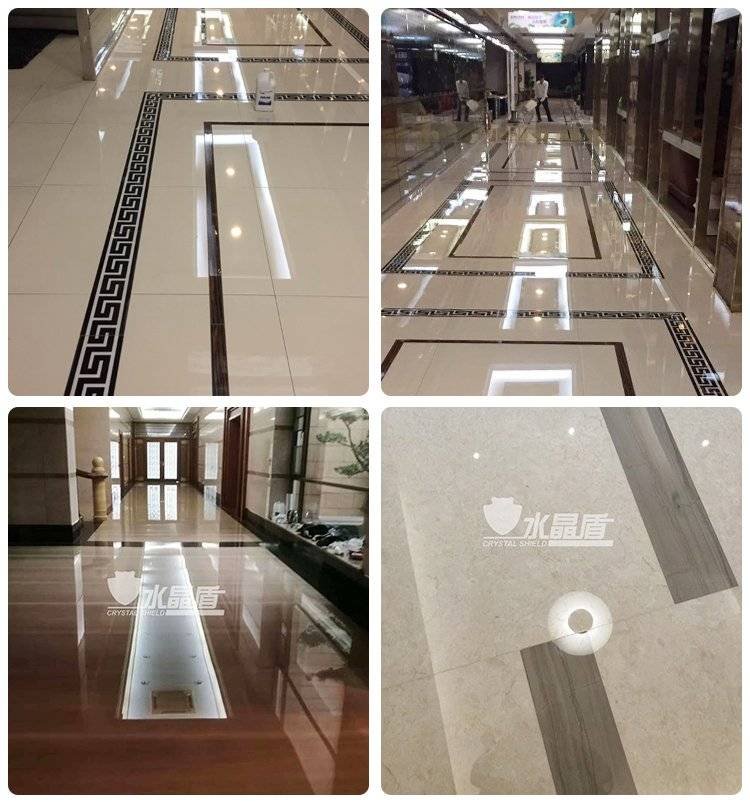
Process differences directly impact timeline, cost, and result consistency:
Key Challenge: Uneven pressure causes inconsistent layer; high speed risks “burning” (yellowing/carbonization).
Key Challenge: Incomplete base cleaning (residual oil/water) causes peeling; uneven application leaves “water marks.”
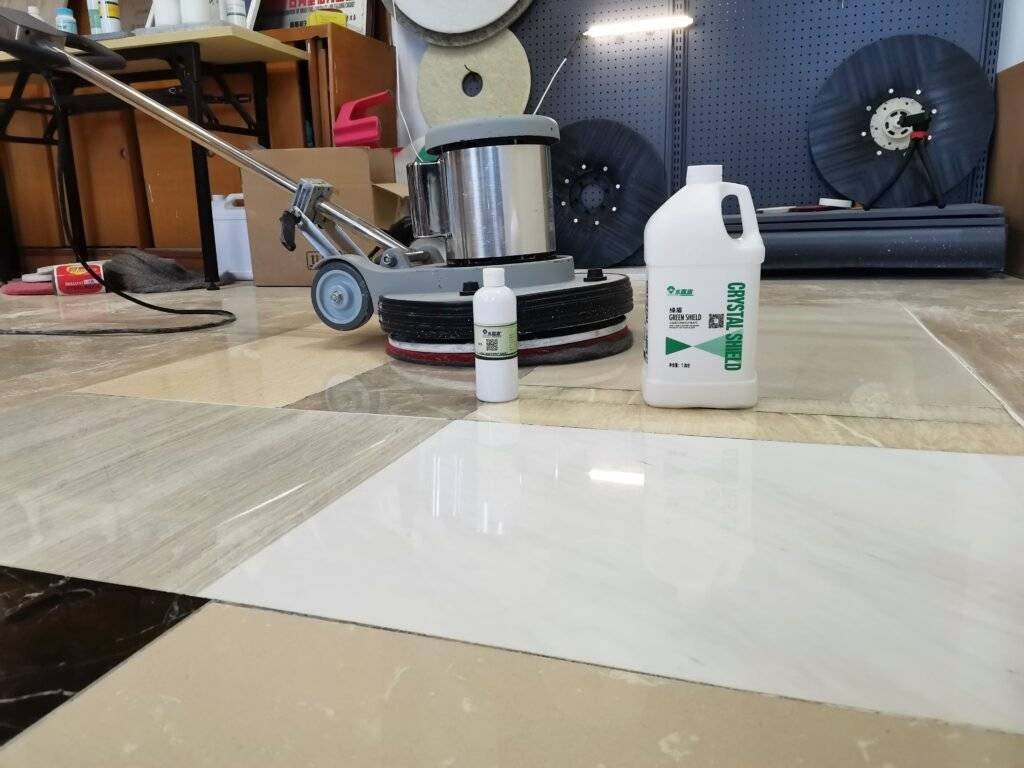
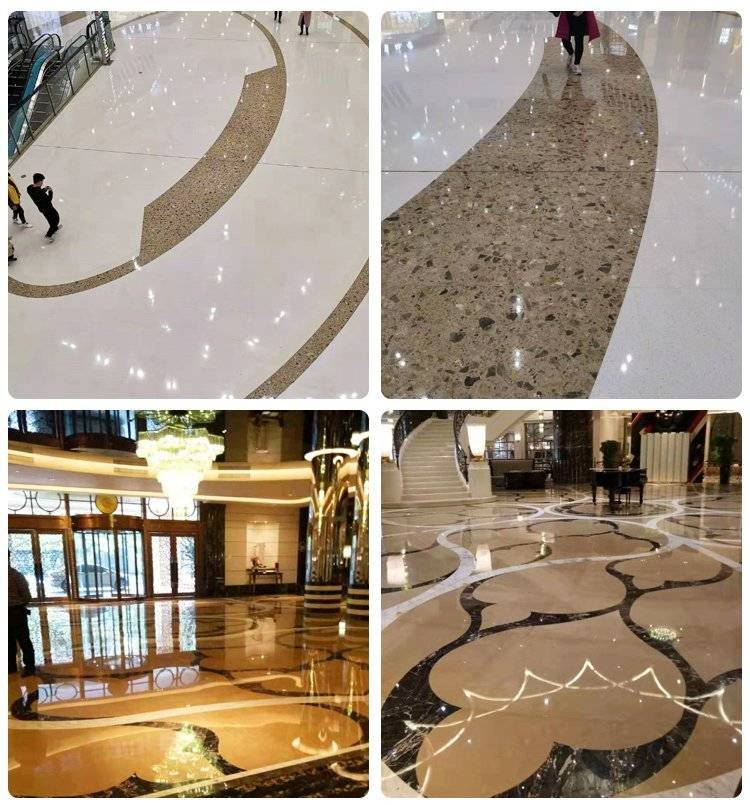
Scenario differences stem from matching “priority needs”:
Typical Scenarios:
Typical Scenarios:
From one-time and lifecycle costs, each has pros/cons:
Crystallization:
Crystal Plating:
Misconception 1: “Crystallization is shinier than plating, so better”
Crystallization shine is the stone’s natural warm glow; plating is filmy mirror gloss (colder/harder). It’s a texture difference, not quality—choose by scenario (hotels: warm shine via crystallization; kitchens: easy-clean via plating).
Misconception 2: “Plating replaces crystallization in one step”
Plating focuses on protection, not hardness boost. For soft marble, damaged plating exposes scratches; do crystallization first for hardness, then plating for seal (“crystallization + plating” combo for high-value stone).
Misconception 3: “Granite can be crystallized”
Crystallizers react with carbonates; granite’s silica (silicate) doesn’t react—forced crystallization dulls/mats it. Granite needs plating only.

Stone crystallization and crystal plating should be compared by stone type, surface condition, traffic, maintenance cycle, and protection goal. A process chosen only for shine can miss the more important question: whether the floor needs gloss recovery, surface hardening support, stain resistance, or a lower-maintenance protection plan.
| Decision factor | Crystallization direction | Crystal plating direction | Evidence to confirm |
|---|---|---|---|
| Stone type and sensitivity | Often considered for marble or calcium-based polished stone when the surface is properly prepared. | Consider when the goal is a protective layer compatible with the stone and use case. | Stone type, finish level, prior chemical history, and hidden test area. |
| Primary goal | Use for controlled gloss recovery or maintenance after the floor is clean and prepared. | Use when protection, easier cleaning, or stain resistance is the main requirement. | Current gloss, stain exposure, traffic, cleaning frequency, and expected maintenance cycle. |
| Surface condition | Requires a consistent prepared surface; deep scratches or contamination need earlier correction. | Requires clean, dry, compatible stone before protection is applied. | Scratch depth, moisture behavior, residue, sealer history, and drying evidence. |
| Operational window | Plan around machine access, pad control, residue removal, and operator consistency. | Plan around surface preparation, application conditions, curing or return-to-service limits. | Work window, ventilation, area closure, operator training, and inspection method. |
For process selection, share stone type, finish condition, traffic level, stain exposure, cleaning routine, machine access, protection history, and desired maintenance cycle. Related guides include marble crystallization powder guidance, Crystal Shield stone protection, and commercial stone floor maintenance.
Stone crystallization vs crystal plating should be selected by stone type, maintenance goal, traffic level, and how much long-term protection the facility needs. GSC queries for marble crystallization powder, marble crystallization chemical, and marble crystallization process show that many readers are still deciding whether the work should be a chemical-mechanical polishing process, a protective surface film, or a combined maintenance plan. Treat crystallization as a gloss-recovery process for suitable calcium-based stone, and treat crystal plating as a film-forming protection step when stain resistance, easier cleaning, and longer service intervals matter more.
| Project condition | Better process direction | Decision check |
|---|---|---|
| Marble or compatible limestone needs fast gloss recovery | Stone crystallization or marble crystallization process | Confirm the stone reacts safely, then control machine speed, pad pressure, slurry cleanup, and haze risk. |
| High-traffic hotel, mall, or commercial lobby needs longer cleaning intervals | Crystal plating for long-term protection | Confirm adhesion, anti-stain needs, slip expectations, and whether the surface film can be maintained without cloudy buildup. |
| Polished stone has uneven scratches, lippage, or deep wear | Grinding, honing, and polishing before either finish step | Do not use crystallization or crystal plating to hide mechanical damage that still needs diamond refinement. |
| Facility wants shine now and lower maintenance cost later | Combined plan after a small test area | Restore the stone first, inspect gloss and absorption, then decide if a protective film improves the service cycle. |
A practical selection path is to identify the stone type first, define the maintenance goal second, and choose the process third. If the goal is short-term high shine on marble, crystallization may be the right operating method. If the goal is long-term protection against staining, traffic soil, and repeated cleaning, crystal plating may be a better fit. If the surface has deep wear, neither process should replace proper grinding, honing, or polishing preparation.
Related planning paths: compare product-level checks in the marble crystallization powder guide, review professional marble floor maintenance for service planning, and use newly installed marble maintenance timing when the floor is still curing or recovering from construction residue.
By Stone Type:
By Usage Scenario:
Conclusion:
Crystallization optimizes surface hardening for short-term shine + durability; crystal plating provides film protection for long-term stain resistance + low upkeep. No absolute winner—match to stone traits and needs.
 English
  Spanish