BIENVENIDO A KINGHOME
Obtenga un presupuesto gratuito
Le responderemos en un plazo de 8 horas

BIENVENIDO A KINGHOME
Le responderemos en un plazo de 8 horas
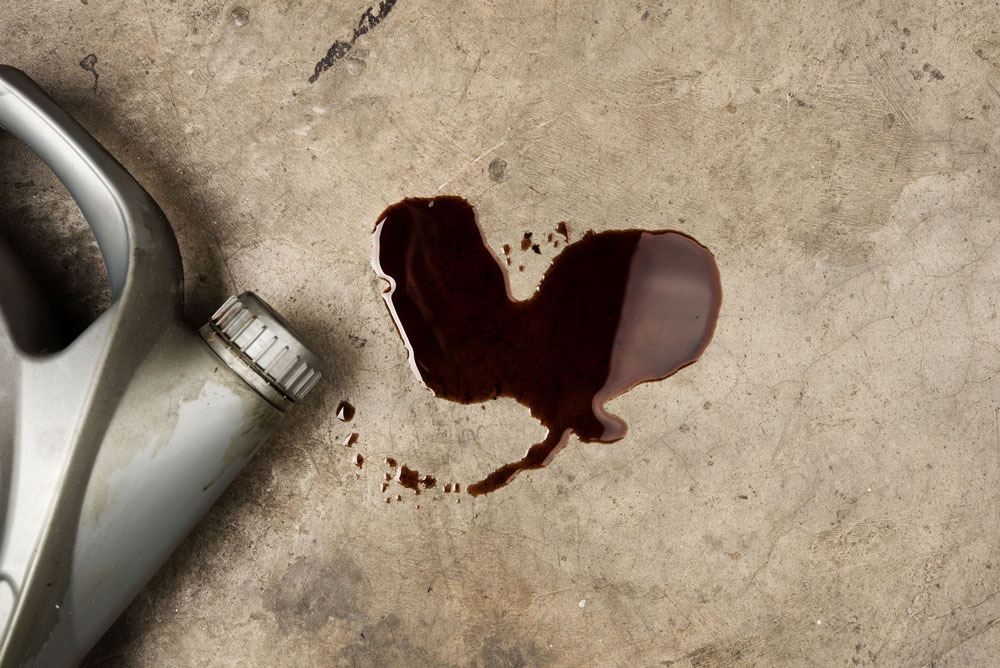
Oil contamination on stone floors is closely linked to daily life. Cooking oil, motor oil, lubricants, and other oil substances can cause oil spots and oil stains on stone surfaces.
Oil contamination on stone floors should be handled by stain stage and stone porosity. Fresh surface oil, absorbed dark patches, repeated kitchen or vehicle exposure, and older residue around grout or joints require different cleaning, drying, and protection decisions.
| Oil condition | Response direction | Verification before next step | Risk to avoid |
|---|---|---|---|
| Fresh surface oil | Contain, lift, and remove residue before it spreads into pores or joints. | Check slip risk, absorbent material used, cleaner compatibility, and recovery method. | Flooding the area and moving oil deeper or wider. |
| Dark absorbed patch | Identify stone porosity and whether poultice-style treatment or repeated controlled cleaning is needed. | Document stain boundary, drying change, prior chemicals, and test-area response. | Sealing the stone before oil migration has stopped. |
| Recurring oil near kitchen, garage, or service zones | Pair cleaning with source control, matting, traffic route review, and maintenance frequency. | Track where oil enters, how often it returns, and whether cleaning residue remains. | Treating the stain without changing the exposure pattern. |
| Oil mixed with detergent haze or old sealer | Separate contamination, residue, and failed protection before choosing a new protection layer. | Review cleaner history, sealer condition, dry-surface clarity, and water behavior. | Layering new chemicals over old residue and making diagnosis harder. |
For troubleshooting, provide stone type, finish, oil source, stain age, cleaner used, drying behavior, sealer history, and photos before and after cleaning. Related pages include outdoor stone protection, Crystal Shield stone protectiony stone floor cleaning mistakes.
Oil contamination on stone floors should be treated as a sequence, not a one-step wipe. Absorb fresh oil first, clean surface grease with a stone-safe alkaline or specialty cleaner, draw out penetrated oil with a poultice-style remover when needed, rinse and dry the floor completely, then apply an anti-oil protective agent if the area is exposed to kitchens, garages, machinery, or adhesive residue again.
| Oil problem | Best treatment direction | KingHome product path |
|---|---|---|
| Fresh cooking oil or light surface grease | Absorb quickly, then clean with a stone-safe deep cleaner before the oil migrates into pores. | Limpiador Profundo de Suelos |
| Motor oil, lubricant, or dark penetrated stain | Use a stronger grease remover and repeat dwell time or poultice application until the shadow fades. | Desengrasante |
| Oil mixed with adhesive, solvent, or construction residue | Break down oily adhesive residue carefully, then rinse and inspect the stone before sealing. | Stone Anti-Glue and Oil Agent |
| Recurring oil exposure on porous marble, granite, terrazzo, or artificial stone | After cleaning and drying, add oil-resistant protection to reduce future absorption. | GT-9000 Agente protector a base de aceite para piedra |
For marble, granite, terrazzo, and porous artificial stone, avoid acidic cleaners and aggressive solvents unless the stone system has been tested. The safest maintenance plan is to match the cleaner to the oil type, confirm the stone has dried after treatment, and protect high-risk areas before stains become permanent.
01 Concepts
Oil contamination on stone is generally divided into two types: oil spots and oil stains.
1. Oil Spots
Vegetable/animal oils or mineral oils penetrate the stone surface and interior, forming visible pollution marks.
2. Oil Stains
After oil spots form, the oil’s strong adsorption attracts dust, soil, and other pollutants from the environment. Through physical and chemical reactions, these create more complex stains.
Note: Oil stains develop from untreated oil spots. Treatment methods are similar but require an extra step to remove surface attachments. This guide focuses on oil spots; extend for oil stains.
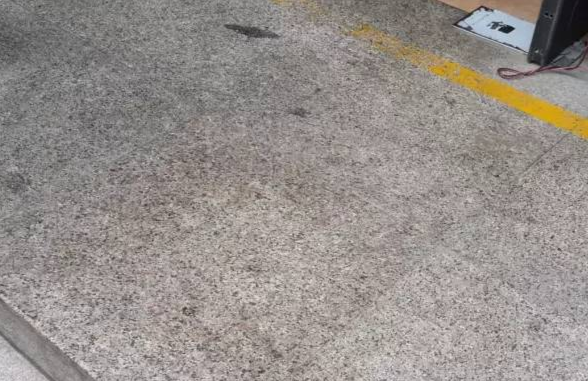
02 Types of Oil Spots
Analyzing common causes from daily scenarios:
1. Vegetable/Animal Oil Contamination
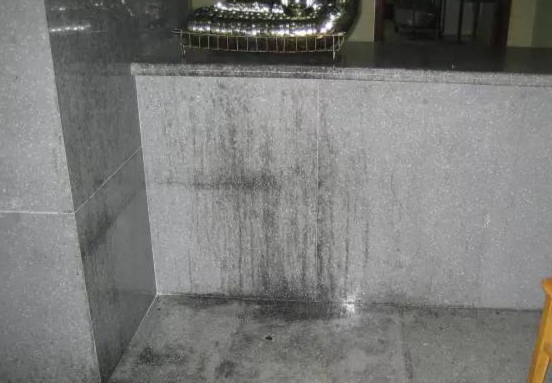
Primarily caused by daily dining activities, this type of stone oil contamination occurs in kitchens, restaurants, and food service corridors where vegetable and animal oils are frequently present, easily forming oil stains.
2. Mineral Oil Contamination
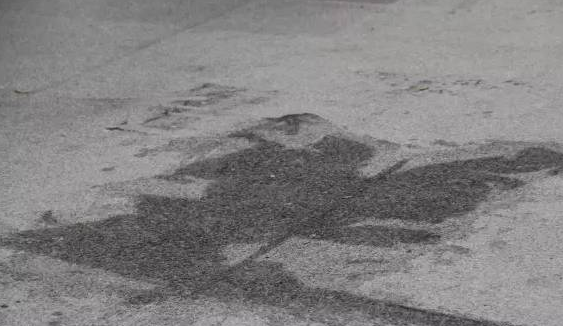
Primarily refers to mineral oils such as motor oil, diesel, kerosene, lubricants, and asphalt that contaminate stone surfaces. This commonly occurs in environments like parking lots, warehouses, and factories.
3. Sealer Factors
Sealer solvent oil contamination is a common but often overlooked cause. Stone sealers are generally composed of “silicone + solvent”.
The solvent is extracted from coal, petroleum, and similar substances. In low-quality sealers, the solvent lacks sufficient purity and contains non-volatile oily components. After application, these can also cause oil spot pollution on stone surfaces.
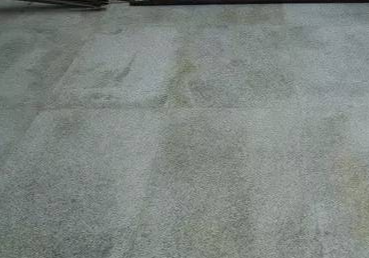
4. Adhesive Oil Contamination
Adhesives such as marble glue, dry-hang glue, and silicone sealant contain glue oil and glue powder components, making them a major factor in stone oil contamination. Types of glue oil pollution include:
① Silicone Sealant (Glass Glue)
Silicone sealant contains resin oil with extremely strong penetration, easily causing oil spots on stone. It is unsuitable for stone applications; avoid using it for bonding or sealing stone joints.
② Inferior Dry-Hang Glue
Low-quality dry-hang glue has poor resin quality that easily contaminates stone. More critically, workers often mix inferior marble glue into dry-hang glue during installation to achieve faster drying. Under the hardener’s action, this accelerates curing. However, this rapid drying prevents complete solidification of the glue oil components, which then seep into the stone, forming oil spot pollution.
③ Marble Glue
Marble glue oil pollution occurs due to:
▸Poor quality marble glue.
▸Improper construction: workers forgetting hardener or using insufficient amounts, greatly extending drying/curing time, allowing glue oil to penetrate stone surface and interior.
▸Low-temperature construction (<5°C), where marble glue curing slows dramatically, causing glue oil pollution.
④ Inferior Sealants
Low-quality sealants contain excessive impurities, easily forming oil spots.
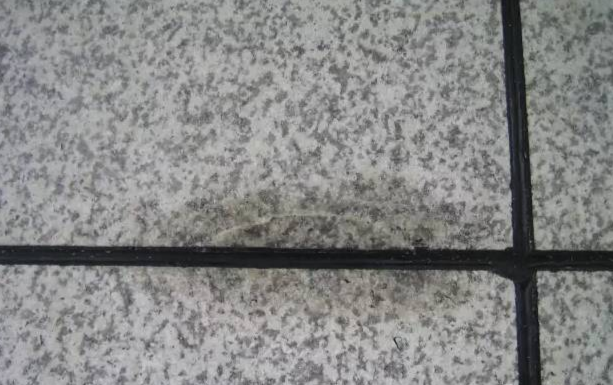
5. Cleaning Agent Misuse
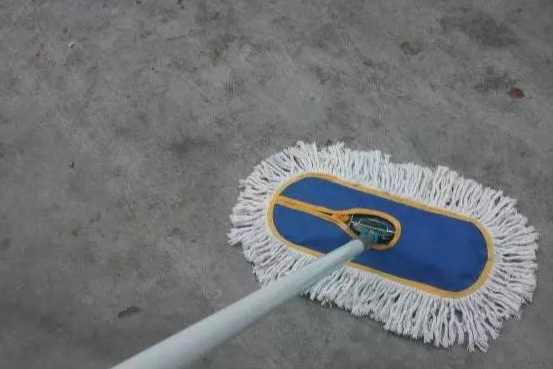
Primarily refers to the improper use of electrostatic dust mop solution, commonly known as dust mop oil, which causes oil spot contamination on stone surfaces. At room temperature, after spraying dust mop oil, it must dry completely for more than 24 hours before use.
If the dust mop oil is not fully absorbed before application, not only will it fail to clean the stone effectively, but it will instead cause dust mop oil contamination.
03 Oil Spot Symptoms
Vegetable and animal oils, mineral oils, and similar substances penetrate the stone surface and interior, affecting the stone’s visual appearance and leading to various problems over time as conditions evolve.
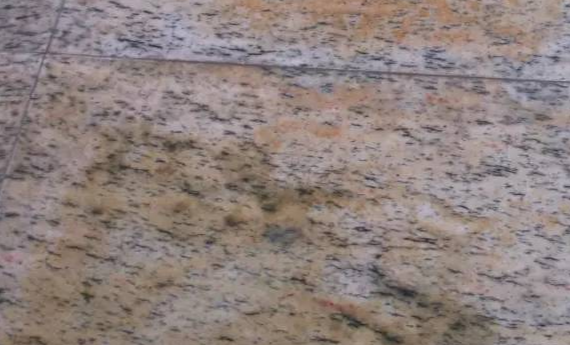
1. Stone Discoloration
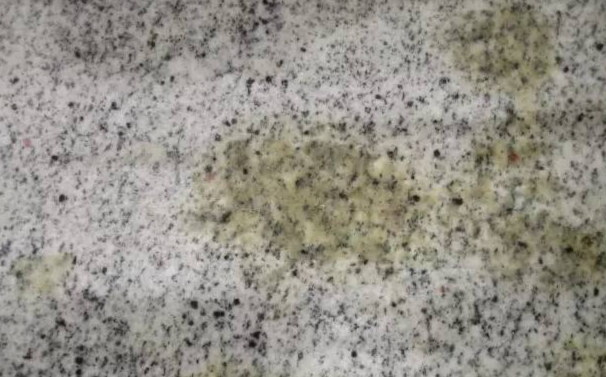
Oil spots from vegetable and animal oils often exhibit yellowing and color changes. The primary reason is that these oils contain abundant fatty acid components. After penetrating the stone, their surface layer reacts chemically with oxygen in the air, producing yellowing and other discoloration effects.
Mineral oils like kerosene and motor oil, which often have inherently dark colors and strong penetration capabilities, cause stone blackening and other color alterations.
2. Stone Damage
Oil spots have strong adsorption properties, absorbing dust from the air, soil from the ground, and various pollutants. Under the influence of air, water, and other conditions, these substances undergo unpredictable changes, forming components harmful to the stone’s material and structure. If left untreated over time, this will cause damage to the stone.
04 Cleaning Methods
Once the type and cause of oil stains are identified, targeted solutions become straightforward. These can be categorized into three main types.
1.Animal/Vegetable Oil Stains
This type of oil stain primarily results from everyday life and is typically found on the stone surface.
Cleaning approach: Use a dedicated degreaser combined with stone cleaners or soapy solutions for surface cleaning.
Related product: Floor Depp Cleaner/ Oil stain cleaner

Serie de limpiadores Ecoclean
Limpiador Profundo de Suelos contiene tensioactivos no iónicos y catiónicos que eliminan eficazmente diversas manchas. Actúa sobre las manchas difíciles -aceite, pintura, manchas de color, nicotina, asfalto, etc.- en suelos duros y caminos, con resultados excepcionales, especialmente sobre las manchas de aceite.
2.Heavy Oil Contamination
Heavy oil stains from mineral oils like engine oil or lubricants have strong penetration and contain significant pigments. These are severe cases requiring more than just degreasing.
The cleaning process involves not only breaking down the oil but also adsorbing and removing the decomposed residues from the stone.
Recommended method: Apply specialized heavy-duty oil removal pastes designed for such contamination, using a poultice application technique.
Related product: Desengrasante

Serie de limpiadores Ecoclean
Desengrasante elimina las manchas de aceite más resistentes y penetrantes en la piedra, incluidas las de aceite de motor, aceite de cocina y aceite sintético. No daña el color de la piedra ni deja residuos, además es fácil de usar y tiene un aroma fresco.
3.Adhesive Oil Contamination
Adhesive oil contamination is one of the most challenging types of oil stains on stone surfaces.
The difficulties include:
①Deep penetration: Adhesive oils from silicone sealants, marble glue, or anchoring adhesives typically penetrate through the entire stone slab thickness, making absorption, penetration, decomposition, and removal of degreasers quite difficult.
②Hard to fully eradicate: For anchoring adhesive stains, the oil seeps from the stone’s back through the slab. As long as residue remains on the back, contamination can recur, preventing complete elimination.
③Operational difficulties: Cleaning requires materials to dwell and penetrate for extended periods. However, stains often appear on floors, walls, or other surfaces where maintaining material contact for absorption is challenging.
Methods and Techniques
①Materials and process: Use oil and adhesive removers along with stone pigment removers, applied via poultice method.
②Multiple applications: Deep contamination means surface brushing only provides temporary relief—deeper oils will resurface. Apply remover repeatedly with patience until fully cleared.
③Temperature control: Maintain temperatures above 20°C for cleaning. Higher temperatures accelerate penetration and reaction between adhesive oils and removers, efficiently extracting residues. Avoid cleaning below 15°C, as low temperatures slow penetration and reduce effectiveness.
-Pro tip for walls: Due to gravity, materials on vertical surfaces drain downward. Extend application 2-3 cm above the stained area to enhance absorption and improve results.
05 Case Study Sharing
★Case 1: Engine Oil Stain Removal
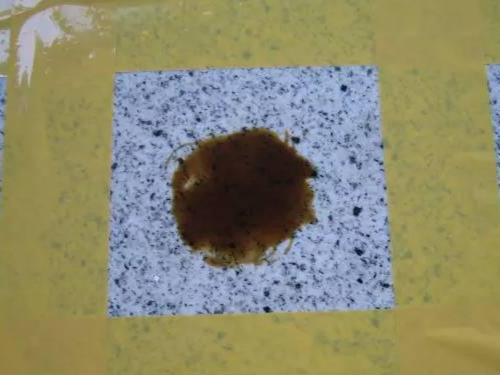
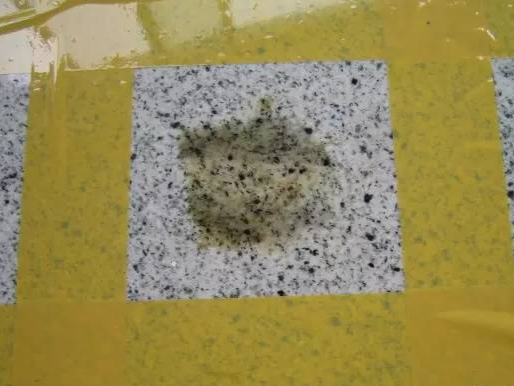
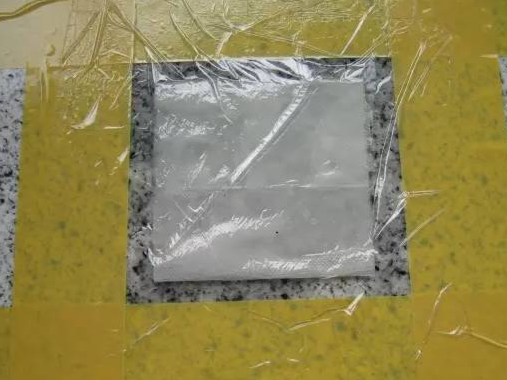
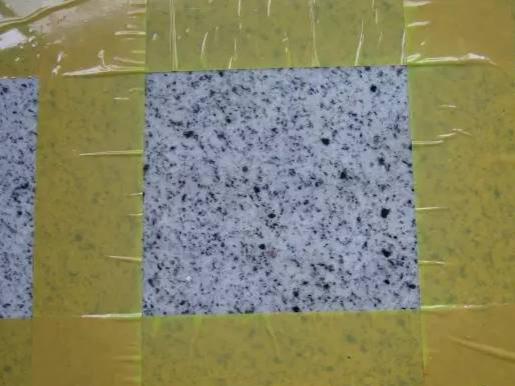
–Stone Type: Shandong White Sesame Polished Granite.
–Cause of Contamination: Oil leakage from fire trucks parked long-term in a fire brigade garage contaminated the stone floor.
–Treatment Materials: Neutral stone cleaner, stone oil & adhesive remover, stone pigment remover, penetrating protective sealer.
–Cleaning Process
1.Wipe surface oil stains from the stone with a cloth.
2.Scrub and clean residual surface oil using neutral stone cleaner.
3.Apply stone oil & adhesive remover using poultice method.
4.After 24 hours, remove covering; repeat poultice if stains persist.
5.For remaining pigment stains, apply stone pigment remover via poultice.
6.Seal with penetrating protective agent.

Serie de limpiadores Ecoclean
Stone Anti-Glue and Oil Agent presenta un material protector nanoescalar de base acuosa. Penetra en los microporos de la superficie de la piedra para formar una capa protectora resistente a los disolventes.
★Case 2:Dry-Hang Adhesive Stain Removal
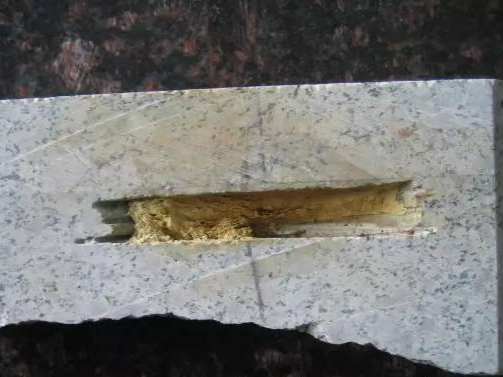
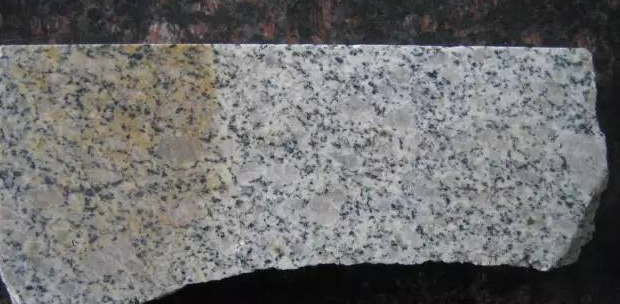
–Stone Type: Pearl Flower Polished Granite.
–Contamination Details: Oily yellow spots appeared around each dry-hang contact point. Upon removal, stains were found to originate from dry-hang adhesive seeping through from the stone’s back surface.
–Treatment Materials: Stone oil & adhesive remover, stone pigment remover, penetrating protective sealer.
–Cleaning Process
1.Cover stained areas with non-woven fabric or paper towels, fully saturating with stone oil & adhesive remover.
2.Cover with soft plastic film and secure with masking tape. After 24 hours, remove the covering.
3.Repeat the process: Fully saturate again with stone oil & adhesive remover, cover with plastic film, secure with tape, and remove after 24 hours.
4.Repeat steps as needed based on stain removal progress.
5.Apply penetrating protective sealer for final protection.

Revontulet Serie Pulido y Cuidado de la Piedra
GT-9000 Agente protector a base de aceite para piedra para piedras naturales/artificiales de alta absorción. Permeable, no amarillea, transpirable, conserva el aspecto. Potencia el color natural, repele las manchas difíciles, previene la eflorescencia y los microbios. Poco olor, seguro, fácil de usar.
 Spanish
  English