BIENVENIDO A KINGHOME
Obtenga un presupuesto gratuito
Le responderemos en un plazo de 8 horas

BIENVENIDO A KINGHOME
Le responderemos en un plazo de 8 horas
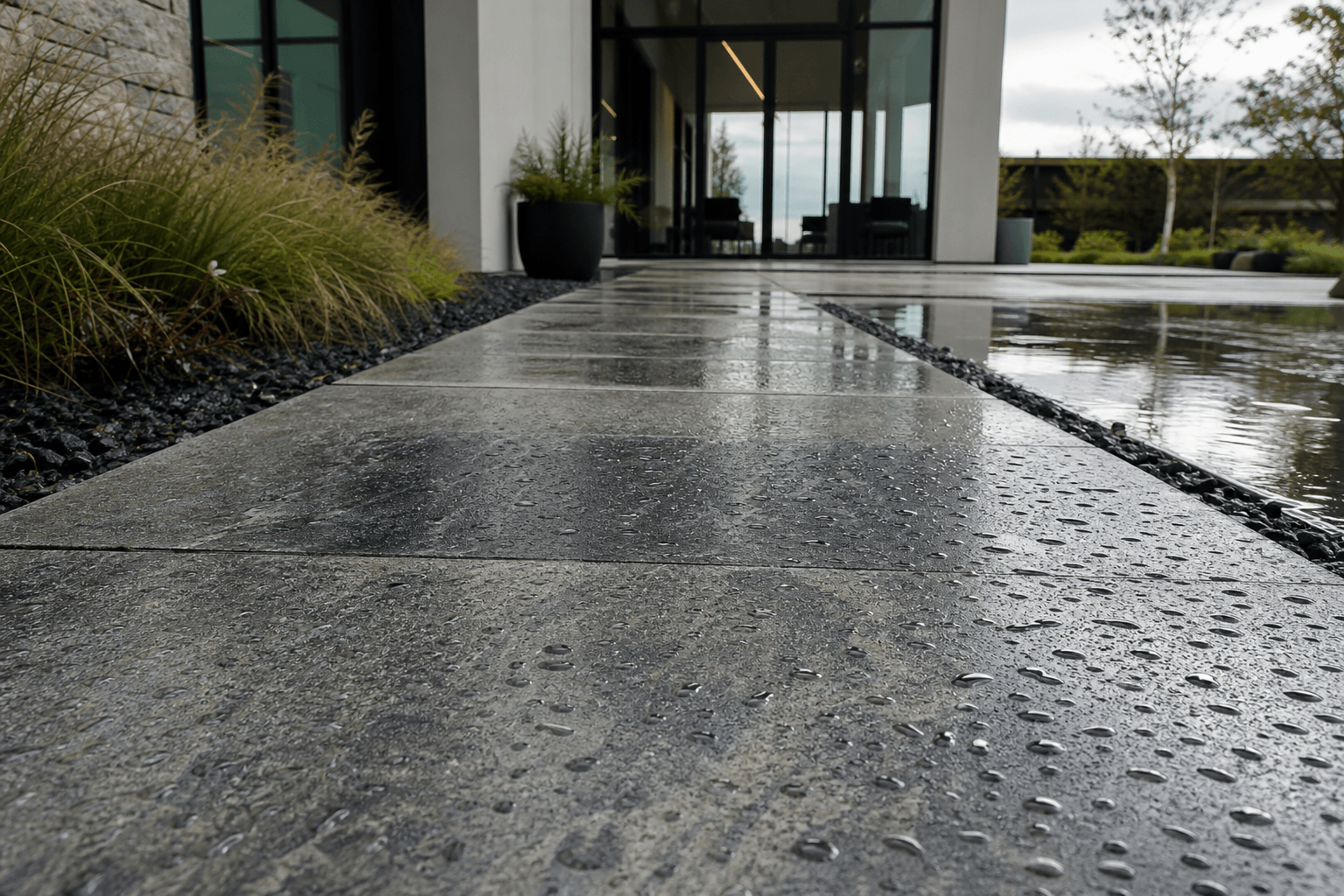
Outdoor stone floor protection requires more than a surface sealer. Exterior stone is exposed to rain, soil, oil, UV light, traffic, drainage problems, and repeated wet-dry cycles. A professional protection plan starts with cleaning, drying, drainage review, moisture control, and a breathable treatment that fits the stone type and exposure level.
Outdoor stone fails differently from indoor stone. A hotel lobby floor may mainly face foot traffic and cleaner residue. A patio, building entrance, terrace, exterior walkway, or loading-zone stone floor must handle weather and contamination at the same time.
This guide explains how to protect outdoor stone floors without trapping moisture or creating slippery, cloudy, or short-lived surface films.
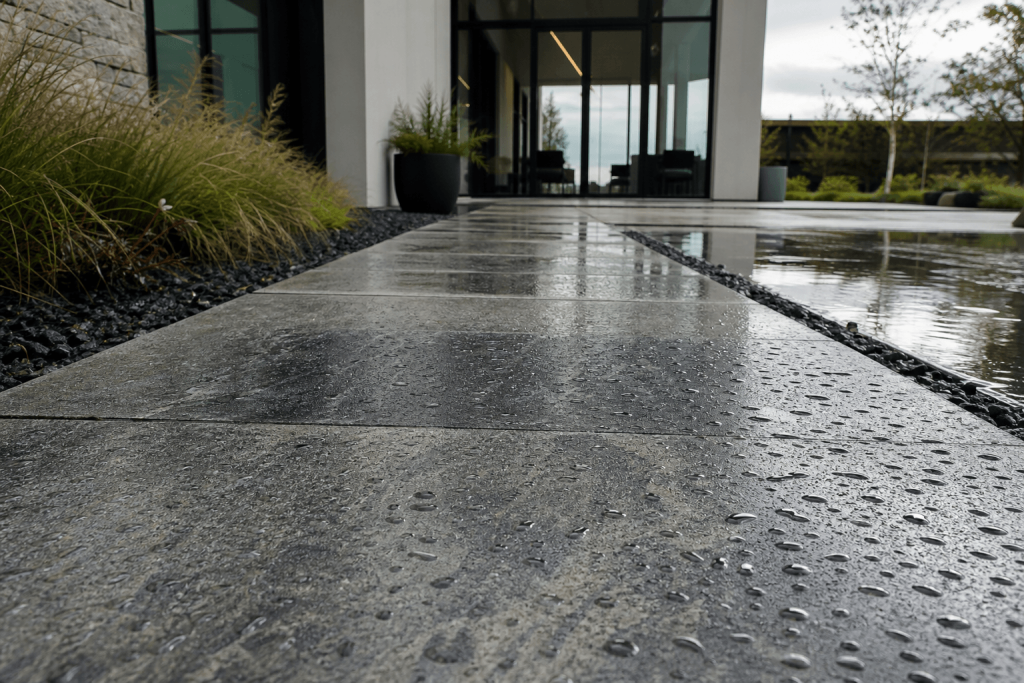
Outdoor stone protection has to manage water from above, moisture from below, and soil from the surrounding environment. It also has to survive cleaning routines, sunlight, and physical abrasion.
Common outdoor stone risks include:
Because the exposure is complex, outdoor stone protection should be planned as a system. Cleaning, joint repair, moisture control, drainage, and product selection all matter.
The same product can behave differently on different stones and finishes. A dense flamed granite does not absorb like a soft sandstone. A honed limestone does not tolerate the same cleaners as a rough exterior granite.
| Stone or Finish | Protection Concern |
|---|---|
| Flamed granite | Soil in texture, oil spots, joint moisture |
| Arenisca | Higher absorption, water staining, dirt retention |
| Limestone | Acid sensitivity, moisture marks, surface wear |
| Slate | Layering, surface variation, water absorption |
| Rough stone | Dirt trapping, uneven product uptake |
| Polished exterior stone | Slip risk, etching risk, visible spotting |
Before treatment, test a small area for darkening, color change, residue, and slip behavior. Outdoor stone often has color variation, so testing is the only reliable way to confirm the visual result.
Waterproofing cannot fix bad drainage. If water sits on the stone after rain, the floor will stay wet longer, absorb more soil, and become more likely to show dark patches or salt movement.
Inspect these details before applying protection:
If drainage is poor, protection may reduce absorption but will not remove the root cause. The best result comes from combining drainage correction with breathable water-repellent treatment.
Outdoor stone is especially prone to efflorescence because it repeatedly gets wet and dries. Water can dissolve salts in the stone system, move them to the surface, and leave white powder after evaporation.
If white powder appears, do not immediately coat the floor. First, dry-remove loose salts and identify the moisture path. For a detailed workflow, read What Causes Stone Efflorescence?.
Anti-efflorescence treatment may be useful when salt movement is a recurring risk. KingHome’s stone anti-efflorescence care agent can be evaluated after inspection and test application.
Outdoor stone near restaurants, driveways, hotels, parking entrances, service corridors, or loading areas often needs oil and stain protection. Rain spreads contaminants, while sunlight and traffic can make stains harder to remove.
Common outdoor contaminants include:
Clean active contamination before applying protection. If oil is already inside the stone, a protective treatment may lock in the appearance rather than solve it. Products such as stone anti-glue and oil agent may be considered where oil and adhesive resistance are part of the specification.
Many outdoor stone floors need breathable protection. The aim is to reduce water absorption while still allowing vapor to escape. This matters because outdoor stone systems may contain moisture even when the surface looks dry.
Use breathable protection when:
For rough exterior stone, rough stone protective shield may be evaluated. For stone exposed to oil and weather, GT-9000 stone oil-based protective agent may be tested depending on the project conditions.
Outdoor stone protection should be selected after exposure, drainage, moisture movement, contamination risk, and slip requirements are understood. A surface that faces rain, oil, freeze-thaw stress, salts, or food spills needs a different protection plan than an interior polished stone floor.
| Outdoor condition | Protection direction | Evidence to collect | Risk to avoid |
|---|---|---|---|
| Rain-exposed walkway or terrace | Prioritize drainage, breathability, and drying behavior before applying protection. | Slope, standing water, drying time, moisture source, and existing sealer history. | Trapping moisture under a layer that cannot tolerate exterior cycling. |
| Efflorescence or white deposits | Diagnose salt and moisture movement before choosing cleaner or protection. | Deposit pattern, weather timing, grout or joint condition, and substrate moisture. | Sealing the surface while salts are still migrating upward. |
| Oil, food, or vehicle contamination | Pair protection with source control, cleaning schedule, and stain response procedure. | Contaminant type, traffic pattern, stone porosity, and current cleaning method. | Relying on protection while routine cleaning redeposits residue. |
| Public or hospitality areas | Balance stain control with texture, drying, and slip-resistance inspection. | Foot traffic, footwear, wet-weather route, cleaning crew access, and inspection owner. | Improving appearance while making wet-area management harder. |
For planning, share stone type, finish, location, rain exposure, drainage, contamination source, cleaning routine, slip concerns, and maintenance window. Related guides include stone efflorescence diagnosis, Crystal Shield stone protectiony stone floor cleaning mistakes.
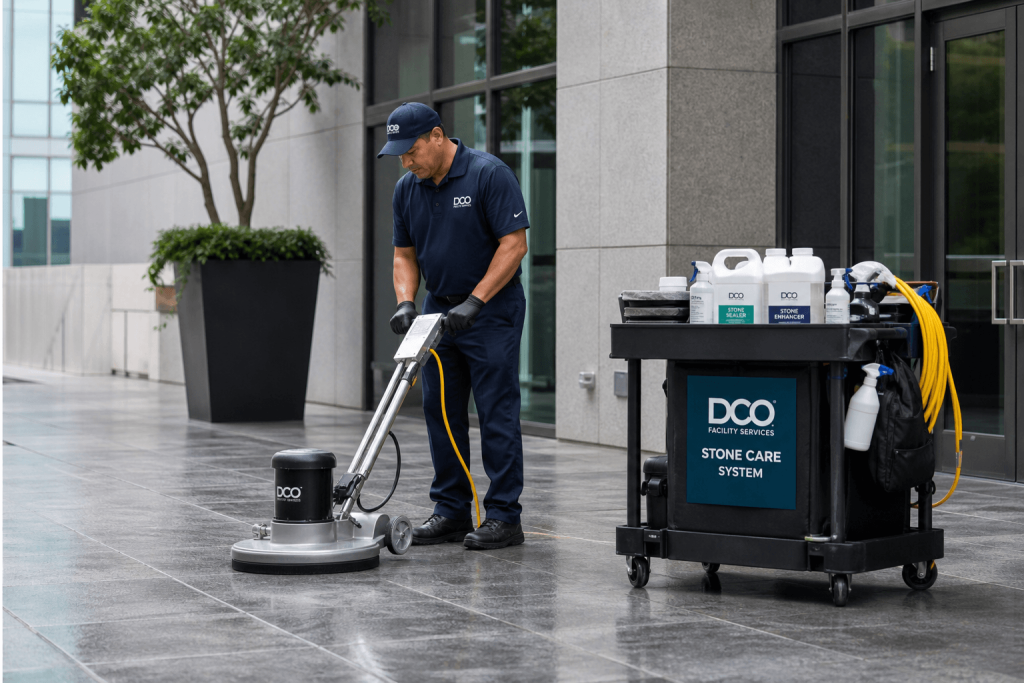
Use this practical workflow before full application.
| Stage | Action | Reason |
|---|---|---|
| Site review | Check drainage, exposure, joints, and traffic | Identify root risks |
| Stone identification | Confirm stone type and finish | Avoid incompatible treatment |
| Dry cleaning | Remove sand, dust, and loose soil | Reduce abrasion and contamination |
| Deep cleaning | Remove oil, organic buildup, and residues | Prepare surface for treatment |
| Drying | Let stone dry to suitable condition | Improve treatment performance |
| Test area | Apply product to small area | Check color, residue, and slip |
| Full treatment | Apply at correct coverage rate | Reduce water and stain absorption |
| Curing | Keep traffic and water off as required | Allow treatment to stabilize |
| Maintenance | Clean with compatible methods | Extend service life |
Skipping cleaning or drying is the most common reason outdoor protection fails.
Outdoor floors often serve entrances, stairs, ramps, patios, and public walkways. Any treatment must be evaluated for slip behavior, especially when wet. A glossy or film-forming product may look attractive but create risk if it changes traction.
Facility teams should test treated areas under expected wet conditions and avoid applying products that leave a slick residue. If the site has strict slip-resistance requirements, use project-specific testing and local standards before approval.
Outdoor stone protection needs ongoing maintenance. The surface is still exposed to soil, water, oil, and traffic.
Recommended maintenance:
Outdoor maintenance teams should evaluate cleaning products for ingredient fit, site handling requirements, and long-term surface compatibility. Where professional chemicals are stored or used, labels, Safety Data Sheets, and worker training should stay aligned with internal compliance procedures.
 Spanish
  English