BIENVENIDO A KINGHOME
Obtenga un presupuesto gratuito
Le responderemos en un plazo de 8 horas

BIENVENIDO A KINGHOME
Le responderemos en un plazo de 8 horas
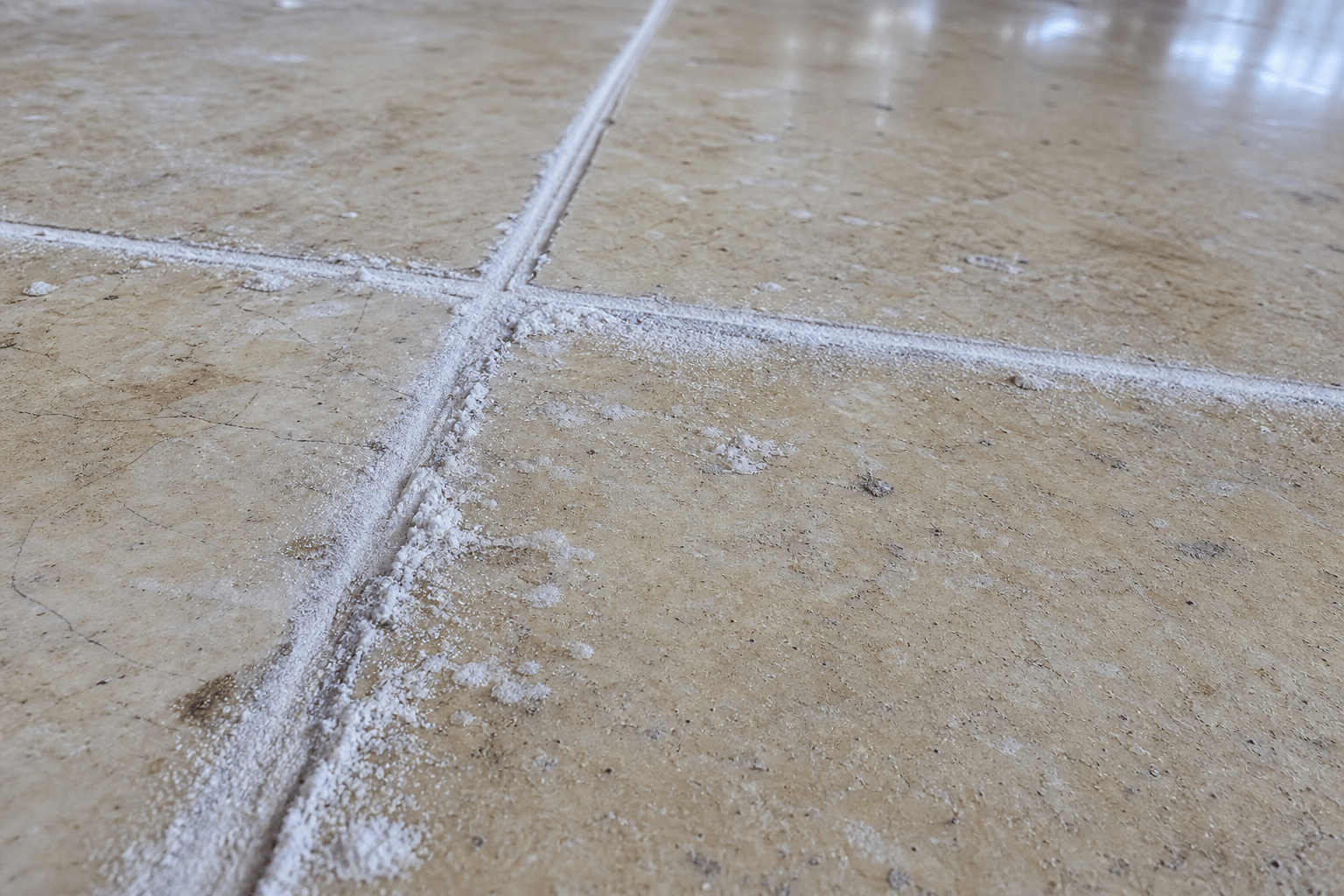
Stone efflorescence happens when moisture moves through stone, grout, mortar, concrete or soil and carries dissolved salts to the surface. When the water evaporates, white powder or white bloom remains. The fix is not simply washing it again; professionals first dry-remove the salts, trace the moisture source, improve drainage or sealing details, and only then apply anti-efflorescence treatment if the substrate is ready.
| Cause | Where it appears | Best first check |
| Moisture from below | Ground floors, exterior paving, damp entrances | Substrate moisture and drainage path |
| Installation salts | New stone, grout lines, mortar beds | Age of installation and curing conditions |
| Residuos de limpieza | Repeated white haze after wet cleaning | Cleaner concentration and rinse process |
Related guides: marble loosening and alkali efflorescence, industrial stone floor cleaningy stone floor cleaning mistakes.
Stone efflorescence is the white powder or white bloom that appears when moisture carries dissolved mineral salts through stone, mortar, grout, or the substrate. As the water evaporates at the surface, the salts remain behind. Professional treatment starts with dry removal and moisture diagnosis, not with more water or a surface coating.
Efflorescence is common on natural stone floors, exterior paving, damp entrances, newly installed slabs, and stone systems exposed to moisture from below. It can appear on marble, granite, limestone, travertine, sandstone, and many cement-based installation systems. The stone itself may not be the only source. Salts can come from the setting bed, grout, concrete, soil, water, or cleaning residues.
This article explains how professionals diagnose efflorescence, what to avoid, and when anti-efflorescence treatment should be part of a broader stone floor protection system.
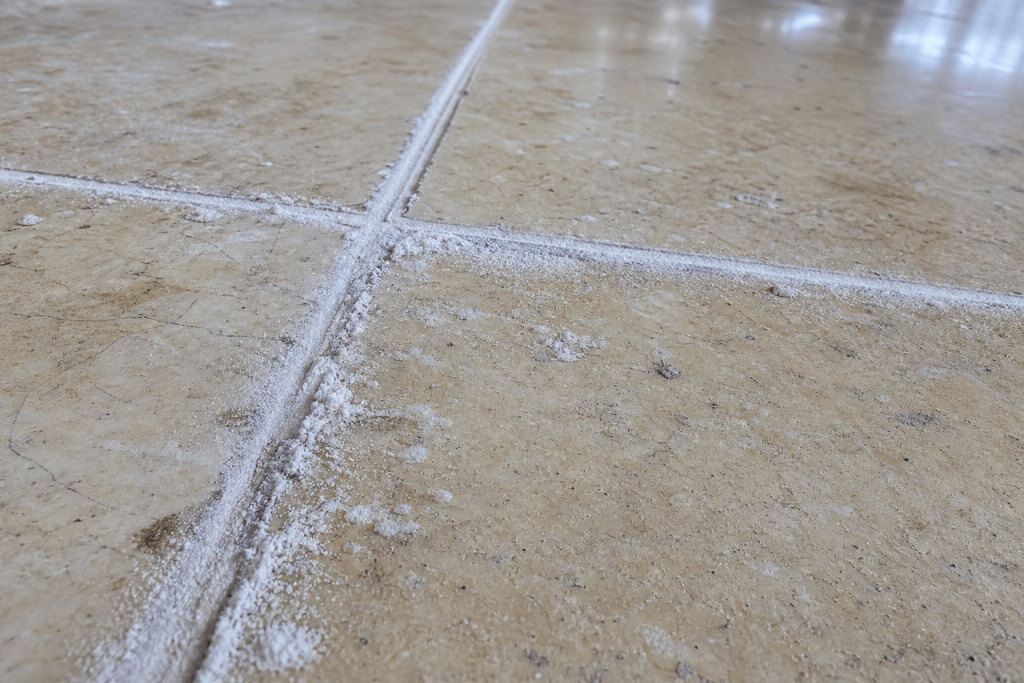
Efflorescence requires three conditions:
If any one of these conditions is removed or controlled, the problem can be reduced. That is why a professional approach focuses on moisture movement and source control.
In practice, efflorescence appears when water carries mineral salts from below the stone surface. When the water evaporates, it leaves the powder behind. Washing the powder away may improve appearance temporarily, but the problem usually returns if the underlying moisture remains active.
That point matters in commercial maintenance. A cleaning team may mop away the white residue every morning, but the floor looks white again the next day. In that case, the team is not removing the cause. It is only resetting the symptom.
Efflorescence often returns because the moisture source has not been identified. The source can be obvious, such as outdoor rain exposure, or hidden, such as moisture trapped in a setting bed.
| Moisture Source | Where It Appears | What to Check |
|---|---|---|
| New installation moisture | Newly installed floors and walls | Drying time, setting bed, grout, ventilation |
| Ground moisture | Ground floors and exterior paving | Vapor movement, substrate, drainage |
| Rain exposure | Outdoor stone and entrances | Slope, joints, cracks, covered areas |
| Wet cleaning | High-frequency maintenance areas | Water volume, drying time, extraction method |
| Plumbing leaks | Restrooms, kitchens, wet areas | Pipe leaks, floor drains, wall bases |
| Condensation | Cold surfaces and humid interiors | HVAC, ventilation, temperature differences |
| Joint failure | Stone edges and grout lines | Open joints, cracked grout, missing sealant |
If the white powder is concentrated at joints, edges, cracks, or slab perimeters, moisture may be moving through those pathways. If the powder is spread evenly across the stone surface, the source may be more general, such as trapped installation moisture or repeated wet cleaning.
Stone efflorescence is a moisture-and-salt symptom, so the first decision is not which cleaner to use. The safer starting point is to identify where water is moving, how salts are reaching the surface, and whether the stone or grout can tolerate the proposed treatment.
| Observed pattern | Diagnostic direction | Evidence to collect | Risk to avoid |
|---|---|---|---|
| Powder returns along grout joints | Investigate moisture movement under tile, grout porosity, or cleaning water trapped in joints. | Pattern photos, recent washing history, drying time, and joint condition. | Only wiping the surface while moisture keeps carrying salts upward. |
| White deposits near exterior edges or entrances | Check rain exposure, drainage, substrate moisture, and deicing or soil contamination. | Weather pattern, slope, drainage route, and where deposits restart after cleaning. | Using a strong treatment before controlling the water source. |
| Efflorescence after installation or repair | Review setting materials, curing, substrate moisture, and washdown process. | Installation timeline, mortar or adhesive history, protection plan, and site humidity. | Sealing too early and trapping moisture under the surface. |
| Acid-sensitive marble or limestone nearby | Separate salt removal from stone compatibility and test before broader treatment. | Stone type, hidden test area, dilution plan, rinse and neutralization method. | Etching calcium-based stone while trying to remove deposits. |
For troubleshooting, provide the stone type, location, deposit pattern, water exposure, cleaning history, installation age, grout or joint condition, and whether deposits return after dry removal. Related pages include industrial stone floor cleaning, stone contamination troubleshootingy outdoor stone protection planning.
The first reaction to white powder is often to wash the floor. That can make the surface look better for a short time, but it may also feed the cycle by adding more water.
Avoid these first-step mistakes:
For marble, limestone, travertine, and other calcium carbonate stones, acidic cleaning can cause etching. The white powder may disappear, but the surface can become dull or damaged.
A practical diagnosis does not need to be complicated, but it must be disciplined.
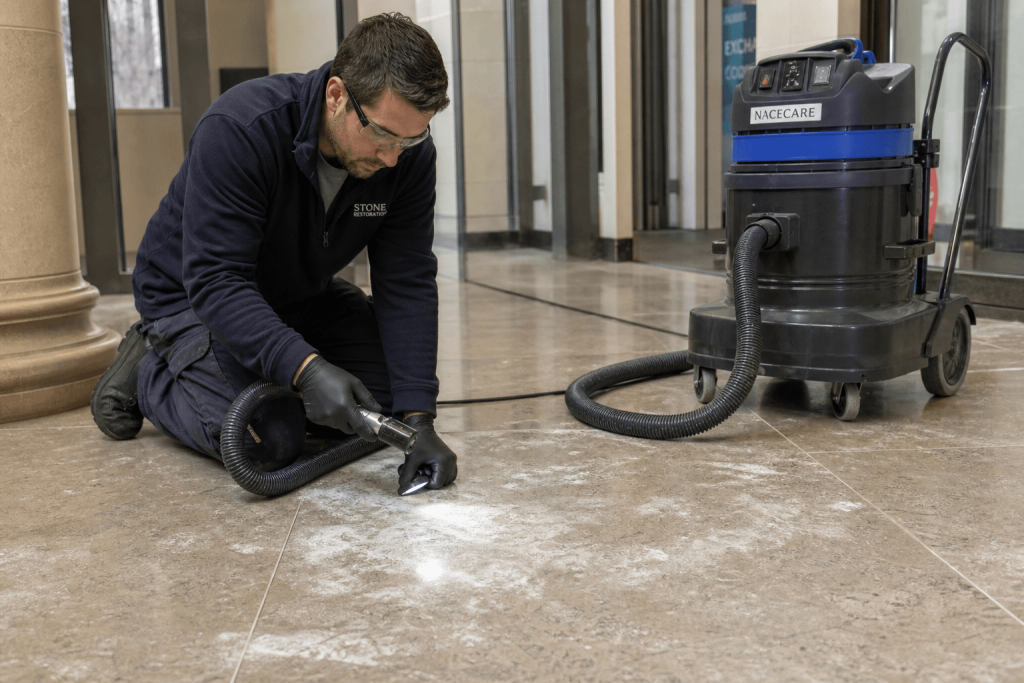
Record where the efflorescence appears:
The pattern often tells the story. Joint-line powder suggests moisture movement through grout or setting materials. Entrance-area powder may indicate rain and drying cycles. Powder under mats may indicate trapped moisture and poor evaporation.
Use dry dust removal, vacuuming, or a non-treated dry mop. Dry removal helps reveal whether new salts continue to migrate. If the powder returns quickly after dry removal, the moisture source is still active.
Review recent installation dates, cleaning procedures, weather exposure, leaks, HVAC conditions, drainage, and substrate history. Where needed, use appropriate moisture testing methods or consult the installer.
Before full treatment, test a small area with the selected cleaner or anti-efflorescence product. Check for color change, residue, darkening, slip change, or surface reaction after the area dries.
If the cause is active leakage, poor drainage, open joints, or trapped water, product treatment alone will not solve the problem. The site condition must be corrected or controlled.
Anti-efflorescence treatment is useful when salts and moisture movement are known risks and the stone system can be treated without trapping moisture. It is especially relevant for:
KingHome’s stone anti-efflorescence care agent can be evaluated for projects where salt migration control is part of the specification. It should be used as part of a system that includes cleaning, drying, site inspection, and maintenance.
Use the following field sequence as a professional starting point. Always adjust to the product label, SDS, stone type, and site conditions.
| Stage | Action | Purpose |
|---|---|---|
| Inspection | Identify pattern, moisture source, and stone type | Avoid treating the wrong cause |
| Dry removal | Vacuum or dust-remove loose powder | Avoid adding water too early |
| Limpieza | Use compatible cleaner only if needed | Remove soil without stone damage |
| Drying | Allow sufficient drying before treatment | Improve penetration and reduce trapping |
| Test area | Apply product in a small area | Confirm compatibility |
| Treatment | Apply anti-efflorescence product as specified | Reduce recurring salt movement |
| Monitoring | Inspect after drying and cleaning cycles | Confirm recurrence control |
Do not rush the drying stage. Moisture trapped below the surface is one of the main reasons treatment fails.
Not every white mark is efflorescence.
| White Mark Type | Apariencia | Likely Cause | Response |
|---|---|---|---|
| Efflorescence | Powdery, often returns after wiping | Salt migration with moisture | Dry remove, diagnose moisture, treat source |
| Etching | Dull, rough, or light spot | Acid damage on calcium stone | Refinish or polish, do not treat as salt |
| Cleaner residue | Hazy film | Overuse or poor rinsing | Remove residue with compatible method |
| Hard water scale | Crusty deposit near wet areas | Mineral deposits from water | Use stone-safe scale approach |
| Coating failure | Peeling, whitening, cloudy film | Trapped moisture or incompatible coating | Remove failed layer and reassess |
Correct identification prevents unnecessary chemical use and protects the stone.
After anti-efflorescence treatment, maintenance should support the protection system.
Professional stone treatment teams should keep hazard information, labels, Safety Data Sheets, and worker training aligned with site chemical-handling procedures.
 Spanish
  English