BIENVENIDO A KINGHOME
Obtenga un presupuesto gratuito
Le responderemos en un plazo de 8 horas

BIENVENIDO A KINGHOME
Le responderemos en un plazo de 8 horas

Floor scrubber replacement brushes come in two main material types—nylon (softer, ideal for polished surfaces) and polypropylene (aggressive, best for textured floors)—and two configurations: disc brushes rotating at 140-300 RPM for general cleaning, and cylindrical brushes spinning at 600-800 RPM for heavy-duty applications. Choose based on your floor type, soil level, and machine compatibility, replacing brushes every 100-200 operating hours or when bristles wear down to ½ inch.
Selecting the right floor scrubber replacement brushes directly impacts cleaning effectiveness, surface protection, and operational costs for commercial facilities. Facility managers overseeing marble lobbies, terrazzo hallways, or industrial concrete floors face different cleaning challenges that require specific brush characteristics. The wrong brush damages delicate stone surfaces or fails to remove embedded soil from textured floors. Selecting the right replacement brushes is essential for maximizing the performance of your equipo profesional de mantenimiento de suelos and ensuring your stone and hard surface restoration delivers consistent results.
This guide addresses the critical decision factors: material composition, brush configuration, compatibility verification, floor type matching, and replacement timing.
The bristle material determines cleaning aggressiveness, surface safety, and brush longevity. Two materials dominate the commercial floor scrubber market, each engineered for distinct applications.
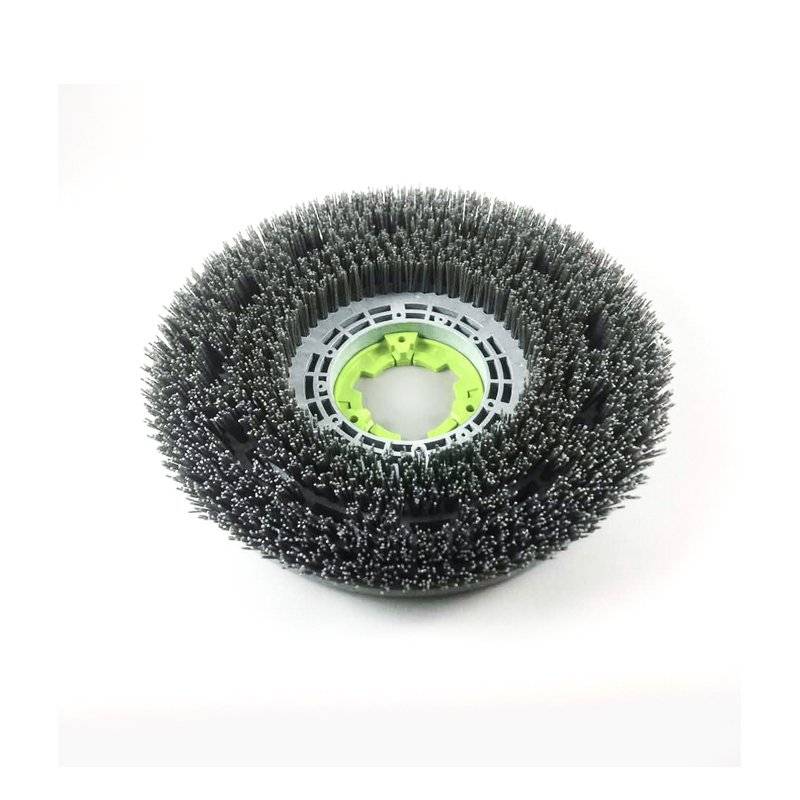
Nylon brushes feature softer, more flexible bristles with superior bend recovery. The material’s inherent flexibility makes nylon the preferred choice for high-gloss finishes found in hospitality lobbies, retail showrooms, and polished stone installations. Nylon brushes excel on marble, terrazzo, polished concrete, and other surfaces where scratch prevention is paramount. The softer bristle structure provides thorough cleaning without compromising surface integrity. Facility managers report nylon brushes lasting 30-60 operating hours longer than polypropylene equivalents on smooth surfaces. The premium material commands higher upfront costs but delivers value through extended replacement intervals and surface protection.
Polypropylene (poly) brushes represent the industry standard, equipped on most floor scrubbers as original equipment. The stiffer bristle structure provides aggressive cleaning power ideal for textured surfaces, grouted tile, unfinished concrete, ceramic, and commercial vinyl flooring. Polypropylene’s rigid composition reaches into grout lines and surface irregularities that softer materials cannot effectively clean. The material offers excellent chemical resistance when paired with alkaline or acidic cleaning solutions, maintaining bristle integrity throughout its service life. Lower material costs make polypropylene the economical choice for high-volume cleaning operations and industrial environments where surface aesthetics are secondary to soil removal.
Material selection depends on four primary factors: floor finish sensitivity, budget allocation, cleaning frequency, and soil characteristics. Light dust and daily maintenance favor nylon’s gentle approach, while heavy grime and infrequent deep cleaning require polypropylene’s aggressive action. Some manufacturers now offer hybrid brushes combining nylon flexibility with polypropylene durability, though these remain specialty products for specific applications.
Brush configuration fundamentally changes cleaning mechanics, water consumption, and application suitability. Understanding these differences prevents mismatched equipment purchases and disappointing cleaning results.
Disc brushes feature flat circular pads rotating at 140-300 RPM beneath the scrubber deck. This configuration applies concentrated downward pressure across a defined circular contact area, making disc brushes highly effective on smooth, flat surfaces. Walk-behind and ride-on scrubbers predominantly use disc configurations due to their simplicity and parts availability. Disc brushes require pad drivers—mounting plates that secure brushes to the machine’s drive system through snap-on, clip, or threaded attachments. The slower rotation speed conserves water and reduces splashing, important considerations for indoor commercial spaces with pedestrian traffic. Disc brushes deliver superior performance on polished concrete, sealed stone, and smooth vinyl where consistent surface contact maximizes cleaning efficiency.
Cylindrical brushes employ horizontal rotating cylinders positioned across the scrubber’s width, spinning at 600-800 RPM. Many industrial scrubbers feature dual counter-rotating cylindrical brushes that simultaneously sweep and scrub, eliminating the pre-sweeping step required with disc configurations. The high rotation speed and brush overlap create aggressive cleaning action that excels in grout cleaning, textured rubber surfaces, and debris-laden warehouse floors. Cylindrical brushes physically lift and capture solid debris—sand, food particles, small metal shavings—into the scrubber’s recovery system. This dual-action capability reduces total cleaning time by 30-40% in environments requiring both sweeping and scrubbing.
| Característica | Disc Brushes | Cylindrical Brushes |
|---|---|---|
| Velocidad de rotación | 140-300 RPM | 600-800 RPM |
| Surface Contact | Circular pressure point | Linear continuous contact |
| Water Usage | Moderado | Higher |
| Mejores aplicaciones | Smooth flat floors | Textured/grouted surfaces |
| Debris Handling | Requires pre-sweeping | Sweeps while scrubbing |
Orbital scrubbers represent a specialized disc variant gaining traction in epoxy floor restoration and stone polishing applications. Orbital brushes oscillate rather than rotate, reducing water consumption by 70% while preventing swirl marks on reflective surfaces. This technology particularly benefits facilities maintaining high-gloss finishes where traditional rotary marks compromise aesthetics.
A replacement brush should be selected from the machine interface and the floor risk, not from bristle material alone. Diameter, drive plate, trim length, bristle stiffness, chemical exposure, and floor finish sensitivity all affect whether the brush cleans correctly without leaving marks or fitting poorly.
| Fit checkpoint | What to verify | Why it matters | Risk to avoid |
|---|---|---|---|
| Machine model and drive interface | Record the scrubber brand, model, brush diameter, clutch plate, and mounting pattern. | Correct physical fit controls brush contact and operator safety. | Ordering by visual similarity and receiving a brush that cannot lock correctly. |
| Bristle material and stiffness | Match nylon, polypropylene, abrasive, or specialty bristles to soil and floor sensitivity. | Brush aggression should solve the soil problem without damaging the surface. | Using a stiff brush on polished stone, coated floors, or soft finishes. |
| Floor texture and grout profile | Check whether the bristle reaches low points, grout lines, and textured safety tile. | Flat pad-like contact may miss soil in low areas. | Increasing chemical strength when the real issue is poor mechanical contact. |
| Replacement timing | Compare bristle wear, uneven trim, vibration, cleaning pattern, and recovery quality. | A worn brush can clean unevenly and increase passes. | Keeping a brush after it has lost useful contact with the floor. |
Before ordering, send photos of the old brush top and side, machine plate, measured diameter, drive detail, floor material, soil source, and cleaner used. Related resources include floor machine brushes, brush material comparisony floor scrubber brush selection.
Compatibility verification prevents costly purchasing mistakes and operational downtime. Floor scrubber brushes lack universal standardization—dimensional and mechanical differences between manufacturers require careful specification matching.
Critical compatibility factors include:
OEM versus aftermarket brushes present a cost-performance tradeoff. Original equipment manufacturer (OEM) brushes guarantee compatibility and maintain warranty compliance but typically cost 40-60% more than aftermarket alternatives. Aftermarket manufacturers produce compatible brushes at lower price points by reverse-engineering OEM specifications. Quality aftermarket suppliers provide detailed compatibility charts matching their brushes to specific equipment models.
To measure existing brushes accurately, place disc brushes flat and measure the outer diameter at the widest point. For cylindrical brushes, measure the overall width and bristle length from the core to bristle tips. Check disc brushes for wear indicators—molded lines showing minimum bristle height before replacement becomes necessary.
When upgrading equipment or purchasing commercial floor scrubbers for demanding environments, verify brush availability and cost before finalizing equipment purchases. Some specialized machines use proprietary brushes with limited aftermarket options and premium pricing.
Floor surface characteristics dictate brush material and configuration requirements. Mismatched brushes compromise cleaning results and risk surface damage.
Hard surfaces including concrete, unpolished stone, and terrazzo demand polypropylene brushes with higher bristle stiffness. The aggressive action removes embedded soil, tire marks, and industrial contaminants that softer materials cannot address. Extremely tough applications—oil-stained concrete, heavy equipment traffic areas—benefit from grit-embedded nylon brushes that combine flexibility with abrasive cleaning power. Facilities maintaining granite and terrazzo floors should pair appropriate brushes with pH-neutral stone cleaners to prevent chemical etching while achieving mechanical soil removal.
Delicate surfaces including marble, polished granite, wood, and laminate require nylon brushes exclusively. The softer bristle structure prevents micro-scratching that dulls high-gloss finishes over time. Hotel facility managers maintaining lobby marble should specify soft-grade nylon brushes and limit machine pressure settings to preserve stone polish. When combined with proper maintenance chemicals and regular burnishing, nylon brushes extend refinishing intervals by 50-75%.
Textured and grouted floors present unique challenges requiring either stiff polypropylene or medium-grade nylon in cylindrical configurations. The brush must reach into grout joints—typically 3-4mm deep—without damaging grout integrity. Cylindrical brushes at 600+ RPM provide the penetration necessary for effective grout cleaning. Commercial kitchens with quarry tile and restaurants with textured slip-resistant flooring achieve optimal results with dual cylindrical polypropylene brushes paired with alkaline degreasers.
Industrial environments including warehouses, manufacturing facilities, and distribution centers require heavy-duty polypropylene in cylindrical configurations. These settings generate metal shavings, cardboard debris, and tracked-in soil that disc brushes cannot effectively remove. Chemical-resistant bristle materials withstand harsh cleaning agents necessary for oil, grease, and industrial contaminant removal. The sweep-and-scrub action eliminates the need for separate sweeping equipment, reducing both labor and equipment costs.
Commercial spaces such as hotels, retail stores, and office buildings benefit from versatile all-purpose nylon brushes. Aesthetic maintenance and quiet operation take precedence over aggressive cleaning power. Nylon disc brushes operating at lower RPM (140-180) minimize noise disruption during business hours while maintaining presentable floors. For facilities servicing mixed flooring—polished stone lobbies transitioning to carpet and tile corridors—maintaining separate brush sets prevents cross-contamination and optimizes cleaning for each surface type.
Browse specialized floor cleaning brushes designed for concrete and stone applications to understand material-specific requirements.
Delayed brush replacement increases operational costs through wasted labor, cleaning chemicals, and potential surface damage. Establishing data-driven replacement schedules optimizes facility maintenance budgets.
Replacement indicators signal when brushes no longer deliver acceptable cleaning performance:
Operating hour guidelines provide baseline replacement intervals. Manufacturers specify brush life at 100-200 operating hours under normal conditions, though actual lifespan varies significantly based on floor type and soil load. High-frequency operations (2-3 times daily) typically require replacement every 1-2 months. Moderate use (once daily) extends replacement intervals to 3 months. Light use (weekly deep cleaning) may achieve 6-12 month brush life. Tracking actual machine hours through onboard monitors or manual logs enables precise replacement forecasting and budget planning.
Performance degradation signs appear before total brush failure:
Cost of delayed replacement extends beyond brush price. Compromised cleaning results create safety hazards through inadequate soil removal on slip-prone surfaces. Worn brushes increase friction, potentially scratching polished stone and terrazzo that cost thousands to refinish. Wasted cleaning solution from ineffective scrubbing directly impacts chemical budgets. Extended cleaning times multiply labor costs as staff make additional passes to achieve acceptable results.
Maintenance tips extend brush life and maximize return on investment:
Floor scrubber replacement brushes require matching material type, configuration, size, and surface characteristics to achieve optimal cleaning results. Nylon brushes protect delicate polished surfaces while polypropylene delivers aggressive cleaning on textured and industrial floors. Disc configurations suit smooth flat surfaces, while cylindrical brushes excel in heavy-duty applications requiring simultaneous sweeping and scrubbing.
Verify exact compatibility specifications before purchasing, measuring brush diameter, attachment mechanism, and center hole dimensions. Replace brushes every 100-200 operating hours or when wear indicators signal reduced performance. Proper brush selection paired with appropriate cleaning chemicals and maintenance schedules protects surface investments while optimizing facility cleanliness and operational efficiency.
 Spanish
  English