BIENVENIDO A KINGHOME
Obtenga un presupuesto gratuito
Le responderemos en un plazo de 8 horas

BIENVENIDO A KINGHOME
Le responderemos en un plazo de 8 horas
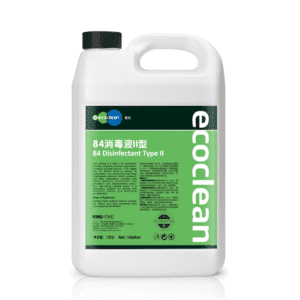
Desinfectante 84 Tipo II: solución de limpieza y desinfección para revisar ingredientes, comparación con lejía, dilución, hipoclorito de sodio, compatibilidad de superficies y ficha técnica.
| Ámbito de aplicación | Cloro disponible (mg/L) | Relación de dilución | Tiempo de contacto (min) | Método de utilización |
| Desinfección general de superficies | 250 | 1:224 | 20 | Limpie, empape, enjuague o rocíe para desinfectar varias superficies de objetos limpios. |
| 500 | 1:112 | 20 | Limpie, empape, enjuague o pulverice para desinfectar diversas superficies de objetos no limpios. Aplicar hasta que la superficie esté húmeda. | |
| Desinfección de frutas y verduras | 200 | 1:280 | 10 | En primer lugar, lave las frutas y verduras y, a continuación, desinféctelas. Aclárelas bien con agua limpia después de la desinfección. |
| Desinfección de tejidos | 250 | 1:224 | 20 | Sumerja completamente el tejido en la solución desinfectante. Aclare a fondo con agua limpia después de la desinfección. |
| Herramientas y equipos para el procesado de alimentos | 500 | 1:112 | 20 | Limpie, empape, enjuague o rocíe para desinfectar varias herramientas y equipos de procesamiento de alimentos limpios. Aclarar a fondo con agua limpia después de la desinfección. |
El Desinfectante 84 Tipo II es un desinfectante a base de hipoclorito de sodio para programas de limpieza profesional. En términos prácticos de compra, se elige cuando un sitio necesita desinfección de superficies y el responsable puede confirmar dilución, compatibilidad, manipulación y almacenamiento antes de aplicarlo.
| GSC search intent | English source answer | Product-side check |
|---|---|---|
| What is 84 disinfectant? | It is a chlorine-based disinfectant using sodium hypochlorite as the active ingredient. | Confirm the available chlorine range, intended surface, and required contact time before use. |
| Ingredients in 84 disinfectant solution | This Type II product lists sodium hypochlorite, available chlorine, linear alkylbenzene sulfonate, betaine surfactant, and supporting components. | Use the technical data sheet when buyers need ingredient, packaging, or compliance details. |
| 84 disinfectant vs bleach | Both are chlorine-based cleaning and disinfection chemistries, but buyers should compare available chlorine, dilution ratio, contact time, and application scope rather than treating every bleach product as interchangeable. | Use the product dilution table for surface, fabric, fruit and vegetable, and food-processing equipment use cases. |
| Where to buy 84 disinfectant | Professional buyers should request pricing by application, volume, destination country, packaging need, and whether the order also needs technical data sheets. | Share the intended use and annual volume so KingHome can confirm the suitable supply path. |
Safe handling should stay part of the purchase decision. The product is for external disinfection use only, should not be ingested, and should be prepared with suitable protective handling. Follow the listed dilution ratio, contact time, rinsing requirement, storage guidance, and the existing precautions on the product page before using it in a facility program.
Rutas de planificación relacionadas: revisar 84 Disinfectant Type II technical data sheet, compare other professional cleaner products, and use the KingHome contact page when the purchasing question is volume, packaging, destination, or documentation.
Precauciones:El Desinfectante 84 Tipo II es una solución de limpieza y desinfección para compradores que necesitan confirmar qué es el desinfectante 84, cómo se compara con la lejía, qué ingredientes deben revisarse y cómo validar la dilución antes de usarlo. En un producto a base de hipoclorito de sodio, la decisión práctica no depende solo del poder de limpieza; también incluye compatibilidad con la superficie, manipulación, almacenamiento y revisión de la ficha técnica para el sitio de uso.
| Comprobación del comprador | Por qué es importante | Qué debes confirmar |
|---|---|---|
| Ingredients and TDS | Searches for ingredients in 84 disinfectant solution usually mean the buyer wants to understand the active chemistry before purchase or use. | Review the TDS, product label, sodium hypochlorite information, concentration guidance, storage notes, and any local handling requirements. |
| 84 disinfectant vs bleach | Buyers often compare 84 disinfectant vs bleach because both may be discussed around chlorine-based cleaning, but product strength and use instructions can differ. | Confirm product type, intended surface, dilution guidance, contact expectations, ventilation, and whether the site requires a specific cleaning protocol. |
| Dilution ratio confirmation | Dilution affects cleaning performance, safety, odor, residue, and surface compatibility. | Check the recommended dilution ratio on the label or TDS, then match it to soil level, surface type, application method, and local safety practice. |
| Surface compatibility and handling | Chlorine-based cleaning solutions can be unsuitable for some metals, fabrics, stone, colored surfaces, or sensitive areas. | Test a small area, avoid mixing with incompatible chemicals, confirm PPE and ventilation, and follow the approved handling process for the facility. |
Elige Desinfectante 84 Tipo II cuando el proyecto requiere una solución de limpieza y desinfección y el comprador puede confirmar ingredientes, dilución, ficha técnica, compatibilidad de superficies y requisitos de manipulación. Para mantenimiento de piedra, pulido, cera o limpieza con máquina, compara la categoría KingHome correspondiente en lugar de tratar la química desinfectante como un limpiador universal.
Rutas de planificación relacionadas: revisar 84 Disinfectant Type II TDS for product details, compare cleaner options for other cleaning needs, browse all products for surface-care categories, and use floor cleaning machine planning when the job requires equipment rather than a chemical cleaning solution.
Relacionado: 84 Disinfectant Type II TDS · Stone care chemicals catalog


 Spanish
  English