WELCOME TO KINGHOME
Get A Free Quote
We will get back to you within 8 hours

WELCOME TO KINGHOME
We will get back to you within 8 hours
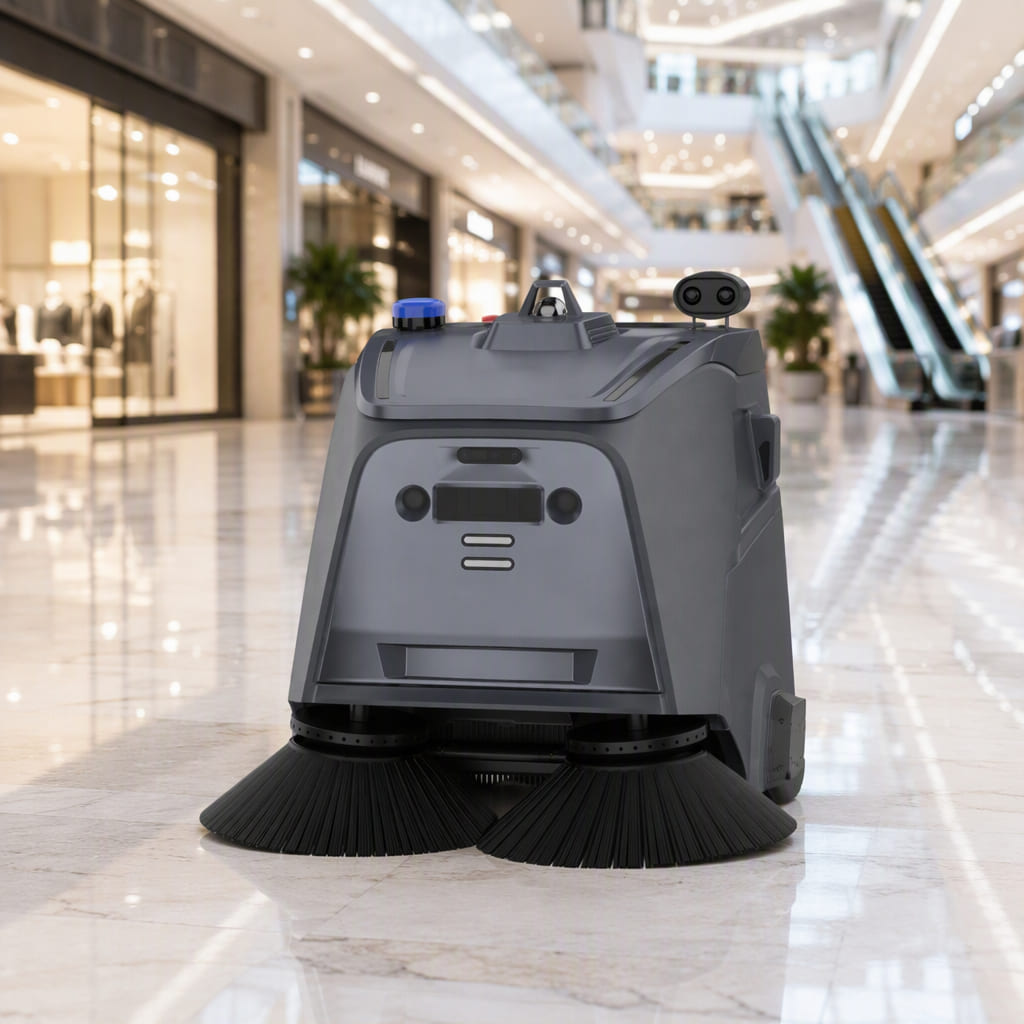
Correct floor scrubber detergent dilution starts with the selected cleaner’s label: confirm what the ratio means, measure the actual batch volume, and verify that the dispensing system delivers the approved dose. A setting marked “1:100” is not enough unless the instructions define whether it means concentrate to water or concentrate to finished solution.
Keep product selection and dosing verification connected. The cleaner must suit the floor, its finish, and the machine at the intended working concentration. An accurately measured mixture is still unsuitable if the chemistry or application method is wrong. KINGHOME’s commercial tile cleaner guidance connects dilution with tile, grout, machine compatibility, and rinsing requirements.
A ratio needs a stated basis. When instructions use equal volume units, these two definitions produce different mixtures:
| Stated definition | What it means | Example |
|---|---|---|
| 1 part concentrate to 100 parts water | Add concentrate to 100 equal parts of water | 100 mL concentrate plus 10 L water produces approximately 10.1 L of solution |
| 1 part concentrate in 100 parts finished solution | Concentrate is one part of the final 100-part volume | Measure 100 mL concentrate and add water to a final volume of 10 L |
Under the first definition, concentrate represents approximately 0.9901% of the finished volume. Under the second, it represents 1%. These percentages describe the volume of the supplied product in the mixture—not its active-ingredient concentration.
The difference becomes more significant with stronger mixtures. Do not infer the convention from a ratio alone, and do not assume a dispenser display uses the same convention as the chemical label. Hydro Systems’ HydroMinder 5111 instructions, for example, explicitly express their calculated ratio as water to concentrate, which reverses the order commonly used in product-to-water instructions.
If the label, technical data sheet, and dosing chart do not clearly agree, ask the supplier to confirm the intended dose in mL per litre of water or mL per litre of finished solution before preparing the batch.
A nominal tank capacity is not a measurement of the water currently inside it. Record whether the operating recipe requires:
These arrangements are not interchangeable. Kärcher’s BD 35/15 C Classic Bp instructions describe detergent dosing by the amount added to the tank. Its B 60 W Bp instructions distinguish models without dosing equipment from the optional DOSE arrangement, which adds detergent on the way to the cleaning head. Follow the manual applicable to the exact machine and configuration.
For equipment comparisons, use KINGHOME’s floor scrubber buying guide alongside the manufacturer’s instructions to assess filling, chemical approval, and operator controls.
The following examples are arithmetic illustrations, not recommended dilutions for any KINGHOME product. Assume an empty, drained tank with a nominal capacity of 50 L, an approved batch size below its permitted fill limit, and volume-based mixing instructions.
| Hypothetical instruction | Batch requirement | Concentrate required | Water or final volume |
|---|---|---|---|
| 1:100 concentrate to water | Start with 40 L of measured water | 400 mL | Approximately 40.4 L finished solution |
| 1:100 concentrate to water | Prepare 40 L of finished solution | Approximately 396 mL | Add water to reach 40 L final volume |
| 1:100 concentrate to finished solution | Prepare 40 L of finished solution | 400 mL | Add water to reach 40 L final volume |
For a concentrate-to-water ratio of (1:x):
[ \text{Concentrate, mL}=\frac{\text{Water, L}\times1{,}000}{x} ]
For a specified final batch volume at the same concentrate-to-water ratio:
[ \text{Concentrate, mL}=\frac{\text{Final solution, L}\times1{,}000}{x+1} ]
If the instructions instead define (1:x) as concentrate to finished solution:
[ \text{Concentrate, mL}=\frac{\text{Final solution, L}\times1{,}000}{x} ]
Use these equations only after confirming the ratio definition and measurement basis. Follow any product-specific mixing or final-volume procedure rather than assuming that all mixtures behave identically.
Do not calculate a full-tank dose and add it to a partly filled tank. If the quantity or concentration of an existing mixture is unknown, do not guess a corrective top-up; obtain the supplier’s correction procedure or replace the mixture using the approved draining and disposal process.
Before handling concentrate, read the product label and safety data sheet for protective equipment, ventilation, splash precautions, and spill response. The SDS supports handling decisions; it does not establish cleaning performance or replace the product’s application instructions.
Verify measuring vessels against a suitable reference measure before relying on improvised markings. Replace vessels with damaged or unreadable graduations, and keep them dedicated or clean them using the chemical supplier’s approved method.
Calibration means comparing actual delivery with the required delivery and making only the adjustments permitted by the equipment manufacturer. Selecting a dial position or fitting a coloured tip does not, by itself, verify the resulting mixture.
For a container-mounted pump that is intended to deliver a fixed quantity per stroke:
For example, if a hypothetical test collects 246 mL from 10 complete strokes, the measured average is 24.6 mL per stroke. That is a test result, not proof that every later stroke will deliver exactly the same amount.
Use the verified output to establish the approved stroke count. If the required dose cannot be measured reliably in whole strokes, use an approved measuring method for the remaining quantity rather than estimating a partial stroke. Investigate inconsistent output before returning the pump to use.
Use the installed proportioner’s own verification procedure. Hydro Systems’ HydroMinder 5111 instruction sheet, Rev. B, September 2010, explains that metering-tip charts are approximate because factors including product viscosity, inlet water pressure, and temperature affect dilution. Its procedure measures both the mixed solution dispensed and the concentrate drawn after priming. These instructions apply to that model, not automatically to every dispenser.
Where the equipment manufacturer permits this type of draw test, use the same volume units for both measurements:
[ \text{Water-to-concentrate ratio}= \frac{\text{Mixed solution collected}-\text{Concentrate drawn}} {\text{Concentrate drawn}} ]
In a hypothetical test, collecting 10.1 L of mixture while drawing 0.100 L of concentrate gives:
[ \frac{10.1-0.100}{0.100}=100 ]
The result is 100 parts water to 1 part concentrate, equivalent to 1:100 concentrate to water—not 1:100 concentrate to finished solution.
Collect and handle test liquids only through the manufacturer’s approved procedure. Compare the result with the required product dilution and the applicable equipment or supplier acceptance limits; do not invent a universal percentage tolerance.
Not every dosing system permits tip changes or access to concentrate. Diversey’s J-Fill system, for example, uses in-cartridge metering. Do not remove, drill, or substitute a cartridge component to force a different dilution. Use the approved cartridge and the supplier’s verification or service procedure.
For on-board injection systems:
A sample from the main tank may not represent the delivered detergent concentration when injection occurs downstream. Kärcher’s B 60 W Bp DOSE arrangement is one example of detergent being added between the fresh-water tank and cleaning head.
A draw test verifies delivery volumes. Testing the concentration of the resulting solution is a separate task.
Use titration, test strips, conductivity, refractometry, or another analytical method only when the chemical supplier confirms that it is suitable for the exact product and working range. Obtain the sampling location, procedure, calibration requirements, and acceptance limits with the method.
Do not treat colour, fragrance, foam height, or a generic pH reading as proof of correct dilution. A pH result is not a universal measure of detergent concentration or floor compatibility. KINGHOME’s stone cleaning and chemical compatibility guidance makes this distinction when discussing solution checks and material selection.
If no validated solution-concentration test is available, document the approved volumetric verification method and its limitations rather than claiming an analytical result.
Maintain a controlled recipe record instead of allowing operators to increase concentration whenever cleaning becomes difficult.
| Task | What the approved recipe should specify | What to check before changing concentration |
|---|---|---|
| Routine maintenance | Exact product, labelled machine-use dilution, floor zone, batch calculation, and rinse requirements | Measuring accuracy, loose-soil removal, brush condition, and recovery |
| Heavier compatible soil | Product-approved heavier-duty dilution and application method | Soil identification, surface compatibility, permitted contact time, and agitation |
| Localised pretreatment | Whether separate application is permitted and how residues must be recovered | Whether the pretreatment is also approved for the machine’s wetted components |
| Rinse pass, where required | Water requirements, machine settings, and recovery procedure | Residual detergent, soil redeposition, and pickup performance |
Each approved recipe should identify the supporting label or technical instructions and their revision where available. Include the ratio definition, actual batch volume, dose, dosing setting or verified pump output, brush or pad, permitted contact time, rinse requirement, and approval record.
Do not copy a tile-degreasing recipe onto polished marble, engineered stone, terrazzo, or coated concrete without separate compatibility confirmation. The complete floor assembly—including grout, resins, sealers, and coatings—matters, not just the exposed tile or stone. Validate the approved method on a representative small area and inspect it after drying before wider use.
When cleaning deteriorates, check the dosing result and the machine before changing the recipe:
Kärcher’s B 60 W Bp troubleshooting instructions separately address insufficient water, detergent delivery, brush wear, and vacuum performance. Increasing detergent concentration does not correct those mechanical faults.
Changing detergent requires more than replacing the container. Residual product can remain in the tank, pickup tube, pump, or delivery line.
Keep the preparation record linked to the product name and code, source-container lot where available, recipe revision, preparation date and time, operator, machine or dispenser ID, and any supplier-specified working-solution use period. Do not assign a universal shelf life to diluted detergent.
| Check | Record or acceptance basis |
|---|---|
| Correct product and current instructions | Product name/code and applicable label or technical document |
| Floor and machine compatibility | Approved application and representative test-area result |
| Ratio definition | Concentrate to water, concentrate to final solution, or explicitly defined percentage |
| Actual batch quantity | Measured water volume or specified final volume—not nominal tank capacity alone |
| Manual dose or pump delivery | Concentrate quantity and verified mL per stroke, where applicable |
| Automatic dispenser | Correct cartridge/tip/setting and manufacturer-approved delivery check |
| Concentration test, if used | Product-approved method, result, and supplier acceptance limits |
| Changeover completed | Required draining, cleaning, flushing, and priming recorded |
| Final operating check | Cleaning, recovery, residue, and dry-surface appearance |
| Release record | Date, operator, machine/batch ID, and required approval |
Set routine verification intervals from the chemical supplier’s instructions, equipment manual, and site quality plan. Include checks after product changes, metering-component replacement, servicing, and unexplained changes in consumption or cleaning results.
For a KINGHOME detergent or equipment enquiry, provide the exact cleaner name, label and technical data sheet, machine model and dosing option, floor material and finish, soil task, water source, intended batch size, and current verification results. Use the KINGHOME enquiry form to request product documentation and confirmation of the applicable dilution and dosing method before issuing the site recipe.
 English
 Spanish