WELCOME TO KINGHOME
Get A Free Quote
We will get back to you within 8 hours

WELCOME TO KINGHOME
We will get back to you within 8 hours

With the continuous development of China’s national economy and the constant enhancement of national economic strength, natural stone flooring is widely used in lobbies, corridors, and other public areas of numerous newly-built large public buildings due to its luxurious decorative features and long-lasting durability, despite its high cost. However, height differences in stone flooring joints remain a persistent quality issue, particularly evident when stone slab sizes exceed 900 mm.
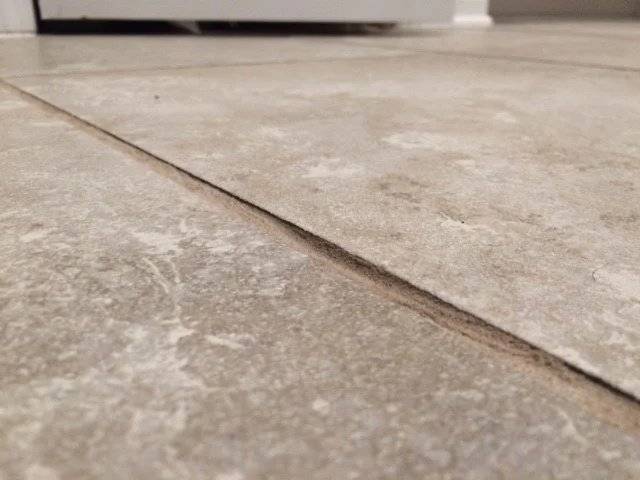
I.Primary reasons for uneven heights in stone flooring joints
1.Inconsistent stone properties
Different stone varieties exhibit significant variations in chemical composition, porosity, water absorption, and other physicochemical properties. Even blocks quarried from the same deposit develop greater internal stress with deeper burial depths. The release of this stress is a slow process; if blocks are quickly processed into slabs post-quarrying, residual stress can cause deformation. Large slabs may also warp during post-processing storage and transportation.
Certain stones, like Big Flower Green, undergo substantial deformation or arching when exposed to moisture. Due to these inherent variabilities, including moisture-induced warping, achieving perfectly flat surfaces on building slabs is unrealistic and beyond current stone processing capabilities.
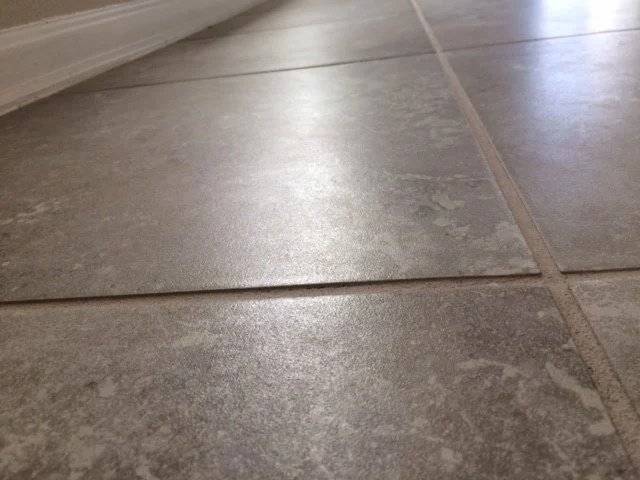
2.Limitations in domestic stone processing machinery precision
While major Chinese stone processors have adopted world-leading CNC multi-head grinders, elevating processing to advanced global standards, these typically use circular disc heads. This results in slightly longer grinding time at slab centers compared to edges, causing minor central concavity. Inhomogeneous stone material also leads to uneven slab thickness during cutting, further impacting grinding flatness.
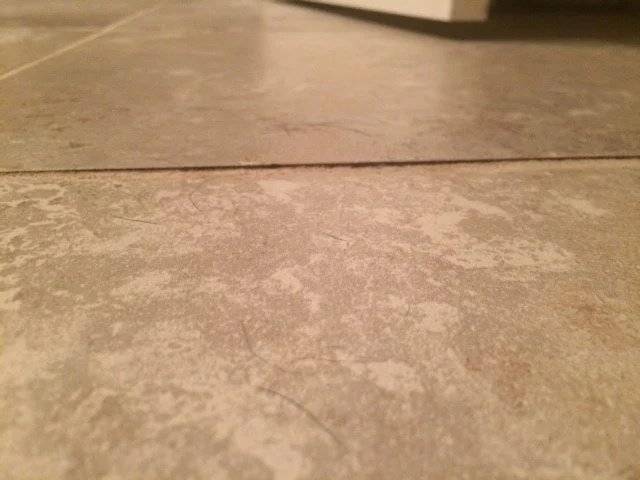
Traditional stone laying techniques struggle to achieve mirror-smooth flooring quality and limit designs using larger slab sizes.
Drawing from advanced domestic and international practices, engineering trials of integral stone floor polishing began in 2001, successfully completing projects like Beijing Oriental Plaza, National Power Dispatch Center Building, and Diaoyutai State Guesthouse Fangfei Court atrium lobby, totaling over 100,000㎡.
Key innovations include refined polishing techniques, flatness control, and on-site sandblasting texturing. Wet grinding requires six-sided stone waterproofing pretreatment to prevent new water stains during polishing.
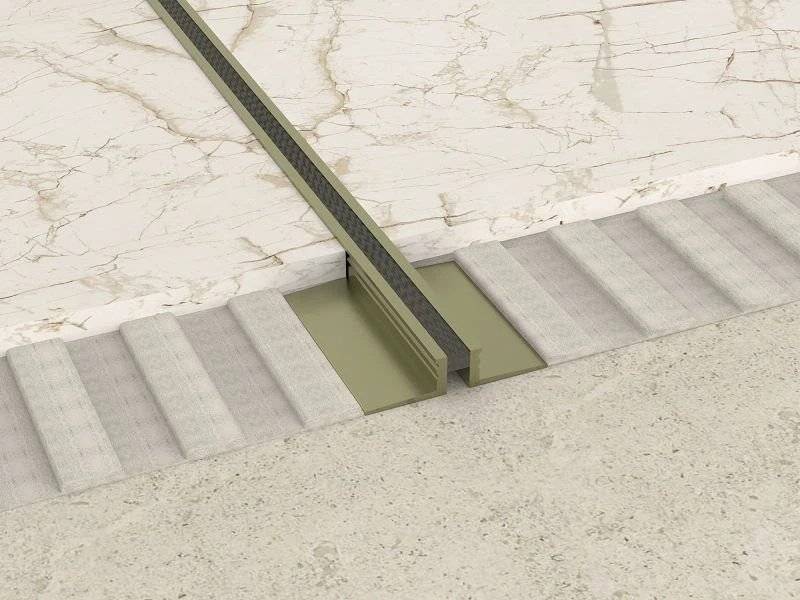
After a year of practice, joint height differences are fully eliminated; 2m straightedge flatness achieves <1mm; polish matches premium factory standards. Preliminary work procedures and quality inspection protocols are drafted, awaiting further refinement.
This on-site polishing process eradicates uneven joint defects, elevates flooring quality, and enables larger slabs without added thickness. Using standard engineering slabs—selected for minimal color variation and matching patterns, roughly polished to spec in-factory, six-sided protected, numbered for installation, then integrally polished—reduces overall project costs.
Stone tile joint height differences should be diagnosed before a grinder, vacuum, bush hammer, or polishing machine is selected. The correction path changes when the issue is installation lippage, slab movement, grout loss, edge chipping, or uneven polishing around joints.
| Lippage or joint signal | Likely direction | Machine or process check | Risk to avoid |
|---|---|---|---|
| Small height difference with intact stone edges | Controlled grinding or honing may be enough after confirming stone thickness and finish target. | Check lippage depth, stone type, grit sequence, dust or slurry control, and edge protection. | Over-grinding a small defect and widening the visual repair area. |
| Chipped edges or weak grout near the joint | Repair, stabilization, or joint treatment may be needed before surface leveling. | Inspect grout condition, edge cracks, hollow sound, and whether movement is active. | Polishing over unstable joints that will reopen or chip again. |
| Large height difference across several tiles | Investigate substrate or installation movement before treating the symptom. | Map affected tiles, slope, hollow areas, moisture, and load history. | Using surface grinding to hide a structural or substrate problem. |
| Uneven gloss after correction | Finish restoration needs to include the field area, edges, and transition zone. | Compare scratch pattern, polishing sequence, crystallization plan, and inspection lighting. | Leaving a flat but visibly patchy repair zone. |
Before choosing equipment, provide lippage depth, stone type, tile size, joint condition, affected area, moisture or hollow-sound evidence, and required finish. Related references include dry vs wet stone grinding, floor grinder selection, and marble crystallization powder guidance.
Height differences in stone tile joints should be diagnosed before choosing a grinder, vacuum, or renovation machine. A small stone tile lippage problem may only need controlled joint grinding and edge refinement, while a larger height change can point to installation movement, hollow tile risk, or a leveling limit that machine polishing cannot safely correct. Start by measuring the height difference, checking whether the edge is marble, granite, terrazzo, or engineered stone, and confirming whether the joint has enough material for wet grinding without chipping.
| Joint condition | Repair direction | Control point before work starts |
|---|---|---|
| Minor lippage on a polished marble or granite floor | Local joint grinding followed by step-by-step polishing | Protect adjacent edges, use wet grinding where possible, and keep the transition wider than the high spot. |
| Repeated height differences across many stone tile joints | Marble and granite floor leveling assessment before polishing | Check substrate movement, hollow sound, joint width, and whether full-floor restoration is safer than spot repair. |
| Chipped edge, cracked corner, or weak joint filler | Repair or refill before aggressive machine work | Do not let a heavy grinder catch the edge; stabilize the joint before polishing pressure is applied. |
| Occupied commercial area or dust-sensitive site | Wet grinding, dust control, and water recovery plan | Match the grinder with vacuum or wet pickup capacity, signage, drying time, and protection for nearby finishes. |
The practical order is inspection, measurement, edge protection, controlled grinding, scratch refinement, final polishing, and cleanup. Machine selection comes after this diagnosis. A stone renovation machine, vacuum, or crystallization machine is only useful when the repair depth, abrasive sequence, dust control method, and finish target are already clear. This keeps a simple joint-height repair from becoming a wider scratch, chip, or gloss mismatch problem.
Related planning paths: use the commercial stone floor maintenance guide when the issue appears during routine care, compare stone floor cleaning machines for recovery and site-control planning, and review industrial floor polishing machines when the project needs broader restoration equipment.
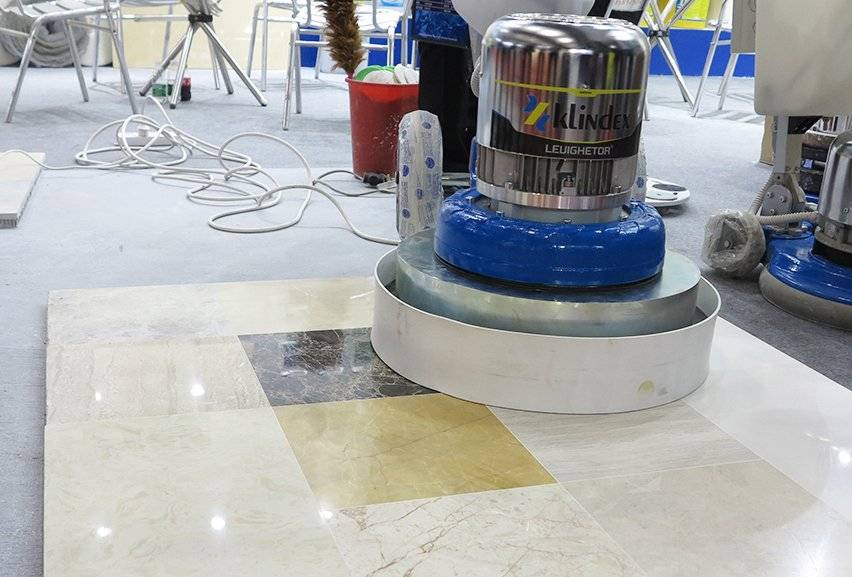
After comparing several international brands, Italian bridge-type grinder series were selected.
Single-head grinder weighs 245 kg empty, 7.5 HP, uses 380V three-phase power, with onboard cooling water tank that stores water while increasing head pressure for higher efficiency and quality. Central dial and bubble level enable precise leveling during operation. Imported grinding blocks; hydraulic jack lifts body for installation/replacement.
Nylon splash guard on head; upper rubber ring prevents wall damage. Select blocks based on flooring quality and stone type, progressing from coarse grind → fine grind → polishing → crystallization.
Granite typically uses 60# → 120# → 220# → 400# → 800# → 1200# → 10LG (polish). Marble: 20# → 220# → 3/4S (coarse polish) → EXTRA (fine polish). Each grit requires 3+ passes; change timing relies on operator experience. Two machines in tandem reduce downtime, boosting productivity.
PATERA T.2000 has 2 heads (doubles efficiency, 10 HP, 310 kg empty). CICALA stair grinder (2 HP, 220V single-phase, 40 kg, 8L tank) for stair polishing/renovation.
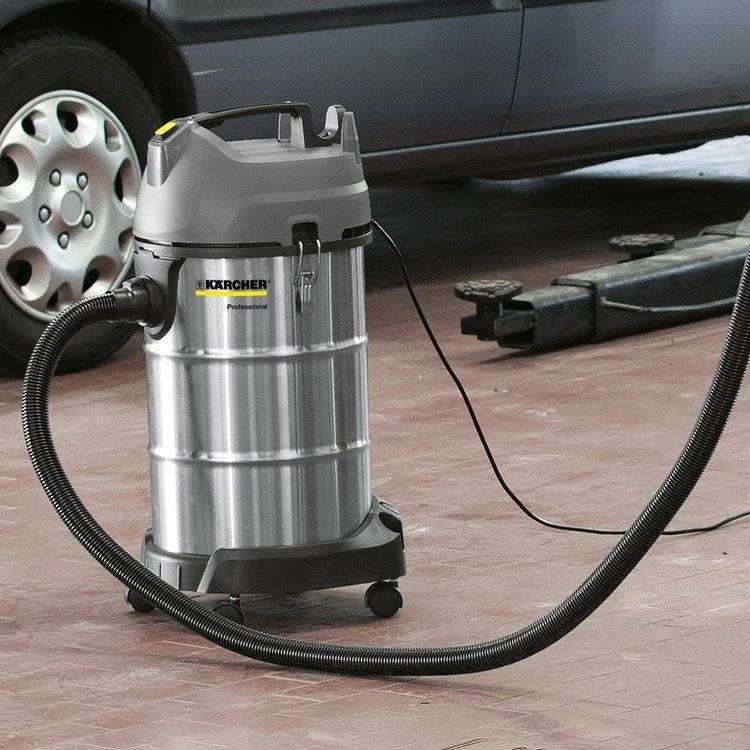
Pairs with grinders to remove cooling water instantly, preventing floor contamination. Ideally, one per two grinders.
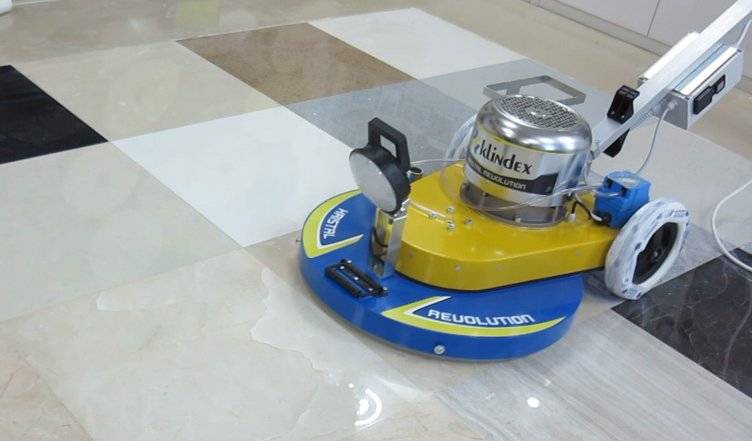
Multi-purpose; fits grinding pads but lower efficiency due to light weight. Primarily for crystallization: uses two agents on clean polished floors; disc with fine steel wool spins at high speed, forming silica crystals under agent action for polishing.
German lightweight 3-head model for texturing mirror-polished surfaces per design. Single-handheld, highly portable.
German dustless model resembles vacuum; dual-layer hose (diamond grit blasts from inner tube, outer recovers it). Select grit size for custom roughness patterns. Used for texturing corners in projects.
① Site survey to assess stone type, patterns, area, and installation quality. Replace any hollows, wide gaps, obvious color differences, or mismatched veins.
② Verify waterproof coating on stones; reapply if needed.
③ Submit construction plan for approval by general contractor and owner.
④ Protect walls, columns, door frames with film (≥500mm height).
⑤ Pre-check flatness with 2m straightedge and feeler gauge; record results.
⑥ Grind inward from center using stone grinders; select grits by stone type, progressing coarse to fine (granite to 800#). Inspectors monitor flatness continuously with 2m ruler and guide workers.
⑦ Repair joints, chips post-grinding.
⑧ Fine grinding and polishing.
⑨ Crystallization treatment.
⑩ Test gloss and flatness; submit acceptance report to supervisor.
⑴ Confirm and test pre-applied waterproofing to avoid contamination.
⑵ Avoid handheld grinders on high joint lips—risks pitting and excess material removal.
⑶ Secure enclosures, especially around wooden doors/baseboards to prevent moisture warping.
⑷ For wide joints, fill and cure 24 hours before grinding.
 English
  Spanish