WELCOME TO KINGHOME
Get A Free Quote
We will get back to you within 8 hours

WELCOME TO KINGHOME
We will get back to you within 8 hours
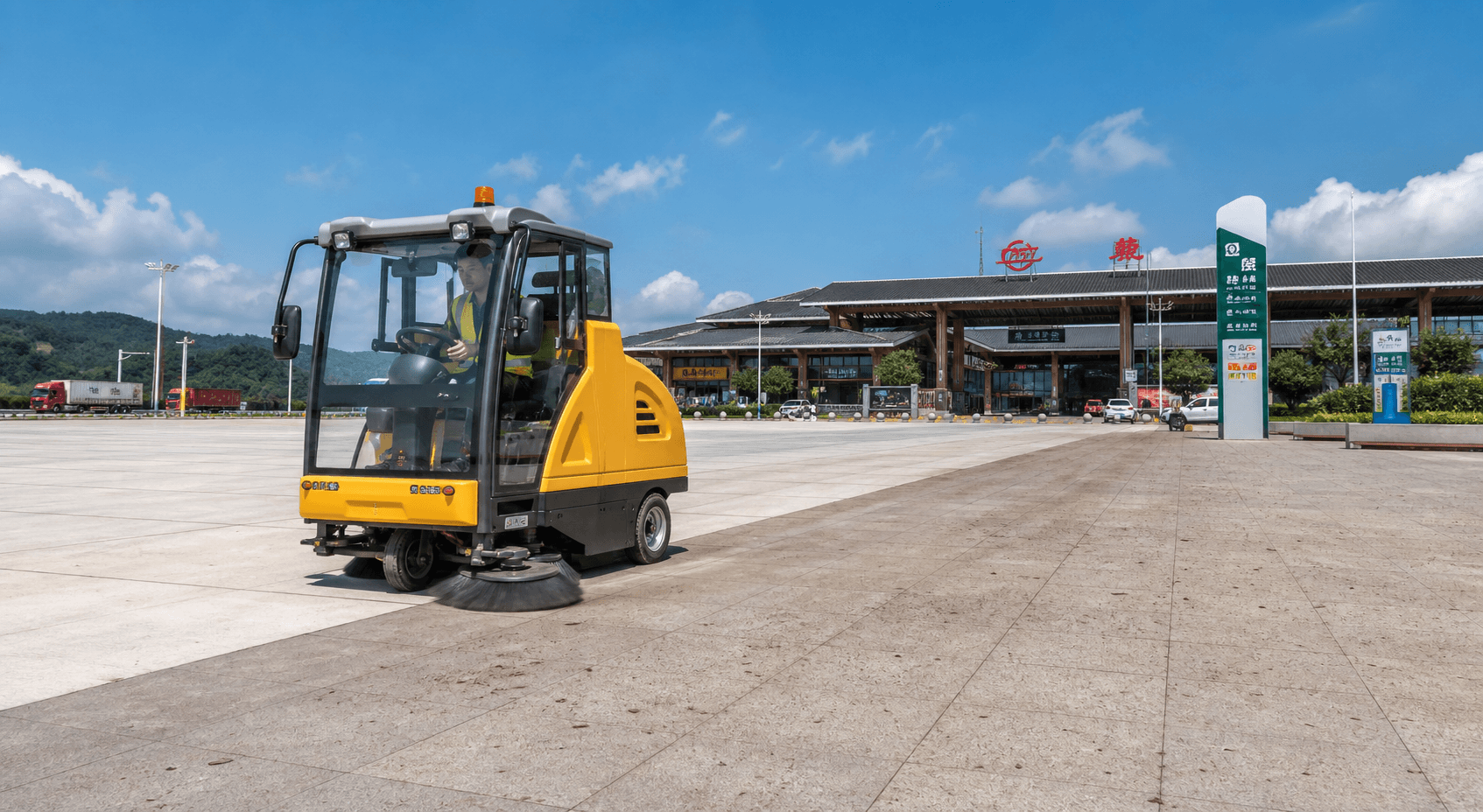
The KM 210/180 is a dry sweeper. No solution tank, no squeegee, no wet chemistry during the sweep pass itself. So why does chemical selection matter?
Because the machine operates in an environment that requires chemistry to stay functional, the surfaces it sweeps often transition directly into zones cleaned with scrubbers and pressure washers that do use chemistry, and the machine itself accumulates biological and chemical contamination that — if not addressed — becomes a source of odour and cross-contamination within weeks.
This guide covers the three places where cleaning chemistry intersects with the KM 210/180 programme: dust suppression during operation, hopper decontamination between shifts, and integration with the wet cleaning equipment that follows the sweep pass.
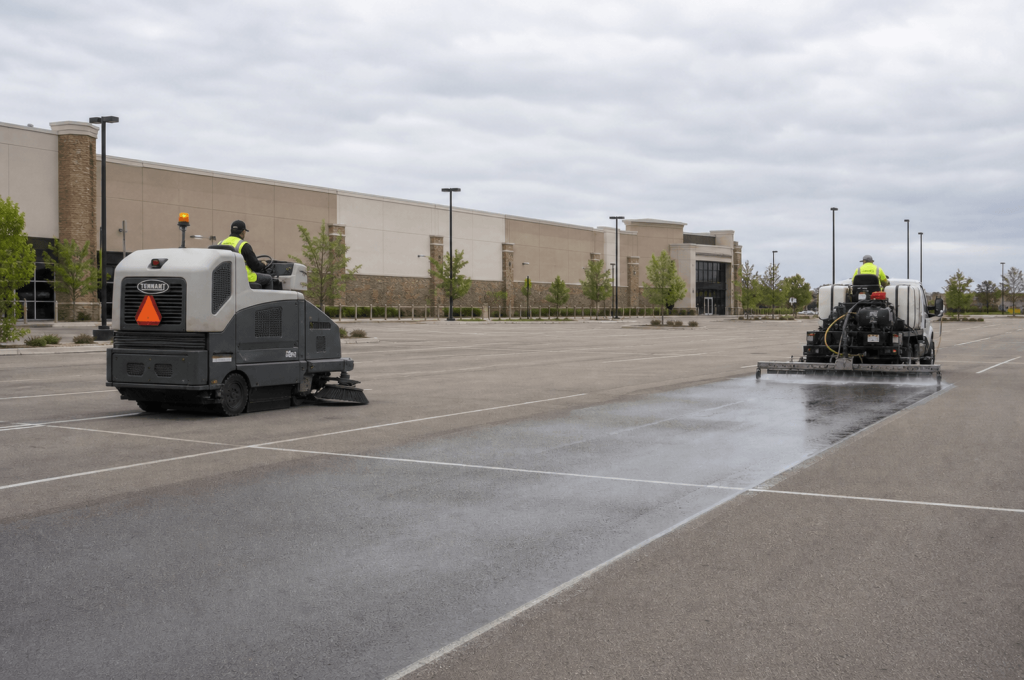
Before getting into the chemistry, one operational point that affects every other equipment’s chemical programme on a large outdoor site: the KM 210/180 sweep pass must happen before the Kärcher BTV 500 pressure wash pass, not after or simultaneously.
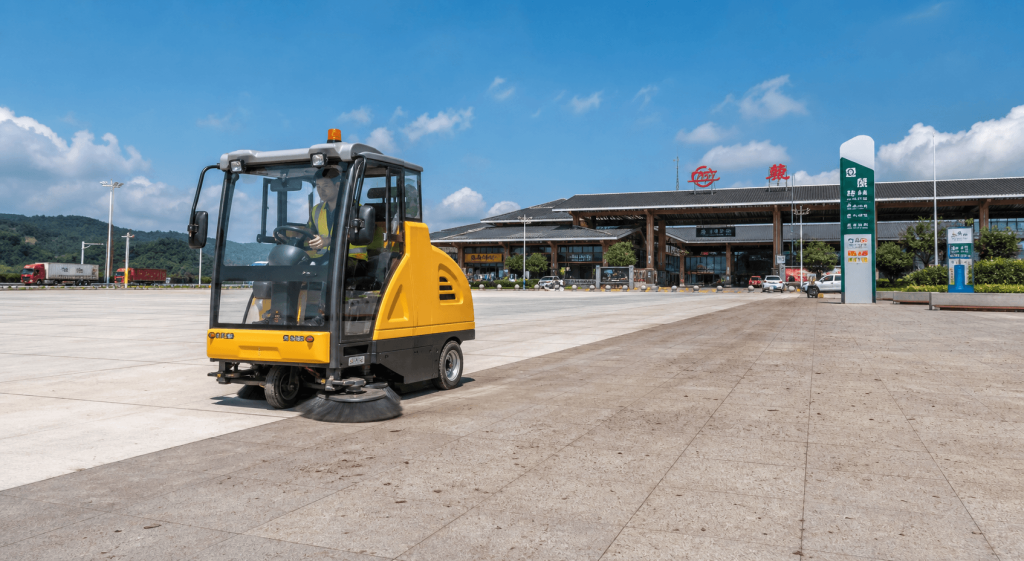
Pressure washing loose dry debris — grit, leaf material, food waste — drives it into surface texture, clogs drainage channels, and overloads the BTV 500’s waste water recovery. The KM 210/180 removes the dry bulk load first; the BTV 500 then addresses the embedded, wet, and organic contamination that sweeping can’t lift. Running them out of sequence costs more chemical, more water, and more time per m² cleaned.
The KM 210/180 has a water spray dust suppression system that mists the sweep path to prevent fine particles from becoming airborne. In dry conditions — low humidity, summer heat, surfaces that haven’t been wet-cleaned recently — this system is the difference between a sweep pass that improves air quality and one that redistributes fine dust at head height.
Plain water works for basic dust suppression. Adding a surfactant to the spray tank improves it significantly: the surfactant lowers the surface tension of each water droplet, increasing the contact area with airborne particulate and improving capture rate by approximately 20–30% versus water alone.
Product: surfactant dust suppressant additive
Dilution: extremely low — 1:500 in the spray water reservoir
At this dilution, there is no visible residue on swept surfaces and no slip hazard. The product must be biodegradable and phosphate-free — runoff from the spray mist contacts open drainage and, in some outdoor environments, unpaved ground.
What not to use: Any foaming cleaner in the spray tank. Even trace foam deposited on a swept surface creates a progressive soil-attracting film and can cause slip hazard on hard paving. If you don’t have a purpose-formulated dust suppression additive, run plain water — it’s a better choice than an unsuitable substitute.
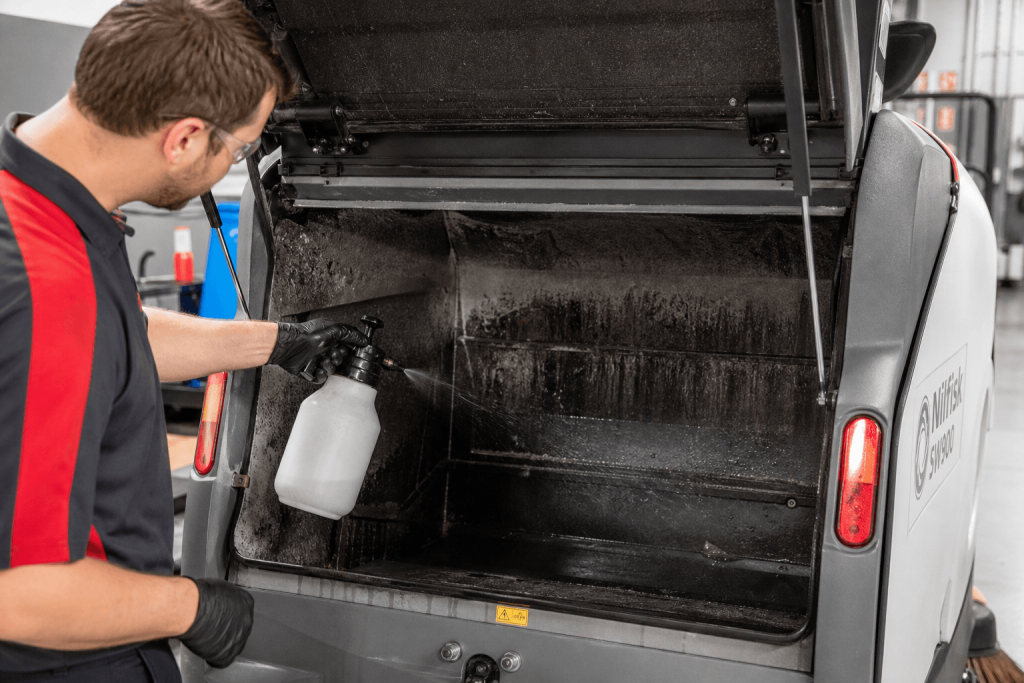
The 180-litre hopper of the KM 210/180 collects everything the brushes pick up: road grit, tyre rubber fragments, cigarette ends, food waste, organic leaf material, and whatever has been tracked from the food court and refuse bay zones. In ambient temperatures above 20°C, the organic content in the hopper begins to decompose within hours of collection. By the end of a summer day shift, the hopper is generating measurable odour.
Most operators empty the hopper and consider it clean. Emptying removes the bulk material — it doesn’t remove the biofilm and organic residue that remains on the hopper walls and base, which is what generates the odour.
Weekly protocol:
Monthly protocol:
After the weekly alkaline clean above, apply an enzyme odour eliminator at 1:5 concentration to the hopper interior. Allow 20 minutes dwell. Rinse. This eliminates the biological odour that alkaline cleaning alone doesn’t reach — the sulphide and amine compounds from decomposed organic material that embed in the hopper surface over weeks of use.
EcoClean Floor Deep Cleaner is the right product for this application because it handles both the oil and rubber residue (alkaline surfactant action) and the organic load (cleaning base) in one pass. A neutral cleaner won’t cut the rubber and tyre contamination; an industrial alkaline degreaser is unnecessarily aggressive for a plastic and steel hopper interior.
The rotating brushes pick up oil, tyre rubber, and tar-based deposits that mechanical debris removal — pulling out the trapped threads and grit — can’t address. Over time, these build up on the bristles and reduce the brush’s sweeping efficiency.
Monthly brush chemical clean:
Do not use solvent-based cleaners on synthetic brush bristles. Solvents swell and degrade the polymer bristle compound, causing accelerated bristle loss and reduced brush life. EcoClean Floor Deep Cleaner is solvent-free and safe for synthetic bristle materials.
The KM 210/180 is a visible piece of equipment on a commercial property. It parks in service areas, moves through car parks and plazas — and a machine coated in road dust and grime reflects directly on the facility’s maintenance standards.
Machine exterior wash: EcoClean Neutral Cleaner at 1:80, applied by low-pressure sprayer or with a cloth and brush on hard-to-reach areas.
Neutral pH (6.5–7.5) is correct for machine exteriors — it’s safe on painted panels, rubber trim, plastic housings, and the glass cab panels found on the larger KM 210/180 configurations. EcoClean Floor Deep Cleaner‘s mildly alkaline formula is the alternative for a machine that’s been operating in an oil-contaminated car park environment, but repeated alkaline washing accelerates paint degradation at scratches and stone chips. Neutral cleaner for routine machine washing; Floor Deep Cleaner only when the machine exterior has visible oil or rubber transfer contamination.
The KM 210/180 doesn’t operate in isolation. Its position in the outdoor cleaning sequence affects the chemical loads on every other piece of equipment:
Sweep before BTV 500 pressure wash: The BTV 500 uses EcoClean Floor Deep Cleaner or Neutral Cleaner at 1:30–1:40 to address embedded surface contamination. Without the KM 210/180 sweep pass first, the BTV 500 is moving loose debris and consuming chemical to wash it away — inefficient and hard on drainage.
Sweep before BD 75/120R indoor transition: Where the KM 210/180 covers covered walkways or basement entry ramps that transition to indoor floor areas cleaned by the BD 75/120R, the sweep removes the grit and debris that would otherwise enter the BD 75/120R solution tank and accelerate brush and squeegee wear.
Stone floors: If the KM 210/180 operates in an area with outdoor polished or crystallized stone (some premium residential and commercial developments), ensure the dust suppression spray is using a compatible surfactant or plain water — any alkaline spray additive on crystallized stone will degrade the Crystal Shield protective layer over repeated contact.
Summer — high dust, accelerated organic decomposition
Increase hopper enzyme treatment to twice monthly. The combination of heat and organic load creates odour faster. For dust suppression in extreme dry heat (humidity below 30%), slightly increase the surfactant additive concentration to 1:400.
Autumn — leaf fall
Heavy leaf material creates a significant wet organic load in the hopper during October–November. Daily hopper inspection is needed — leaf material holds moisture and ferments faster than dry road debris. Extend the weekly hopper cleaning protocol to twice weekly during peak leaf fall.
Winter — sub-zero temperatures
Disable the dust suppression spray system below 3°C to prevent ice formation on swept surfaces. Drain the spray system completely at shift end — residual water freezes and damages nozzles. Apply a light anti-corrosion spray to exposed metal chassis joints at the start of winter season.
| Product | Monthly Usage | Source |
|---|---|---|
| Dust suppression surfactant | 1–2L concentrate | Contact KingHome |
| EcoClean Floor Deep Cleaner (hopper + brush) | 1.5L concentrate | kinghomechemicals.com/brand/ecoclean |
| Enzyme odour eliminator (monthly hopper) | 0.5L concentrate | kinghomechemicals.com |
| EcoClean Neutral Cleaner (machine exterior) | 0.5L concentrate | kinghomechemicals.com/brand/ecoclean |
The machine chemical cost is marginal relative to fuel and labour. The value is in equipment longevity — a hopper that is properly decontaminated monthly lasts longer and doesn’t become a complaint source when it parks near pedestrian areas in summer.
The hopper smells strongly after cleaning a zone near the food court. Is more frequent emptying the answer?
No — emptying removes the bulk material but the odour source is biofilm and organic residue on the hopper walls. Implement the monthly enzyme treatment (1:5 concentration, 20-minute dwell) in addition to the weekly alkaline clean. In summer, move to twice-monthly enzyme treatment. The smell is generated by decomposing food waste products embedded in the hopper surface, not by the bulk material in the collection chamber.
Can we skip the monthly brush soak? The brushes look clean after we pull out the debris.
Visual inspection doesn’t show the oil and rubber contamination on the bristle surface. The performance degradation from contaminated bristles is gradual — the sweep efficiency drops over weeks, not overnight. If your KM 210/180 is leaving visible grit on surfaces it should be clearing, or if you’re having to make multiple passes over the same area, contaminated brushes are a likely cause. The 20-minute soak in EcoClean Floor Deep Cleaner at 1:15 takes 30 minutes total including prep and rinse — worth doing monthly.
Our KM 210/180 operates on outdoor granite sett paths. Should we be adding anything to the dust suppression tank?
Plain water is the safest choice for dust suppression over crystallized or sealed outdoor stone. The risk of any additive — even at 1:500 — degrading a Crystal Shield or sealer treatment over hundreds of sweep passes is real. Check with your stone floor contractor whether the specific protective coating used on your granite sett is compatible with surfactant contact before adding anything to the spray water.
 English
  Spanish