WELCOME TO KINGHOME
Get A Free Quote
We will get back to you within 8 hours

WELCOME TO KINGHOME
We will get back to you within 8 hours
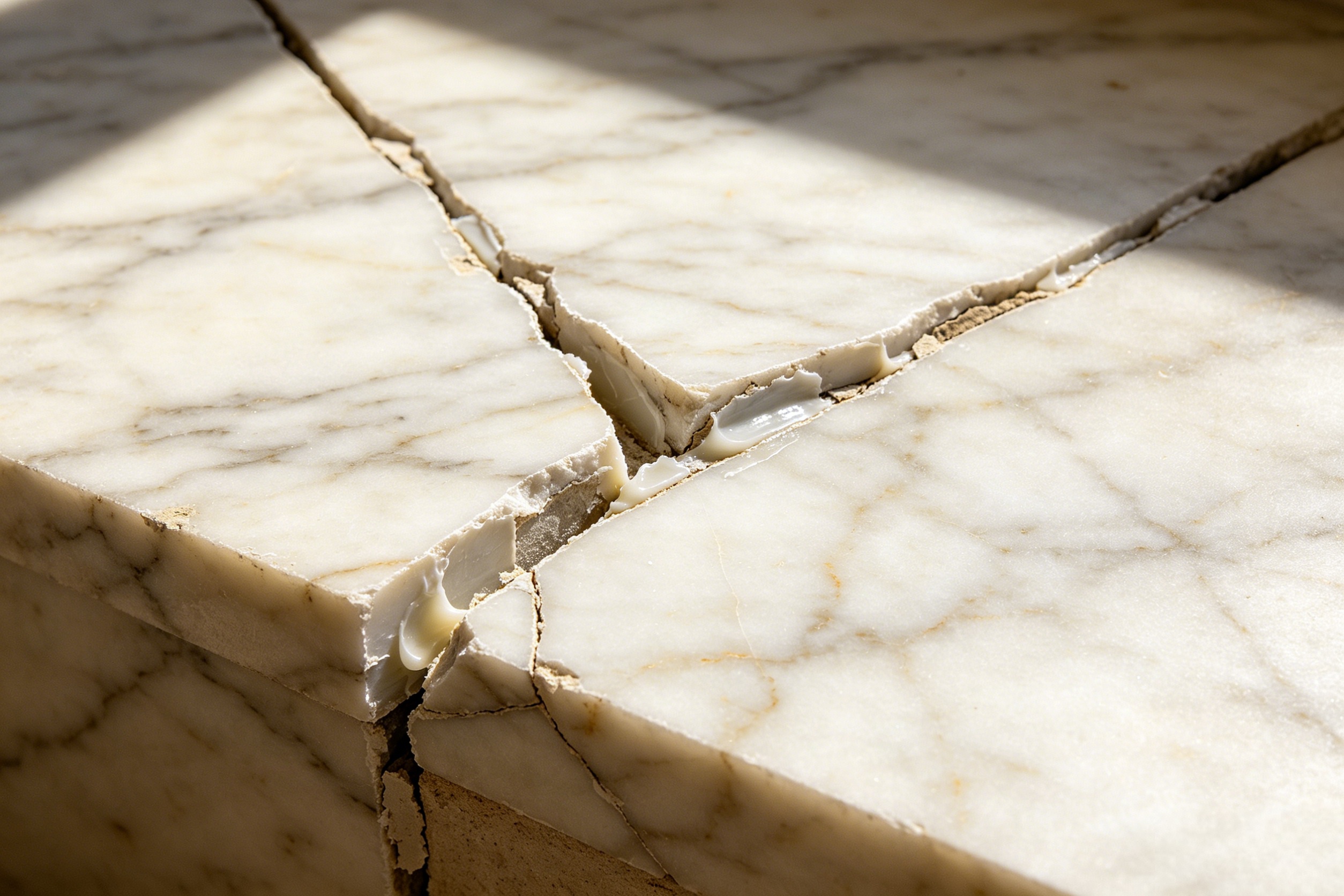
Stone is a widely used decorative material, but fracture repair and special-shaped bonding are common challenges in fabrication and installation. Professional stone repair and stone adhesive bonding not only improve the final decorative effect, but also increase stone utilization and reduce material waste. This article introduces the adhesive application process for stone crack repair, stone fracture repair, and special-shaped stone bonding.
Stone crack repair and special-shaped bonding work better when the adhesive choice follows the damage type, open time, color requirement, and finish target. A strong adhesive can still be a poor fit if it stains the stone, cures too quickly for alignment, or cannot be polished to the surrounding surface.
| Repair or bonding task | Adhesive-fit question | Preparation check | Finish review |
|---|---|---|---|
| Fine stone crack repair | Does the adhesive flow into the crack without darkening the surrounding stone? | Clean dust and moisture, then test color and penetration on a small area. | Check whether the repaired line can be leveled and polished after curing. |
| Wide fracture or broken slab | Does the repair need gap filling, structural support, or reinforcement behind the visible face? | Stabilize the pieces, remove weak residue, and confirm cure time before loading. | Review alignment, visible seam width, and any follow-up grinding or polishing. |
| Miter edge or special-shaped bonding | Can the adhesive hold alignment while the profile is clamped and adjusted? | Dry-fit the pieces, confirm contact area, and protect visible stone faces from squeeze-out. | Inspect the joint under side light before final polishing or installation. |
| Waterjet mosaic or trim bonding | Does the adhesive allow enough working time for small pieces and repeated alignment? | Sort pieces, label orientation, and use a clean work surface. | Check color bleed, joint consistency, and cleanup marks before delivery. |
For technical support, send photos, stone type, crack width, bonding area, expected open time, indoor or outdoor use, polish requirement, and whether the repair will carry load. If the problem starts as a floor crack diagnosis, review the stone floor cracks guide before choosing the adhesive path.
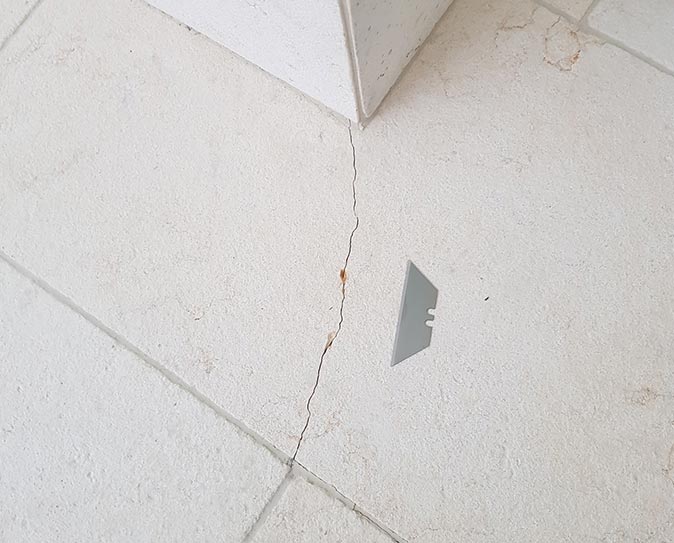
Stone fractures are generally divided into visible cracks and hidden cracks. Visible cracks mean the stone has completely broken into several pieces, while hidden cracks appear as surface fissures without changing the overall shape of the slab.
Hidden cracks create two major problems: they reduce slab yield and may lead to future defects. For hidden crack treatment, it is recommended to use a liquid penetrating epoxy adhesive for front-side scraping repair. This type of stone crack repair epoxy can penetrate deep into the crack, and after curing, it helps the stone surface maintain a rich, glossy finish with a natural oily appearance.
Special-shaped stone bonding mainly includes three application scenarios: waterjet mosaic bonding, miter edge bonding, and molding/trim bonding.
Waterjet cutting technology can control stone joints to within 1 mm. For such ultra-narrow gaps, the selected adhesive should have moderate viscosity, strong bonding strength, and be solvent-free. This ensures precise filling without contaminating the stone surface.
This type of stone seam adhesive is ideal for delicate decorative installations that require clean joints, high precision, and durable adhesion.
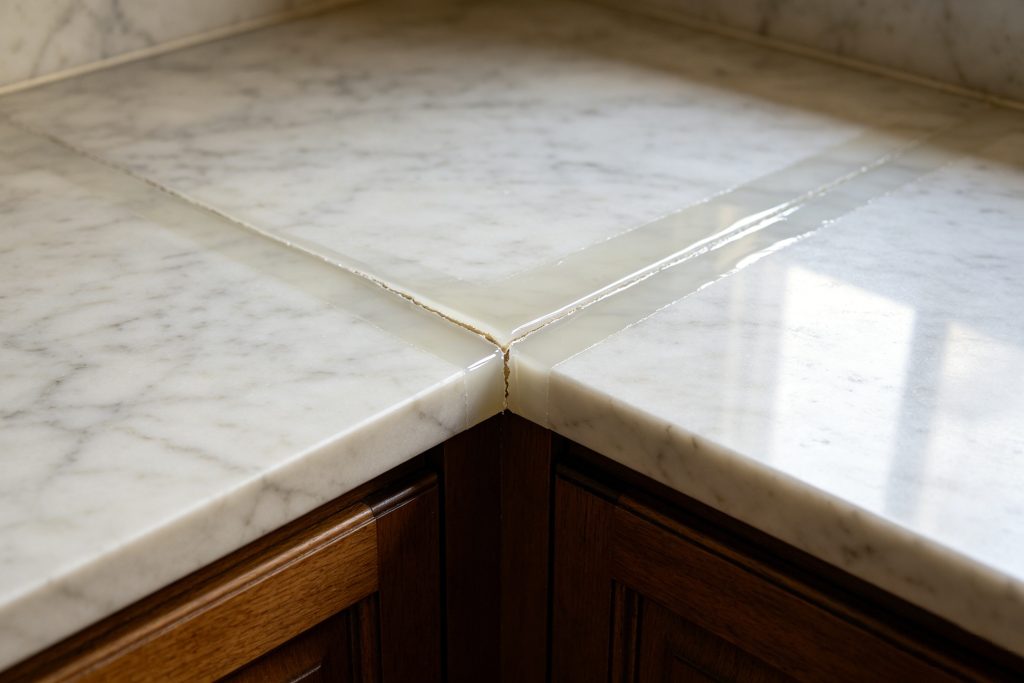
Miter edge bonding is commonly used for cabinet countertops and mitered porcelain or stone wall installations at 45-degree corners.
For kitchen countertop miter bonding, the working environment is often humid and hot, and frequent wiping is required. A two-component epoxy acrylic adhesive is recommended because it offers excellent resistance to heat, moisture, and staining.
For large-format porcelain slab wall installation, the mitered edges are usually prefabricated in the factory and then transported to the project site. The adhesive should have moderate viscosity and should not sag easily, so as to avoid contaminating the porcelain slab surface and surrounding area during installation.
This application is mainly used for background walls and door/window frames.
For stone trim bonding on feature walls, the adhesive must provide high strength to prevent debonding or falling under gravity. It should also cure quickly and have no irritating odor, making it suitable for both factory prefabrication and on-site installation.
For door frame and window frame bonding, the application usually involves bonding stone to other materials. The selected adhesive should have strong adhesion to both substrates and must be solvent-free to prevent oil stains or surface discoloration on the stone.
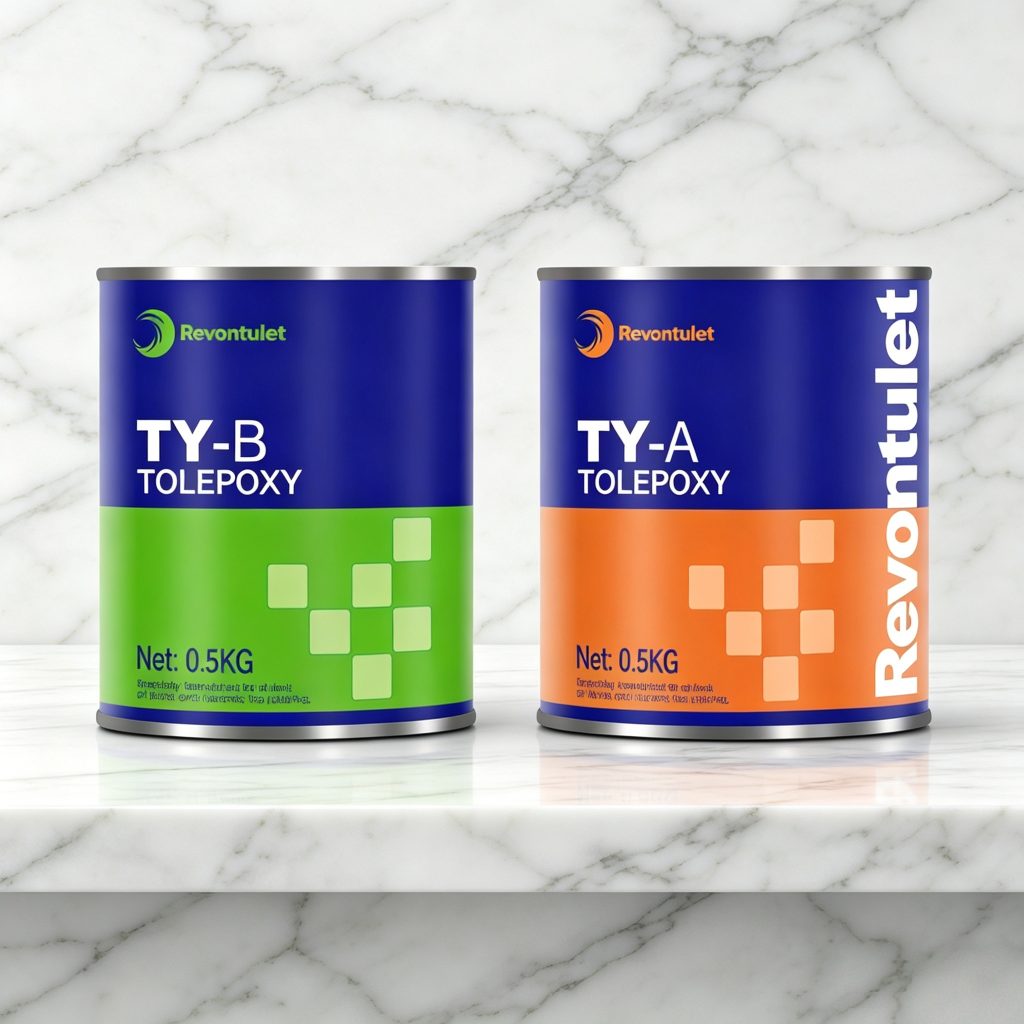
3.TOLEPOXY——A high-performance adhesive specifically formulated for repairing stone fractures

Revontulet Stone Polishing & Care Series
TOLEPOXY: high-quality modified marble adhesive. Anti-aging, strong water/moisture resistance, 95% utilization. Easy to use (boosts efficiency), with efficient penetration preventing leakage, shrinkage, yellowing. Durable, pressure/stretch-resistant, tough.
TOLEPOXY is a modified, anti‑aging premium marble adhesive that offers strong waterproofing and moisture resistance, achieves up to 95% material utilization, and is easy to use for high work efficiency. It penetrates and bonds effectively without bleeding or shrinkage, does not yellow, and provides long-lasting durability with excellent resistance to compressive and tensile forces and good toughness.
When used as an adhesive for jade, marble, granite, white stone, and translucent stone, TOLEPOXY effectively prevents yellowing, oil bleed, and cracking; it can be polished and color-adjusted, and it is aged-resistant.
 English
  Spanish