WELCOME TO KINGHOME
Get A Free Quote
We will get back to you within 8 hours

WELCOME TO KINGHOME
We will get back to you within 8 hours
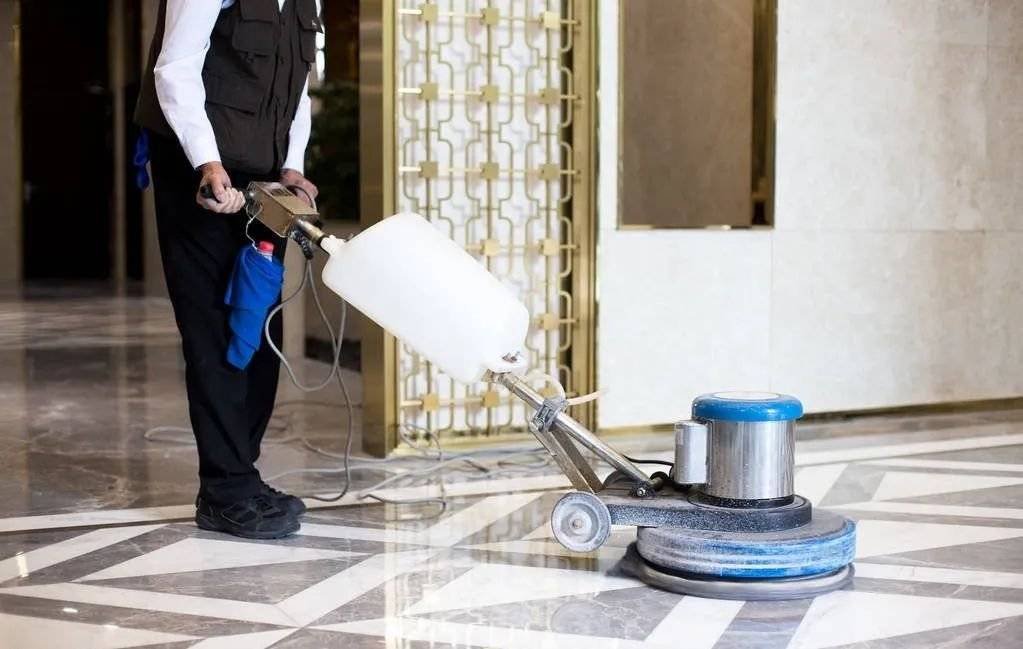
Choose a commercial tile cleaning machine by matching the tile surface, grout condition, soil load and cleaning area. Walk-behind scrubbers fit most retail, school and facility tile floors. Single-disc machines help with detail cleaning and restoration prep, while ride-on scrubbers make sense for large open routes.
| Tile cleaning job | Recommended machine | Best-fit setting |
|---|---|---|
| Daily tile floor cleaning | Walk-behind auto scrubber | Retail, schools, offices, healthcare corridors. |
| Grout-line soil and edge detail | Brush machine or single-disc scrubber | Bathrooms, kitchens, entrances and detail zones. |
| Large open tile areas | Ride-on scrubber | Warehouses, supermarkets and long cleaning routes. |
| Stone or polished tile | Scrubber with surface-safe brush and cleaner | Marble, terrazzo, granite and sensitive finished floors. |
For broader equipment comparison, use the floor cleaning machine archive. If the floor is stone or terrazzo, also review granite and terrazzo floor cleaning machines.
This guide focuses on commercial tile floors. Start with the floor area, tile texture, grout condition, soil load and available recovery method; then compare walk-behind, ride-on and detail-cleaning equipment.
A commercial tile cleaning machine should be chosen around tile texture, grout condition, soil load, and brush fit. Compare the machine and its accessory package together, including replacement brush fit and supply. For ceramic, porcelain, quarry tile, and textured commercial floors, the wrong brush can leave grout dirty, scratch a glossy surface, or fail to reach low joints.
| Cleaning requirement | Machine or brush direction | Selection check |
|---|---|---|
| Commercial tile cleaning machine | Walk-behind scrubber, single-disc machine, or ride-on scrubber by area size | Confirm working width, tank size, water recovery, and whether the site needs daily cleaning or periodic deep cleaning. |
| Frequent commercial cleaning | Commercial-grade motor, brush deck, and recovery system instead of a light home unit | Check duty cycle, chemical resistance, operator training, and parts support before comparing price. |
| Replacement brush fit | Manufacturer or supplier that can match brush diameter, clutch style, bristle material, and stiffness | Verify OEM fit for the scrubber brand and test nylon, polypropylene, or abrasive brushes on the actual tile. |
| Ceramic tile and grout brush selection | Brush package for ceramic tile, grout lines, textured tile, or anti-slip surfaces | Use softer brushes for glazed tile and stronger brushes only when grout depth, texture, and coating risk are confirmed. |
For commercial facilities, the machine, brush, chemical, and recovery method should be specified together. A strong cleaner without enough agitation leaves grout lines dirty; an aggressive brush with the wrong pad pressure can damage tile glaze; and poor recovery leaves residue that attracts soil. The best tile cleaning workflow balances cleaning speed, brush reach, surface safety, drying time, and replacement brush availability.
Related planning paths: compare floor scrubber brush selection, review stone floor cleaning machine guidance, and use industrial ceramic floor brush guidance when brush material and OEM fit are the main buying questions.
Rotary scrubbers use disc brushes or pads for routine cleaning and periodic deep cleaning. Compare the approved driver, brush or pad, operating speed, solution flow and recovery system for the exact machine. Do not apply one RPM range across different scrubbers, single-disc machines and restoration equipment.
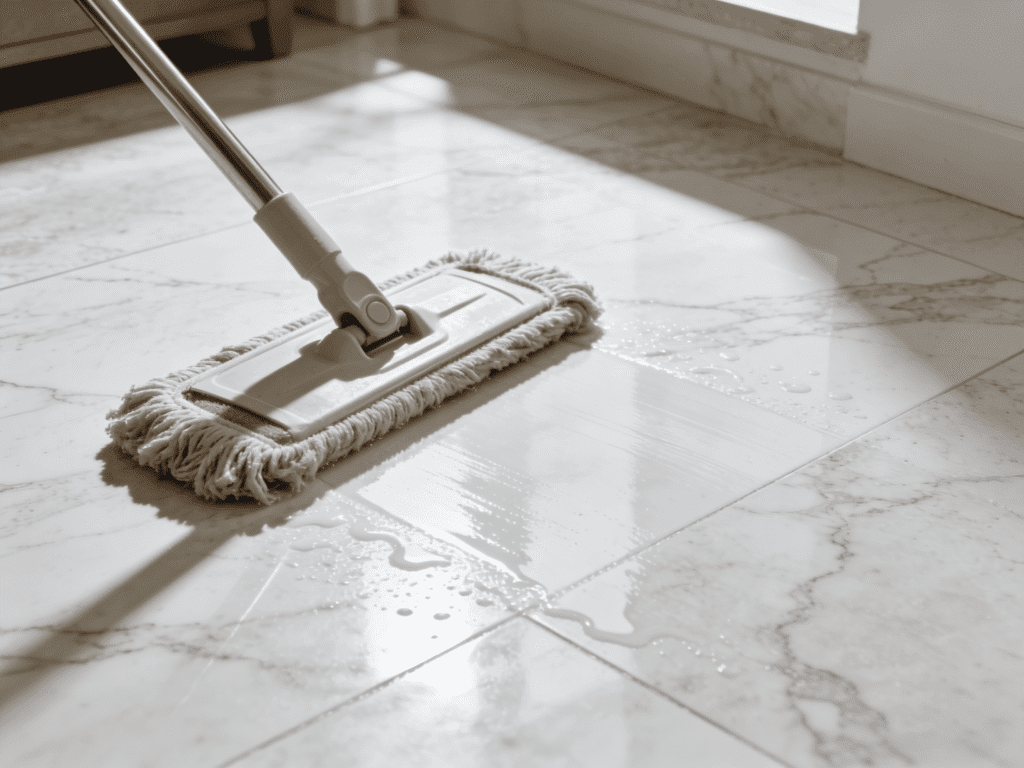
Steam equipment is a separate option for small areas and detail work, not a substitute for an automatic scrubber on a large commercial route. Check tile, grout and sealer manufacturer guidance before applying heat or moisture.
Automatic floor scrubbers combine solution delivery, agitation and dirty-water recovery. Check the floor after cleaning for remaining moisture and residue; squeegee pickup does not guarantee an immediately dry or slip-free surface. Use the site’s access-control procedure until the area is ready to reopen.
Select the brush or pad and cleaner for the complete floor assembly: tile body, glaze, grout, sealer and existing finish. Textured tile may need bristles that reach recesses, while polished stone may need softer contact. Confirm compatibility and test before increasing agitation.
For routine commercial tile cleaning, compare brush or pad contact pressure, solution flow, squeegee recovery and machine width. A walk-behind auto scrubber washes and recovers water in one pass; stubborn grout lines may need a compatible brush and a separate detail pass. Check the machine manual for down-pressure and water-flow settings, then test on a small area before cleaning the full floor.
Brush or pad down-pressure is only one selection factor. Follow the scrubber and brush manufacturers’ instructions, and test the complete machine, cleaner and floor combination in a small area before increasing agitation.
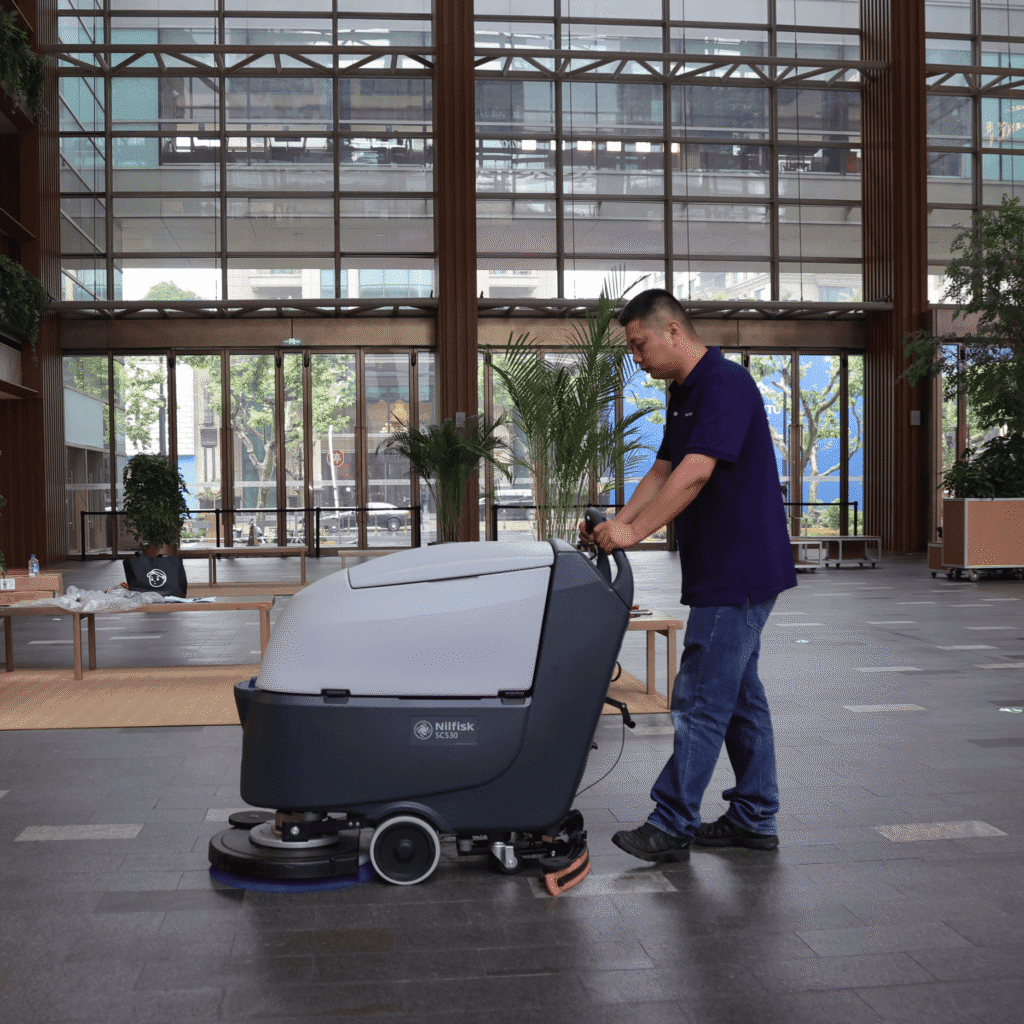
Cylindrical brushes can reach textured surfaces and grout lines more directly than a flat pad, but results depend on brush diameter, bristle stiffness, floor profile and machine design. Confirm the brush is approved for the machine and test it on the installed tile.
Tank size and battery runtime affect how much area a machine can cover before refilling or recharging. Compare the manufacturer’s rated capacity with the actual route, soil load, turning space and water disposal plan; published coverage is not a guarantee of on-site output.
If the machine includes chemical metering, confirm which products and concentrations the manufacturer permits. Follow the cleaner’s technical instructions and verify dosing before use; some machines require pre-mixing instead.
Natural stone flooring demands equipment specifically designed to prevent etching, scratching, and surface degradation. Marble, granite, limestone, and travertine tiles exhibit varying hardness levels and chemical sensitivities that standard tile cleaning machines may damage through excessive pressure or incompatible brush materials. Understanding these requirements separates routine maintenance from costly restoration projects.
An orbital or oscillating machine is one option for stone maintenance, but head motion alone does not prevent scratches. Use a pad approved for the machine and installed finish, remove loose grit first, and inspect a test area before full use. Restoration compounds and daily cleaners serve different tasks; follow the relevant product instructions.
Rotary scrubbers can clean granite when fitted with a surface-compatible soft brush or pad and a stone-safe cleaner. Begin with low brush down-pressure and controlled water flow, then inspect a small test area for dulling, scratches or sealer damage. Granite is harder than marble, but a polished or sealed granite floor still needs a finish-specific cleaning method.
For stone tiles, start with the machine manufacturer’s lowest suitable brush or pad down-pressure setting and a stone-safe cleaner. Check the finish and sealer on an inconspicuous area, then increase agitation only if the surface tolerates it. Do not use a pressure-washer PSI figure as an auto-scrubber brush-pressure setting.
For stone tiles, use a low-foam cleaner approved for the stone, grout, sealer and machine. Start with a pH-neutral stone-safe product for routine care of acid-sensitive stone. Follow the stated dilution, rinse and recovery instructions; neutral pH alone is not proof of compatibility with every finish.
Walk-behind scrubbers suit routes where maneuverability, doorways and access around fixtures matter. Ride-on machines can reduce operator travel on large open floors, but aisle width, turning space, transport access and staffing affect the choice. Compare rated productivity from the specific model with a site demonstration instead of relying on a universal area threshold.
A ride-on scrubber may suit a large, open floor with long uninterrupted routes. In divided spaces, narrow aisles or areas with frequent obstacles, a walk-behind machine may cover more of the floor without touch-up. Check access width, turning radius, recovery performance and operator training before choosing.
Compare cleaning time on a representative route, including corners, obstacles, refilling, draining and battery charging. Rated travel speed and theoretical coverage do not include every delay; a site demonstration gives a better basis for comparing operator time.
Obtain current quotes for the exact machines and include batteries, brushes, squeegees, service, delivery and operator training. Compare the expected cost over the intended duty cycle rather than relying on generic price bands or replacement intervals.
Facility requirements change the shortlist. Hotels may prioritize sound level and reopening time; healthcare sites must follow their approved cleaning and infection-control procedure; retail routes may require compact turning space and reliable pickup during occupied hours. Record the actual noise window, access controls, floor finish, approved chemistry and recovery requirement before comparing models.
A commercial tile cleaning machine should be selected by the floor problem, not only by tank size or machine width. Ceramic tile, porcelain tile, textured safety tile, stone tile, and grout lines all change the brush, pad, detergent, water recovery, and edge-cleaning requirements.
| Facility condition | Machine direction | Brush or pad check | Recovery and chemistry check |
|---|---|---|---|
| Smooth ceramic or porcelain tile in open areas | Use a walk-behind or ride-on scrubber sized to the aisle width and daily soil load. | Confirm non-scratch pads or brushes and whether grout lines still receive enough agitation. | Use tile-safe detergent, correct dilution, squeegee contact, and clean-water/rinse control. |
| Textured tile or anti-slip tile | Prioritize brush contact and soil release from low points in the surface. | Check bristle stiffness, dwell time, and whether the brush can reach the texture profile. | Confirm recovery after agitation so loosened soil is not redeposited. |
| Dirty grout lines | Use targeted agitation and chemistry before assuming a wider machine will solve the issue. | Match cylindrical brush, disc brush, or detail tool to grout width and soil type. | Verify alkaline cleaner compatibility, rinse recovery, and post-clean residue control. |
| Mixed tile and natural stone areas | Separate tile-cleaning and stone-sensitive zones before choosing one machine setup. | Use less aggressive pads or brushes where polished stone can scratch or dull. | Confirm cleaner pH, water exposure, and whether stone zones require a separate maintenance process. |
Before requesting a quote, provide the tile type, grout width, soil source, cleaning frequency, aisle width, water access, drainage or recovery rules, and photos of corners and traffic lanes. For adjacent decisions, compare the floor scrubber vs buffer guide, floor scrubber brush selection guide, and stone floor cleaning machine guide.
Cylindrical brushes can help on textured tile and recessed grout, while disc brushes and pads suit many open floor areas. Neither design guarantees better cleaning in every installation. Demonstrate the proposed brush, machine and cleaner on the actual floor before purchase.
Disc brush systems use round brushes or pad drivers. Check the model’s approved brush speed, accessory fit and surface compatibility, and inspect the test area for remaining grout soil, swirl marks or damage.
Nylon and polypropylene bristles are brush materials; rubber and urethane squeegee blades are recovery components. Specify each separately by machine fit, chemical compatibility and floor condition. For accessory checks, see the floor scrubber brush selection guide.
Brush and pad colors are not a universal stiffness standard. Use the accessory manufacturer’s grade and application chart for the exact product. A brush suitable for textured tile may damage a polished or glazed finish.
Inspect brushes and pads for wear, debris and uneven contact according to the machine manual. Replace them at the manufacturer’s wear limit or when damage or loss of performance requires it. Rotate accessories only if the machine instructions permit it.
If stronger chemistry is required, confirm the exact working dilution and temperature from the cleaner instructions, then obtain written compatibility for the machine tank, pump, hoses, seals, fittings and recovery system. An “alkali-resistant” description does not prove compatibility with every high-pH, solvent-containing or specialty cleaner.
Cleaner choice depends on the tile body, grout, finish and sealer. Ceramic or porcelain may tolerate a wider range of products than marble or limestone, but acidic cleaners can still damage cement grout, metal trim and some sealers. Use a cleaner approved for the complete floor assembly, follow its dilution instructions and test a small area first. For calcium-based stone and many terrazzo systems, start with a pH-neutral stone-safe product.
If a machine has on-board metering, confirm the approved chemical, concentration range, calibration method and flushing procedure. Metering can improve repeatability, but it does not remove product-selection, loading or calibration errors. Compare this with pre-mixing only after checking the exact model and cleaner instructions.
When comparing water-saving or detergent-reducing systems, request the manufacturer’s current operating limits and evidence for the proposed application. Check whether the system is approved for the soil and floor involved; do not assume a feature eliminates all detergent use or guarantees a fixed reduction in water consumption.
Build the maintenance checklist from the exact machine manual. At the specified intervals, inspect and clean the solution and recovery tanks, filters, squeegee assembly, hoses, brushes or pads, batteries and charging system. Replace or rotate components only when the manufacturer permits it and the stated wear or condition limit is reached.
Use symptoms as diagnostic prompts, not automatic conclusions. Streaking, poor pickup, uneven brush wear or reduced runtime can have several causes; record the condition, check the manual’s troubleshooting sequence and escalate to qualified service when the required inspection or adjustment is outside the operator procedure.
Measure the floor route, narrowest access, turning space and cleanable area. Compare these with machine width, recovery performance, runtime and refill requirements. Use a demonstration to select between walk-behind and ride-on equipment; area alone does not decide the right machine.
Set cleaning frequency from observed soil, traffic peaks, appearance or hygiene requirements, available work windows and the result of the current process. Measure the representative route, including pre-sweeping, refilling, draining, edge work and reopening time, before deciding whether the existing machine is undersized.
Identify the soil before selecting chemistry and accessories. Remove loose grit before wet scrubbing; for grease, mineral residue or old finish, use only a product and process approved for the complete floor assembly and machine. Confirm dilution, temperature, dwell time, rinse and waste-recovery requirements, then validate the result in a controlled test area.
Include current quotes for brushes, squeegees, batteries, chemicals and servicing in ownership costs. Measure labor on the actual route and document the cleaning schedule before estimating savings.
Request a site demonstration or trial when the supplier offers one. Test the proposed machine, brush or pad and cleaner on a representative route, and record pickup, remaining grout soil, surface change, operator handling, refill time and edge work. Confirm all trial, return and warranty terms in writing before purchase. For additional context on equipment selection, review our article explaining differences between scrubbers and buffers.
Check how the machine will fit the existing floor-care program. Confirm approved cleaners, operator training, local service coverage, parts lead times, brush and squeegee availability, warranty terms and the process for technical support. Compare these items in the quote instead of treating purchase price as the only cost.
Choose commercial tile cleaning equipment around the installed surface, soil, access and recovery needs. Confirm brush fit, approved cleaner, parts availability and operator training, then test the machine on the site before committing to a purchase.
For a machine shortlist, provide the tile and grout type, finish or sealer, main soil, cleanable area, narrowest access, water and drainage conditions, cleaning frequency, current machine or brush details, and site photos. KingHome can then compare relevant machine, brush and cleaner paths without assuming one setup suits every floor.
Commercial tile scrubbers are designed for repeated facility use and commonly add larger solution and recovery tanks, replaceable brush or pad assemblies, squeegee recovery and serviceable parts. Home machines are smaller and may be easier to store, but are not intended for the same duty cycle. Compare the actual machine specifications, floor area, access width and cleaning frequency rather than assuming a universal pressure or productivity rating.
Yes, if the exact machine, brush or pad and cleaner are approved for the stone, finish, grout and sealer. Marble, limestone and travertine are acid-sensitive, but neutral pH alone does not prove compatibility. Begin with the manufacturer’s lowest suitable setting, control water recovery and inspect an inconspicuous test area for scratches, dulling or residue before cleaning the full floor. For equipment selection, consult the stone floor cleaning machines guide.
Replace brushes according to the machine and brush manufacturer’s wear limits and the observed cleaning result. Inspect for uneven wear, missing bristles, trapped grit and poor grout contact; calendar intervals alone do not establish service life. For fit checks, see the floor scrubber brush selection guide.
A compatible bristle brush can reach recessed grout more effectively than a flat pad in some installations. Choose stiffness and brush geometry for the grout depth, tile finish and machine. Test a small area and plan separate edge or detail cleaning if the machine cannot reach the soil; no brush design reaches every joint.
Usually, when the brush or pad, cleaning solution and water flow match the tile, grout and sealer. Start with a test patch: decorative glazes and cement grout may need softer agitation or a gentler cleaner than the tile body itself. Follow the grout and tile manufacturer’s curing instructions on new floors; do not assume a single PSI or cleaner pH is safe for every installation.
Related: Floor cleaning machines · Tile and stone cleaners
 English
 Spanish