WELCOME TO KINGHOME
Get A Free Quote
We will get back to you within 8 hours

WELCOME TO KINGHOME
We will get back to you within 8 hours
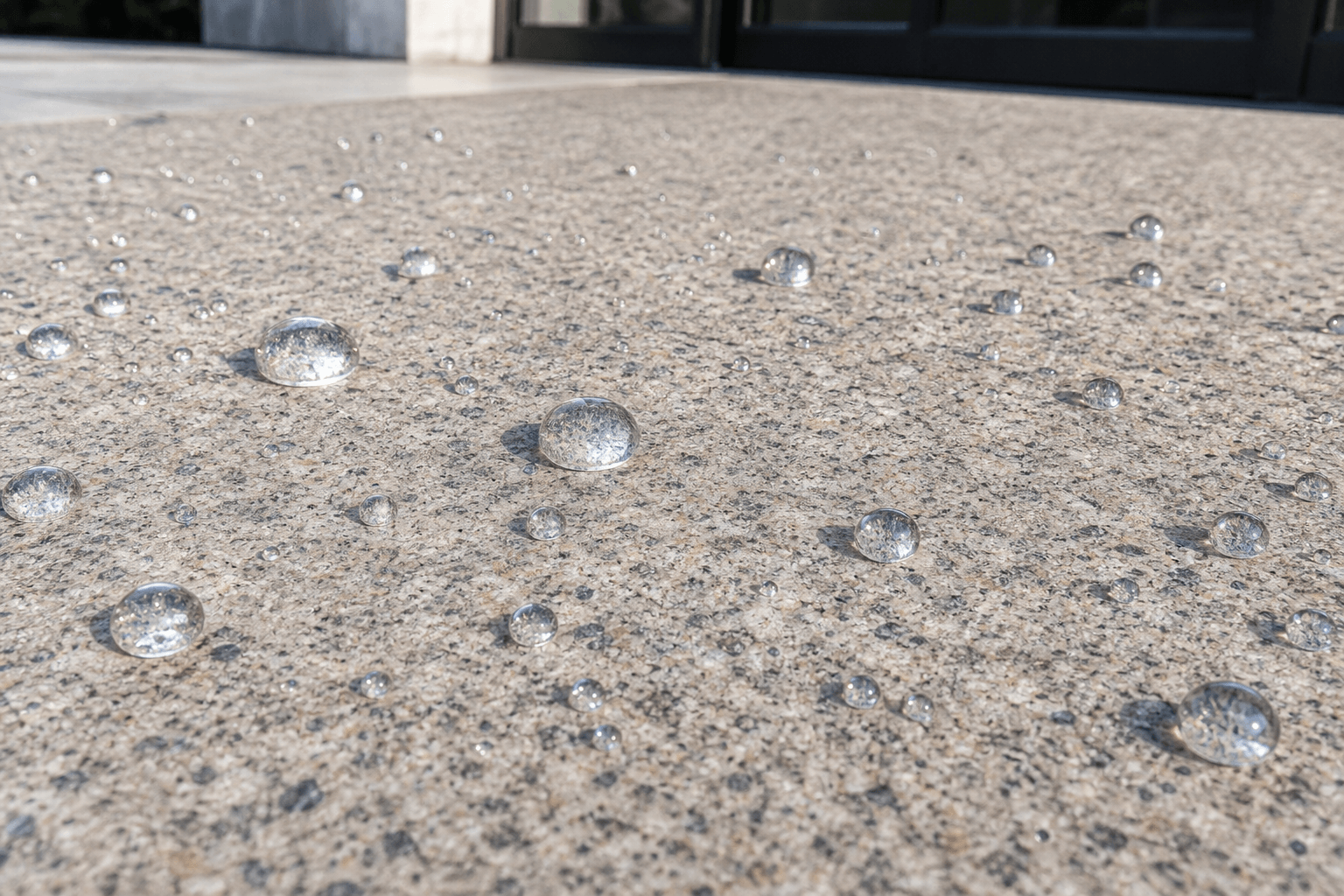
To waterproof natural stone floors professionally, clean and dry the stone, identify moisture sources, confirm that the floor can release vapor, test the selected treatment, and apply a compatible breathable water-repellent protection. The goal is to reduce water absorption without trapping active moisture inside the stone system.
Waterproofing is often misunderstood. Many teams think waterproofing means forming a hard film over the stone. On some surfaces, that may create more problems than it solves. Natural stone floors, especially outdoor stone, entrance areas, and wet-zone installations, may need protection that resists liquid water while still allowing vapor movement.
For the complete system, start with the Stone Floor Protection Systems Guide.
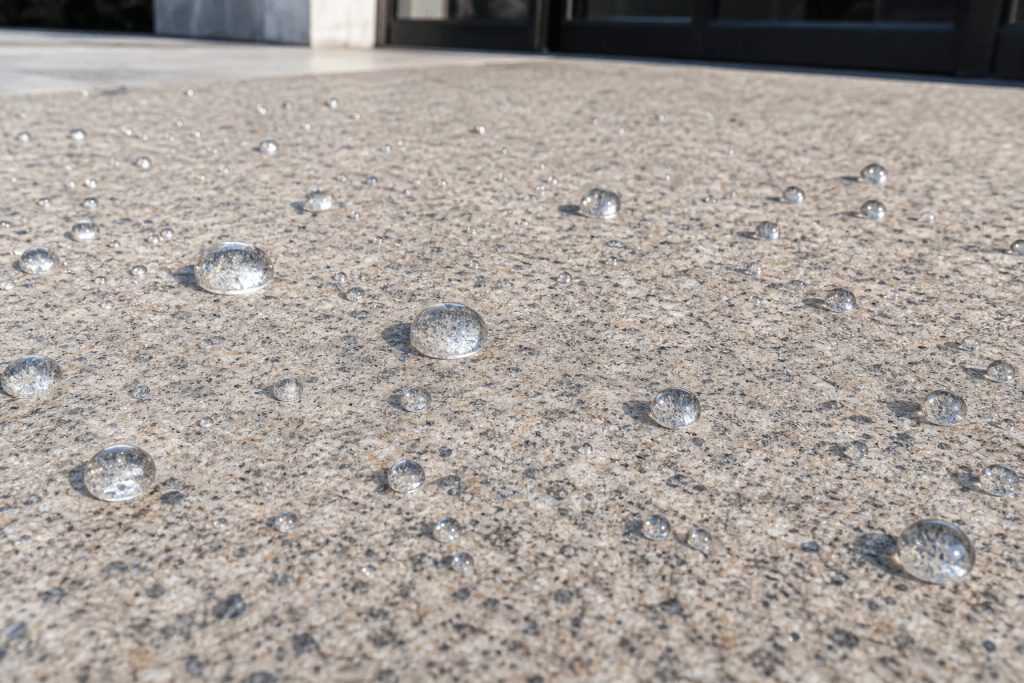
Natural stone floors need waterproofing when water exposure creates staining, darkening, efflorescence, surface weakening, or maintenance problems. The risk is higher in areas where the stone repeatedly gets wet and dries again.
Common waterproofing candidates include:
Waterproofing may not be the first step if the floor already has active efflorescence, trapped moisture, hollowing, or coating failure. In those cases, diagnose the underlying problem first.
The most important decision is whether the floor needs breathable protection or a surface film.
| Treatment Type | How It Behaves | Best Use | Main Risk |
|---|---|---|---|
| Breathable penetrating protection | Reduces absorption while allowing vapor release | Outdoor stone, porous stone, entrances | May need reapplication over time |
| Film-forming coating | Creates a visible surface layer | Some interior decorative floors | Can trap moisture if used incorrectly |
| Oil-resistant protection | Reduces oil and grease penetration | Kitchens, service corridors, loading areas | Needs cleaning before application |
| Temporary topical finish | Adds short-term appearance or wear layer | Controlled indoor environments | Can whiten, peel, or wear under moisture |
For many natural stone floors, breathable protection is safer than a heavy film because water vapor can still escape. If moisture is already under the stone, a non-breathable layer can create white haze, dark patches, blistering, or renewed efflorescence.
Water can enter stone floors through several pathways:
The path matters because waterproofing the surface does not fix a leak from below. If ground moisture or a wet setting bed is pushing water upward, surface treatment alone may only slow evaporation and intensify salt movement.
For active white powder or salt bloom, read What Causes Stone Efflorescence? before selecting a waterproofing product.
Different stone types absorb water differently. Surface finish also changes absorption and treatment behavior.
Many dense granites absorb less water than softer stones, but flamed, rough, or weathered granite can still take in moisture through texture and joints. Outdoor granite often needs attention to joint condition and oil exposure as much as surface absorption.
Marble and limestone are calcium-based stones. They are vulnerable to acid damage and may show etching if the wrong cleaner is used before waterproofing. Use mild, compatible cleaning and avoid acid-based preparation unless the stone professional confirms it is appropriate.
These stones may be more porous depending on the variety and finish. They can benefit from breathable water-repellent treatment, especially outdoors. Test for darkening, color change, and slip behavior.
Textured stone traps soil and moisture in the surface profile. Cleaning and drying are especially important before treatment. Products such as rough stone protective shield may be evaluated for rough exterior stone after testing.
Waterproofing natural stone floors is a moisture-management decision, not only a product choice. The protection path should account for stone porosity, finish, drainage, vapor movement, existing treatments, and whether the surface needs breathable water resistance or a film-forming layer.
| Moisture signal | Protection direction | Evidence to collect | Risk to avoid |
|---|---|---|---|
| Water darkens porous stone quickly | Clean and dry first, then compare a compatible penetrating protection path on a small test area. | Stone type, absorbency pattern, drying time, finish, and old sealer history. | Applying protection over trapped moisture or residue. |
| Exterior rain, splash, or standing water | Review drainage, slope, joints, and drying behavior before selecting a treatment. | Water route, ponding areas, weather exposure, joint condition, and substrate moisture. | Trying to solve a drainage problem with a surface layer alone. |
| White salts or recurring damp edges | Diagnose moisture movement and efflorescence before resealing or coating. | Deposit location, recurrence timing, substrate, grout, and cleaning history. | Sealing while salts are still migrating through the stone system. |
| Polished or low-absorption stone | Confirm whether the surface can absorb the proposed protection and whether appearance or slip behavior will change. | Finish, water response, hidden test result, visual target, and wet traction concerns. | Using an absorbent-stone treatment that leaves uneven residue. |
Before specifying a waterproofing route, document stone type, finish, moisture source, drainage, previous sealer or coating, cleaning chemistry, and the test-area result. Related resources include efflorescence diagnosis, resealing checks, and stone protection selection.
Preparation decides whether waterproofing succeeds.
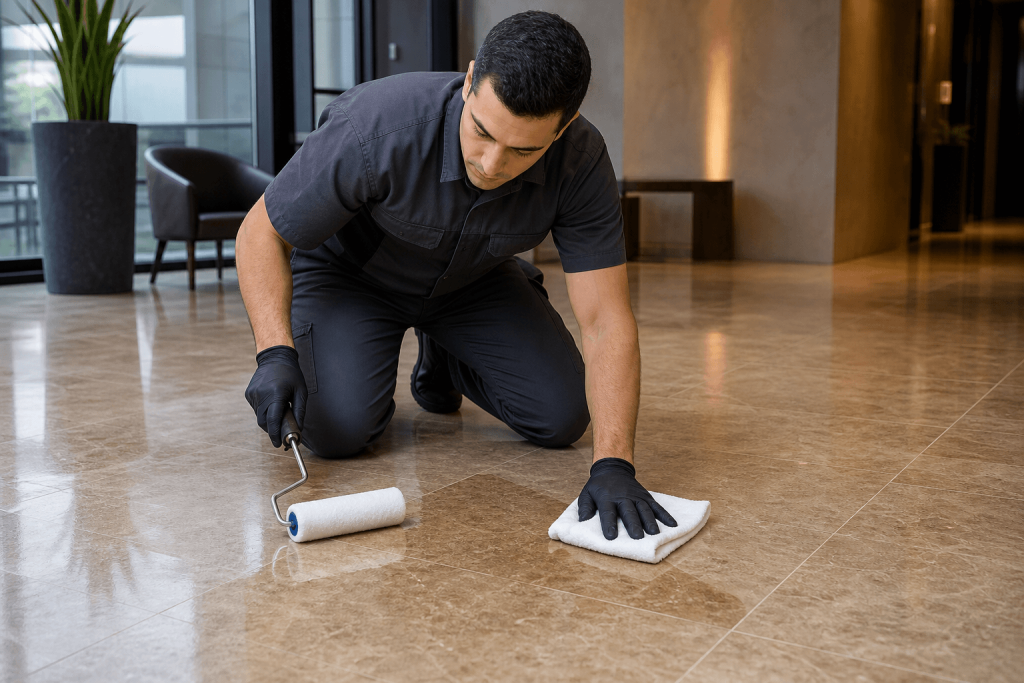
Check drainage, slopes, joints, cracks, nearby irrigation, door thresholds, and areas that stay wet longer than the rest of the floor. Note whether the stone is indoor, outdoor, covered, or fully exposed.
Old coatings, waxes, topical finishes, or incompatible sealers can block penetration. If a previous layer is present, it may need removal before waterproofing.
Remove soil, oil, cleaner residue, and loose deposits. Use a compatible cleaner based on stone type. For calcium-based stones, avoid acidic cleaners unless a professional specifies a controlled restoration process.
The stone must be dry enough for the selected treatment. Drying time depends on stone porosity, substrate, weather, ventilation, and cleaning method. Rushing this step is a common cause of cloudy or uneven results.
Apply the product to a small inconspicuous area. Check for color change, darkening, residue, slip change, and water repellency after drying. Testing is essential on mixed stone, old installations, or visible architectural floors.
Always follow the specific product label and Safety Data Sheet. The general professional framework is:
Too much product can be as damaging as too little. Over-application can leave sticky residue, uneven sheen, or dirt attraction. Under-application may leave porous areas untreated.
| Failure | Likely Cause | Prevention |
|---|---|---|
| White haze after treatment | Moisture trapped below surface | Dry fully and diagnose moisture first |
| Uneven darkening | Uneven absorption or dirty stone | Deep clean and test before application |
| Sticky residue | Excess product not removed | Follow coverage and wipe-off instructions |
| Continued efflorescence | Moisture source still active | Treat salt movement and drainage issue |
| Slippery surface | Wrong product or over-application | Test slip behavior before full treatment |
| Short service life | Abrasion or harsh cleaning | Use compatible maintenance chemistry |
Waterproofing is not a substitute for drainage, joint repair, or cleaning discipline. It is one layer in the protection system.
Use this checklist before treating outdoor stone:
For outdoor or oil-exposed stone, GT-9000 stone oil-based protective agent may be considered after site testing. For anti-glue and oil exposure, review stone anti-glue and oil agent.
After waterproofing, the floor still needs correct maintenance.
When selecting cleaning and protection products, buyers should review chemical compatibility, performance, pH, handling requirements, and the product Safety Data Sheet. On working sites, labels, SDS records, and staff training should stay aligned with internal chemical-management procedures.
 English
  Spanish