WELCOME TO KINGHOME
Get A Free Quote
We will get back to you within 8 hours

WELCOME TO KINGHOME
We will get back to you within 8 hours

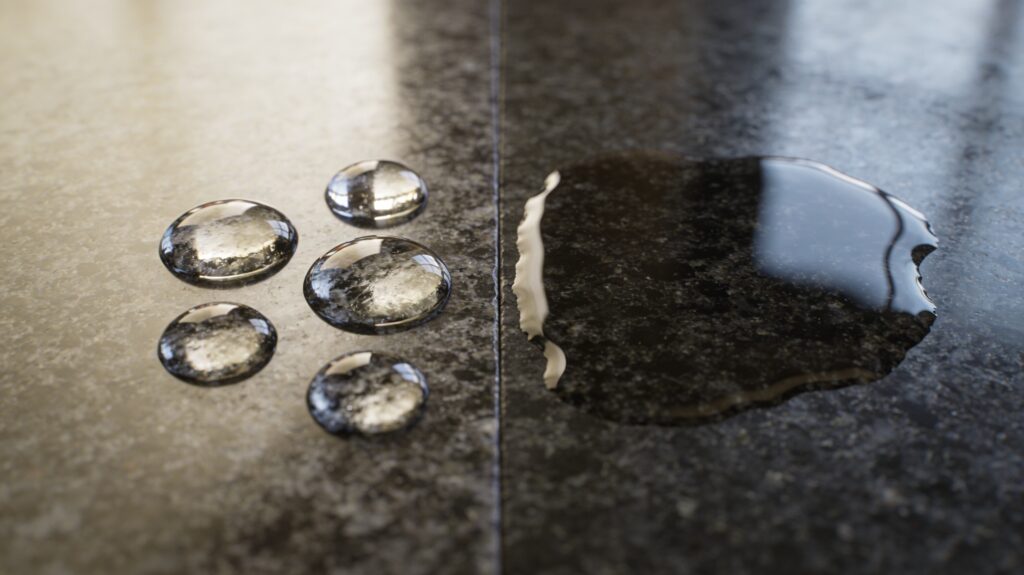
Re-seal granite after stain removal only when the surface is fully clean, dry and still absorbs water during a water-drop test. If water darkens the stone within a few minutes, apply a penetrating granite sealer. If water beads on the surface, wait, clean residue again or skip sealing to avoid haze and sticky buildup.
| Test result | What it means | Best next step |
|---|---|---|
| Water darkens quickly | Granite is absorbent | Apply penetrating sealer after the stone dries. |
| Water beads for 10-15 minutes | Existing protection remains | Do not add more sealer yet. |
| Surface looks cloudy or greasy | Residue may remain after stain treatment | Clean and dry again before sealing. |
| Etch or scratch marks remain | Sealer will not repair surface damage | Polish or restore before sealing. |
For the stain-removal step before sealing, see how to remove chemical stains from granite. For ongoing stone care planning, review professional marble and stone floor maintenance.
Most guides on removing granite stains end at “clean the area and you’re done.” That ending is incomplete. Any deep stain treatment — especially a poultice — removes not only the stain but also the penetrating sealer that was protecting the stone. Leaving granite unsealed after treatment means the next spill will penetrate faster, deeper, and with less warning.
This guide covers why re-sealing is a required final step, how to confirm your granite is ready and actually needs a new sealer, how to choose the right sealer type, how to apply it correctly, and how to set a maintenance schedule based on your granite’s surface finish.
For the stain removal procedures that make re-sealing necessary, see our guide: How to Remove Chemical Stains from Granite
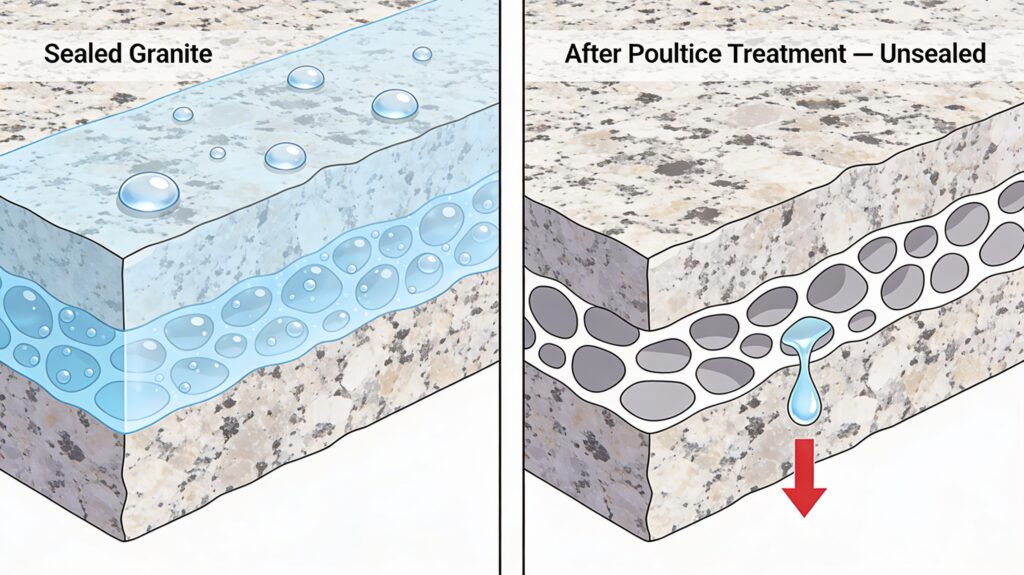
A penetrating sealer works by migrating into the microscopic pores of granite and bonding with the mineral structure there. It creates a subsurface barrier that makes the pores hydrophobic and oleophobic — repelling both water and oil-based liquids long enough to give you time to wipe up spills before they penetrate.
The problem is that the same solvents used in stain removal also dissolve this sealer barrier:
The result: after any poultice treatment, the treated area is effectively unsealed. To the naked eye, the surface looks normal — the stone still has its finish, the stain is gone. But any liquid spilled on that area will now penetrate without the usual 15–30 minute absorption window that a healthy sealer provides.
Re-sealing immediately after stain removal closes this vulnerability before the next spill occurs.
Granite should be re-sealed only after the stain treatment is complete, the surface is clean, and drying evidence supports the next step. A floor that still shows darkening, residue haze, poultice moisture, or cleaner film is not ready for a new sealer layer, even if the stain looks lighter than before.
| Post-treatment condition | Readiness signal | Next action | Risk to avoid |
|---|---|---|---|
| Surface darkens quickly with water | The granite may be porous or the previous sealer may be depleted. | Clean, dry, document water behavior, and test a small sealing area if the surface is residue-free. | Applying sealer while moisture or stain-removal chemistry is still active. |
| Poultice or stain treatment recently removed | The treated area needs time to dry and equalize with surrounding stone. | Wait for stable dry appearance and compare under consistent lighting before sealing. | Locking in moisture, residue, or partially lifted stain material. |
| Cloudy film remains after cleaning | Cleaner residue, rinse issue, or surface film may be present. | Resolve residue with granite-safe cleaning and recovery before any sealer decision. | Sealing over haze and creating an uneven finish. |
| Mixed high-traffic and low-traffic zones | Wear and absorption may differ by area. | Map zones, test separately, and avoid using one coat plan for every section without evidence. | Over-sealing dense areas or under-protecting worn traffic lanes. |
For review, provide the stain source, treatment method, drying time, water-bead result, sealer history, floor finish, and photos before and after drying. Related guides include cleaning granite without damaging the seal, stone enhancer selection, and granite stain removal guidance.
Re-seal granite after stain removal only after the stain type, cleaner residue, and surface dryness are clear. GSC queries for granite stain removal, acetone on granite, oil stains from granite, and sealer removal show that many searchers are still diagnosing the mark while planning to seal. If the stone still contains solvent, poultice residue, moisture, or active discoloration, a new penetrating sealer can trap the problem instead of protecting the surface.
| Stain or treatment history | Sealer readiness risk | Best next check |
|---|---|---|
| Oil stain treated with a poultice | Residual oil or damp absorbent material can block sealer penetration | Let the area dry fully, repeat the water-drop test, and seal only if the stone absorbs evenly. |
| Acetone used during granite stain removal | Solvent can expose old sealer damage or leave the surface temporarily dry-looking | Rinse with neutral cleaner, allow ventilation, then test water absorption after the surface stabilizes. |
| Acid mark, light spot, or etched-looking area | Sealer will not repair finish damage, dullness, or altered texture | Confirm whether the mark needs refinishing or polishing before applying any sealer. |
| Old sealer removed from granite countertops | Uneven stripping can leave patchy absorption and haze risk | Clean residue, dry the stone, then test several zones instead of relying on one water-drop test. |
The practical sealer readiness sequence is simple: finish stain removal, remove residue, dry the granite completely, test several zones with water drops, then apply a penetrating sealer only where the stone absorbs. If water beads, skip sealing or wait; if water darkens the stone quickly and evenly, resealing is usually appropriate. This protects the cleaned area without creating sticky buildup, cloudy patches, or uneven gloss.
Related planning paths: diagnose the mark first with chemical stains on granite, compare seal-safe daily care in granite floor cleaning without damaging the seal, and review why generic granite stain advice fails before selecting a stronger chemical or sealer.
Re-seal granite after stain removal only when the treatment residue, moisture, and stain behavior are under control. The water-drop test should confirm that the cleaned area absorbs evenly before a penetrating sealer or protection product is applied. If acetone, poultice residue, oil stains, acid marks, or cloudy patches are still active, sealing too early can trap the problem and make the next repair harder.
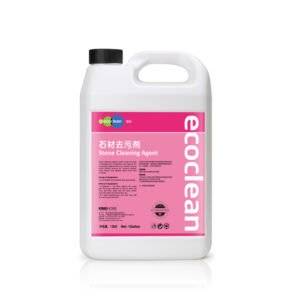
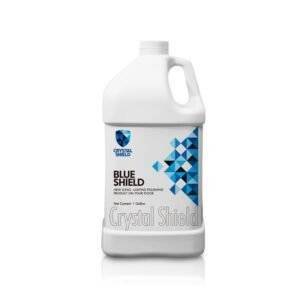
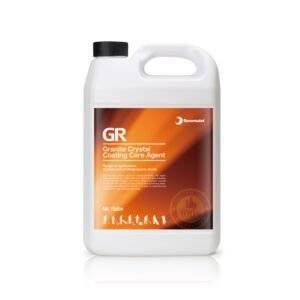
| Granite condition after stain treatment | Reseal decision | Product or guide path |
|---|---|---|
| Stain is lighter but still active, damp, oily, or uneven | Do not seal yet. Finish granite stain removal and dry the stone first. | Stone Stain Remover and chemical stains on granite. |
| Acetone or poultice was used during treatment | Neutral-clean, ventilate, and repeat the water-drop test after the surface stabilizes. | why generic granite stain advice fails. |
| Water darkens the cleaned zone quickly and evenly | The area is usually ready for a penetrating sealer or protection decision. | floor polish vs floor sealer and Blue Shield. |
| The surface is clean but needs gloss-support care or coating | Choose a granite-specific care path instead of applying random topical layers. | GR Granite Crystal Coating Care Agent and GR Granite Crystal Coating Care Agent TDS. |
| The floor keeps staining after cleaning | Fix daily cleaning and residue control before resealing again. | granite floor cleaning without damaging the seal and Crystal Shield stone protection. |
For rust-related granite stains, keep the Granite Rapid Rust Remover TDS available before sealing decisions. Resealing should protect a stable surface; it should not be used to cover unresolved discoloration, solvent residue, or moisture.
Applying sealer over a surface that is damp, contaminated with poultice residue, or still chemically active will produce a failed seal — the sealer will haze, peel, or bond unevenly. Before applying any sealer, confirm all three of the following conditions:
Not every surface treatment depletes the sealer to the same degree. Before applying a full re-seal, run these two tests to assess the current protection level. This matters because over-applying sealer — particularly on granite with tight pores — can cause surface haze that is difficult to remove.
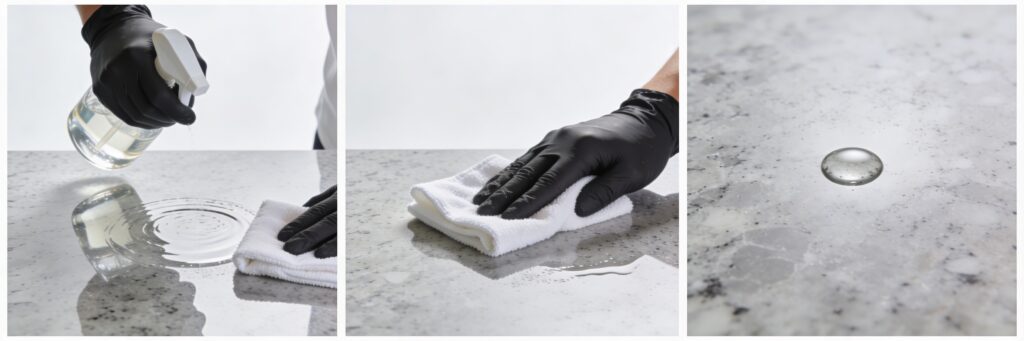
Pour a small amount of water (about a tablespoon) onto the treated area and an adjacent untreated area. Leave both undisturbed for five minutes.
Apply a single drop of cooking oil or mineral oil to the surface. Leave for three to five minutes, then wipe clean. Inspect under direct light.
If the water test passes but the oil test fails, the sealer needs refreshing specifically for oil resistance — common in kitchen areas where sealers face a more aggressive daily challenge than bathroom surfaces.
The distinction between these two categories determines both the application method and the long-term performance. Choosing the wrong type for your application is one of the most common sealing mistakes.
How they work: Penetrating sealers migrate below the granite surface into the pore network, where they bond with the minerals. They do not form a film on the surface — they work from within, making the pores resistant to water and oil absorption without altering the stone’s appearance or texture.
Best for:
Characteristics:
Limitations: Penetrating sealers do not fill surface pits, scratches, or etching. If the granite surface has been physically damaged, the sealer will penetrate but will not visually restore the damaged area.
How they work: Topical sealers form a protective film on the granite surface. They do not penetrate — they coat.
Best for:
Characteristics:
Limitations: Topical sealers on countertops can trap moisture beneath them if the stone is not completely dry at application. They also show wear patterns in high-contact areas (around sink rims, near the stove) and can become slippery when wet on floors.
For the overwhelming majority of post-stain-removal applications — countertops, bathroom granite, and residential floors — a penetrating impregnating sealer is the correct choice. It restores the subsurface protection that the stain removal process depleted, without altering the surface or creating a layer that must be maintained separately.
Topical sealers are appropriate for commercial granite floors with high foot traffic, or in cases where a stone restoration professional has recommended them for a specific surface condition.
For granite floor-specific cleaning and care considerations, see our guide: How to Clean Granite Floors Without Damaging the Seal
Step 1 — Final surface preparation
Wipe the entire area with a clean cloth and pH-neutral stone cleaner. Remove all dust, fingerprints, and residue. Allow to dry completely. The surface must be bone dry before you open the sealer.
Step 2 — Ventilate the workspace
Most penetrating sealers contain carrier solvents that evaporate during the application process. Open windows and ensure air circulation. This is especially important in confined bathrooms or kitchens.
Step 3 — Apply the sealer
Pour a small amount of sealer onto a clean, folded cloth or applicator pad — do not apply directly from the bottle onto the stone, as this creates uneven puddles. Work in manageable sections (approximately 0.5–1 square meter at a time). Apply the sealer in an even, overlapping pattern, ensuring full coverage with no dry patches. The stone surface should appear uniformly wet.
Step 4 — Allow the sealer to penetrate
This is the most critical variable and differs significantly by product, granite type, and ambient temperature. Follow the product’s specified dwell time — typically in the range of 5 to 20 minutes. Denser, polished granite requires less dwell time because the pores are tighter; honed or flamed granite with more open pores can accommodate longer dwell times.
Watch the surface carefully: if you notice the sealer beginning to haze or dry on the surface before the recommended dwell time is up, move immediately to Step 5. Hazing means the solvent carrier is evaporating faster than expected, leaving behind residue that must be removed before it hardens.
Step 5 — Remove excess sealer before it hazes
Using a clean, dry cloth, buff the surface firmly to remove all sealer that has not been absorbed into the stone. Work in circular motions. Do not leave standing sealer on the surface — any residue that dries on the surface will create a permanent white haze that is very difficult to remove without chemical stripping.
This step must be done while the sealer is still liquid. If you are working on a large area and the first section begins to haze while you are still applying sealer to the last section, buff the first section immediately before finishing the application.
Step 6 — Assess absorption and apply a second coat if needed
After removing excess from the first coat, inspect the surface. Perform the water bead test on a small area. If water still absorbs into the stone within a few minutes, the granite has consumed the first coat entirely and a second application is needed. Apply the second coat using the same method, starting 30–60 minutes after completing the first coat (follow the specific product instructions for inter-coat timing).
Dense, polished granite typically needs one coat. More porous finishes — honed, flamed, or brushed — often require two coats to reach adequate protection.
Step 7 — Cure period
After the final coat has been buffed and all excess removed, the sealer requires time to fully cure and harden within the pores. Avoid water contact on the surface for the cure period specified by the product — commonly 24 to 72 hours. During this period, do not clean the surface with anything other than a dry cloth if necessary.
Step 8 — Final verification
After the full cure period, run the water bead test again. Water should bead clearly on the surface. If it does not, a third coat may be required — this is uncommon for countertops but can occur on highly porous granite, particularly flamed or brushed outdoor stone.
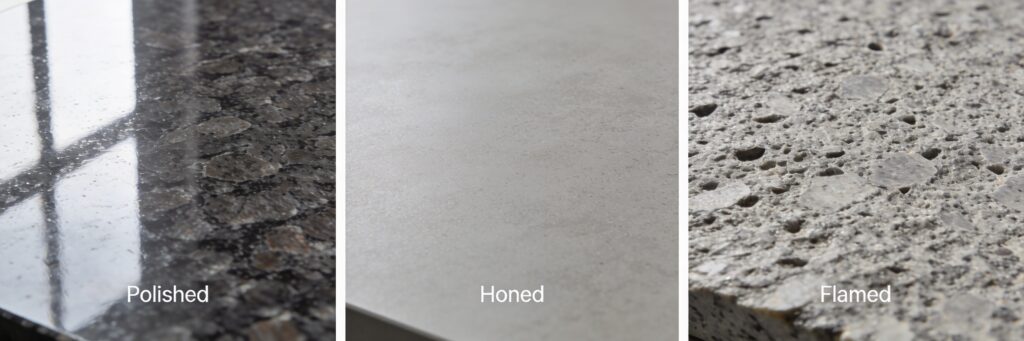
Sealing frequency is primarily determined by the porosity of the stone’s surface — and porosity correlates directly with the surface finish. The same granite slab cut to different finishes will require dramatically different sealing schedules.
| Surface Finish | Pore Structure | Recommended Sealing Frequency | Notes |
|---|---|---|---|
| Polished | Tight, compressed pores | Every 12–24 months under normal use | Kitchen countertops near cooking areas: reassess every 12 months due to heat and cleaning product exposure |
| Honed (matte) | More open pores than polished | Every 6–12 months | Stains more visibly on light-colored honed granite; err toward 6-month intervals |
| Flamed / Thermal | Highly open, roughened surface | Every 3–6 months | Outdoor applications subject to rain, temperature cycling, and UV will deplete sealer faster |
| Brushed / Antiqued | Moderately open surface texture | Every 6–12 months | Similar to honed; inspect more frequently in wet environments |
| Leathered | Variable — depends on specific process | Every 6–12 months | Test regularly; leathered finishes vary significantly in porosity between manufacturers |
After any stain removal treatment, do not wait for the standard interval — reseal the treated area immediately regardless of when the last full application was done. A poultice treatment on a countertop that was sealed six months ago still requires immediate re-sealing on the treated zone.
High-use zones within a surface — the area around a kitchen sink, the perimeter of a bathroom vanity, the entry zone of a granite floor — wear sealers faster than the center of the same slab. These zones should be tested and potentially spot-resealed more frequently than the surrounding surface.
Can I use the same sealer I used originally, or do I need a fresh product?
If the original sealer is within its shelf life and has been stored sealed, it can be reused. Most penetrating sealers have a shelf life of two to five years once opened, though this varies by product. If the original sealer has changed consistency, color, or smell, use a fresh product. Using a degraded sealer will not provide adequate protection and may leave residue that is difficult to remove.
What happens if I apply sealer while the surface is still slightly damp?
The moisture in the pores will compete with the sealer for space, preventing full penetration. You will get uneven sealer bonding, and in some cases, the moisture trapped beneath the sealer will cause it to haze or peel within days. If you sealed too soon and the result has uneven white patches or an irregular sheen, the sealer can often be removed with the appropriate solvent for that sealer type — consult the product manufacturer.
Can I seal only the treated area, or must I reseal the entire surface?
For practical stain removal scenarios, sealing only the affected area is acceptable. Apply the sealer slightly beyond the edges of the treated zone — by approximately 5 cm — to prevent a visible transition line between the resealed and original surfaces. On countertops, it is good practice to do a full surface re-seal once per year regardless, which will naturally absorb any spot treatments into the overall maintenance cycle.
Does sealing granite make it completely stain-proof?
No. A penetrating sealer makes granite stain-resistant by slowing liquid absorption, giving you a window of time to wipe up spills. It does not make the surface permanently impervious. Leaving any liquid on sealed granite for extended periods — particularly oil, wine, or acidic liquids — can still result in staining. The sealer extends your response window, not your inaction window.
Related guides:
 English
  Spanish