WELCOME TO KINGHOME
Get A Free Quote
We will get back to you within 8 hours

WELCOME TO KINGHOME
We will get back to you within 8 hours
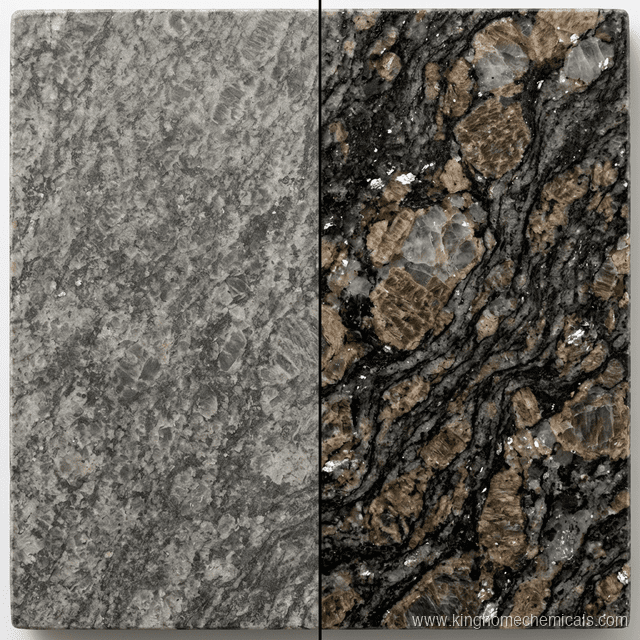
Choose a stone enhancer by first deciding how much color change you want. Use a color-deepening enhancer for faded granite, slate, and honed stone where richer veining is the goal. Use a wet-look enhancer when the project needs a darker, slightly sheened finish. Use an enhancer-sealer when the surface also needs stain resistance, especially on porous stone or outdoor installations.
| Project goal | Best enhancer type | Good fit |
|---|---|---|
| Make faded stone look richer | Color-deepening enhancer | Granite, slate, honed marble, quartzite |
| Create a darker wet-look finish | Wet-look enhancer | Slate, sandstone, travertine, tumbled stone |
| Add color and stain resistance | Enhancer-sealer | Outdoor stone, porous tile, high-use counters and floors |
| Preserve the original color | Clear penetrating sealer instead | Light marble, limestone, or stone where darkening is unwanted |
Always test a small area first. For protection-only projects, compare enhancer results with sealer selection basics before changing the stone appearance.
Choosing the wrong enhancer can darken the stone too much, leave a sticky residue, or create an artificially glossy look that contradicts the stone’s natural aesthetic. This guide walks you through the three main types of enhancers, which stones they suit, and how to apply them correctly.
Stone enhancers work by filling the microscopic pores on the stone’s surface with a transparent resin or solvent-based compound. This filling effect does two things:
Darkens the stone color — The filled pores refract light differently, producing the rich, saturated appearance you see when stone is wet. The color change is permanent as long as the enhancer remains in the pores.
Adds stain resistance — The filled pores make it harder for liquids (coffee, wine, oil) to penetrate the stone surface. However, enhancers are not full sealers — they provide moderate protection, not waterproof sealing.
Important distinction: Enhancers change the appearance of the stone. Sealers protect without changing appearance. Some products combine both functions, but most professionals choose separate products for better control over the final result.
Type 1: Color-Deepening Enhancers
Color-deepening enhancers are the most common type. They significantly darken the stone’s natural color, making veins, crystals, and mineral patterns dramatically more visible.
Best for: Granite, dark marble, slate, quartzite
Finish: Matte to low sheen (no glossy film)
Durability: 3–5 years before reapplication needed
Application: Brush or cloth, wipe excess after 5–15 minutes
Key benefit: Transforms faded outdoor stone and honed surfaces
Type 2: Wet-Look Enhancers
Wet-look enhancers create a permanent “just-rained-on” appearance with a slight sheen. They sit slightly closer to the surface than color-deepening enhancers, producing a more visible effect.
Best for: Slate, sandstone, travertine, tumbled marble
Finish: Low to medium sheen (wet appearance)
Durability: 1–3 years (depends on traffic and weather exposure)
Application: Spray or brush, multiple thin coats
Key benefit: Revives weathered outdoor stone without polishing
Type 3: Impregnating Sealer-Enhancers
These combination products both enhance color and provide full penetrating sealer protection. They offer the deepest penetration and longest-lasting protection.
Best for: High-traffic indoor stone, kitchen countertops, commercial lobbies
Finish: Natural to low sheen (minimal surface change)
Durability: 5–10 years for premium products
Application: Flood-coat, allow 15–30 minutes absorption, wipe excess
Key benefit: Maximum protection with moderate color enhancement
| Property | Color-Deepening | Wet-Look | Impregnating Sealer-Enhancer |
|---|---|---|---|
| Color Change | Significant deepening | Moderate + sheen | Moderate deepening |
| Protection Level | Moderate | Light–Moderate | High |
| Durability | 3–5 years | 1–3 years | 5–10 years |
| Best Surface | Honed/matte stone | Textured/tumbled stone | Polished/high-traffic stone |
| Recoat Ease | Easy | Easy | Requires stripper |
| Cost | $$ | $ | $$$ |
Granite → Best choice: Color-deepening enhancer or impregnating sealer-enhancer → Granite’s dense, crystalline structure responds well to deep-penetrating enhancers. Color-deepening formulas bring out the dramatic mineral patterns (feldspar, quartz, mica) that make granite visually striking. For kitchen countertops, choose an impregnating sealer-enhancer for combined protection. For more granite care tips, see our .
Marble → Best choice: Impregnating sealer-enhancer (cautious application) → Marble is softer and more porous than granite. Use enhancers conservatively — marble can darken more than expected. Always test on an inconspicuous area first. For polished marble floors, crystallization treatment is usually preferred over enhancement. See our .
Slate → Best choice: Wet-look enhancer → Slate’s layered, textured surface is perfectly suited for wet-look enhancers that highlight its natural color variation. The uneven surface holds the product well, and the wet-look effect transforms dull gray or green slate into a rich, dark surface with visible metallic flecks.
Limestone & Travertine → Best choice: Color-deepening enhancer (light application) → These soft, porous stones absorb enhancer quickly. Apply sparingly to avoid over-darkening. One coat is often sufficient. These stones also benefit from a topical sealer applied over the enhancer for additional protection.
Sandstone → Best choice: Wet-look enhancer → Sandstone’s high porosity absorbs enhancer deeply, producing dramatic color deepening. Wet-look enhancers bring out the warm orange, red, and gold tones that make sandstone attractive. Outdoor sandstone may need reapplication every 1–2 years due to weather exposure.
Preparation:
Clean the stone thoroughly — Remove all dirt, stains, and previous coatings. Use a pH-neutral . Allow the stone to dry completely (24–48 hours after wet cleaning).
Test first — Apply enhancer to a small, hidden area (back of a countertop, corner behind furniture). Evaluate the color change after 24 hours before proceeding.
Application:
Apply evenly — Use a brush, roller, or spray. Work in manageable sections (1–2 square meters at a time).
Allow absorption — Let the product soak in for the manufacturer-specified time (typically 5–30 minutes depending on product type and stone porosity).
Remove excess — Wipe away any unabsorbed product with a clean, dry cloth. This is critical — excess enhancer left on the surface creates a sticky, blotchy finish.
Second coat (if needed) — For heavily faded stone or very porous materials, apply a second coat after 2–4 hours. Two thin coats always outperform one heavy coat.
Curing:
Keep dry for 24 hours — Avoid water contact, foot traffic, and placing objects on the treated surface during the cure period.
Full cure: 72 hours — The enhancer reaches full depth and color stability after approximately 72 hours.
Not testing first — Different stone lots from the same quarry can absorb enhancer at different rates. Always test a small area before committing to the full surface.
Over-application — Excess enhancer creates a dark, blotchy appearance that is difficult to reverse. Apply thin coats and wipe thoroughly.
Applying to wet stone — Moisture in the stone pores prevents enhancer absorption and causes hazing. The stone must be completely dry — 24 to 48 hours after cleaning.
Using enhancer on polished stone that needs sealer — If your primary goal is stain protection (not color enhancement), choose a standalone penetrating sealer instead. Enhancers change the stone’s appearance; sealers do not.
Our includes formulations for every stone type and application scenario:
Granite & dark stone enhancers — Maximum color depth for crystalline stone
Marble-safe enhancers — Controlled penetration for soft stone
Outdoor wet-look formulas — UV-stable formulations for exterior stone
All our enhancers are tested under industrial conditions and backed by technical support for dosage and application advice.
A stone enhancer should be selected by the surface condition and finish goal, not only by the phrase “wet look.” Granite, marble, slate, travertine, terrazzo, and textured stone can absorb and display enhancer differently. The safer starting point is to confirm porosity, color-change expectation, sealing need, and test-area response before committing to a full-floor or countertop application.
| Stone condition | Enhancer direction | Test-area check | Risk to avoid |
|---|---|---|---|
| Dense granite or low-porosity stone | Use a small test to confirm whether visible color enhancement is realistic before choosing product volume. | Check absorption time, wipe-off behavior, and color change after drying. | Leaving surface residue because the stone does not absorb enough material. |
| Porous slate, travertine, or textured stone | Evaluate enhancer-sealer behavior and whether the desired tone is natural or darker wet-look. | Compare dry sample, first coat, and fully cured appearance under the project lighting. | Uneven darkening, over-application in low spots, or trapped soil before sealing. |
| Polished marble or calcium-based stone | Confirm compatibility and whether the real need is gloss maintenance, stain control, or color enrichment. | Test on a hidden area and inspect for haze, etching sensitivity, or uneven sheen. | Using an enhancer to hide scratches, acid damage, or dullness that needs restoration. |
| Existing sealed or previously treated stone | Identify the prior treatment before adding a new enhancer or sealer layer. | Perform water-drop, solvent-safe residue, and visual tests where appropriate. | Applying over an incompatible coating or creating patchy absorption. |
Before requesting guidance, share the stone type, finish, indoor or outdoor location, current sealer history, desired appearance, and photos of a clean dry surface. Related pages include the floor polish vs sealer guide, granite floor sealing guide, and professional marble maintenance guide.
Stone enhancing works best when the product choice starts with the surface and finish goal, not with a generic wet-look promise. Current GSC queries show demand for stone enhancing, best stone color enhancer, natural stone enhancer, stone color enhancer, tile enhancer, floor enhancer, stone enhancer sealer, and granite enhancer. A good selection path should separate color deepening, wet effect, light protection, and granite-specific oil resistance before applying the product across a full floor, counter, facade, or decorative stone surface.


| Search or project intent | Selection direction | Product or guide path |
|---|---|---|
| Natural stone enhancer or stone color enhancer | Choose a penetrating color enhancer when the goal is richer tone, clearer veining, and a natural-looking before-and-after result. | ILPA VIVO Stone Color Enhancer and stone enhancer product category. |
| Wet effect, slate color enhancing, tile enhancer, or floor enhancer | Use a wet-effect enhancer only after confirming absorbency, slip risk, outdoor exposure, and whether the surface can darken evenly. | ILPA EXTRA DROPS Wet Effect and professional floor maintenance planning. |
| Granite enhancer or best stone color enhancer | For granite, confirm whether the surface is polished, honed, flamed, or rough before choosing between subtle color lift and stronger protection. | ILPA GRANILUX Granite Enhancer and granite stain diagnosis. |
| Stone enhancer sealer or natural stone enhancer sealer | If stain resistance is as important as color, compare an enhancer-sealer with a dedicated protection system instead of assuming one product solves every risk. | stone protection product selection and granite reseal guidance. |
Before full-area application, clean and dry the surface, remove old wax or sealer residue, and make a small sample area. A stone enhancer can deepen color and improve visual contrast, but it cannot remove etch marks, fill missing stone, or replace a protection system when heavy oil, water, chemical, or traffic exposure is the main risk.
Stone enhancing is used when natural stone looks faded, uneven, or dry after cleaning. A stone enhancer deepens color and makes veins, texture, and mineral contrast more visible. A stone enhancer sealer adds protection at the same time, so it is useful when the surface also needs water resistance, oil resistance, or easier daily maintenance.
For granite enhancer and granite color enhancer selection, test the product on a hidden area before treating the full slab or floor. Dense polished granite may need a different approach from honed granite, flamed granite, rough stone, slate, or textured tile. A tile enhancer can improve color on porous stone tile, but it should not leave a slippery or patchy film on traffic areas.
Natural stone enhancer products are often chosen for slate color enhancing, wet effect finishes, stone enhancer before and after comparisons, and color deepening on rough or antique surfaces. Reflector enhancer queries often refer to a stronger visual lift; in practice, the right choice depends on surface absorption, desired sheen, indoor or outdoor exposure, and whether the stone also needs sealing.
Compare related KingHome options: browse stone floor enhancer solutions, review ILPA VIVO Stone Color Enhancer, see ILPA EXTRA DROPS Wet Effect, or use the antique stone care guide for rough and weathered stone surfaces.
 English
  Spanish