WELCOME TO KINGHOME
Get A Free Quote
We will get back to you within 8 hours

WELCOME TO KINGHOME
We will get back to you within 8 hours
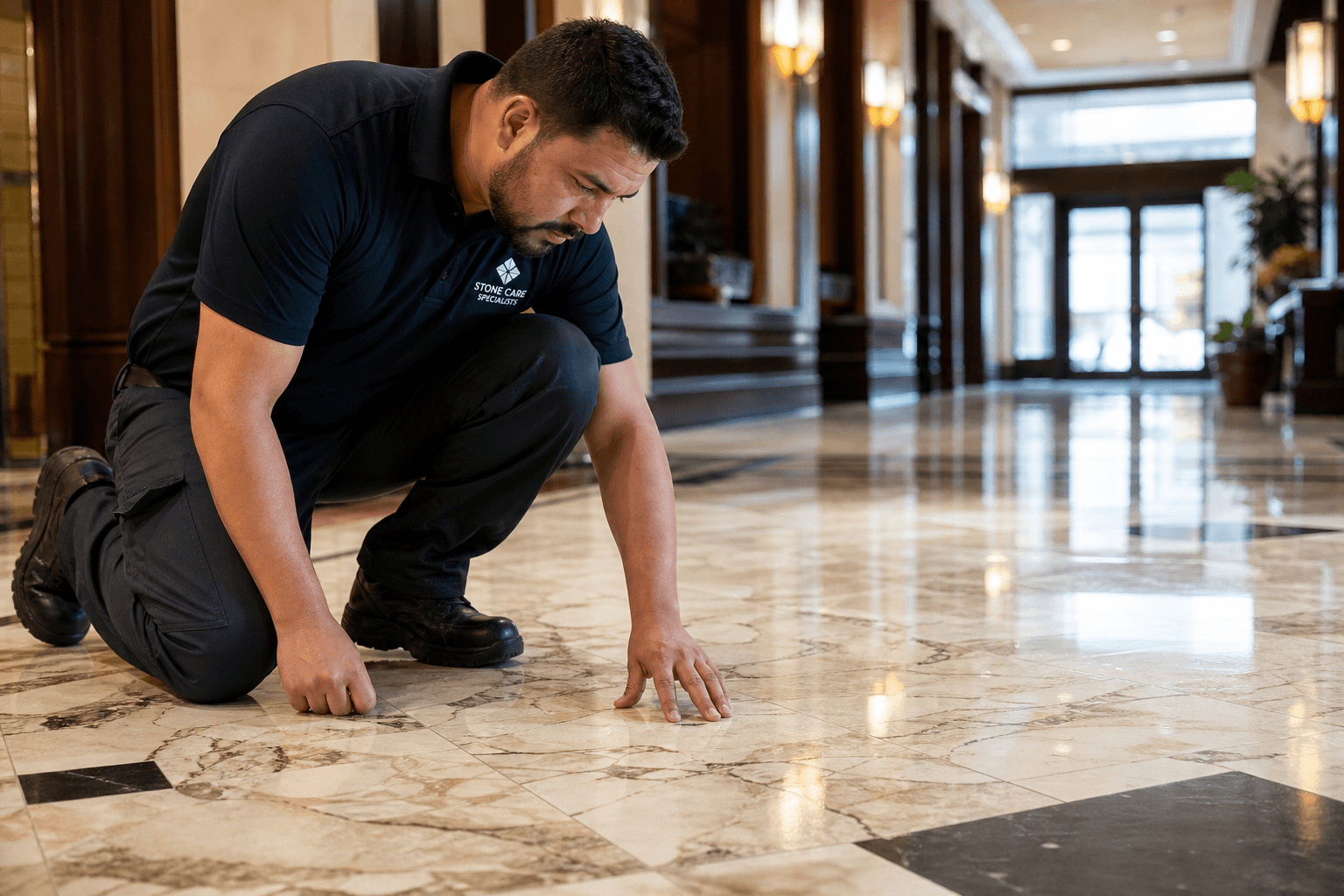
Stone floor protection is not one product. It is a complete system for controlling moisture, salt movement, oil penetration, surface wear, and slab instability before they become visible damage. A professional protection plan starts with diagnosis, then selects cleaning, drying, anti-efflorescence, waterproofing, stain-blocking, and repair treatments based on stone type and site conditions.
For facility managers, contractors, and stone maintenance teams, the biggest mistake is treating every stone problem as a surface problem. White powder, recurring damp marks, loose slabs, dark oil spots, and dirty outdoor stone often begin below the visible surface. If the root cause is not identified, even a high-quality coating or cleaner can fail early.
This guide explains how to build a practical stone floor protection system for commercial buildings, hotels, shopping centers, office lobbies, outdoor paving, wet areas, and renovation projects.
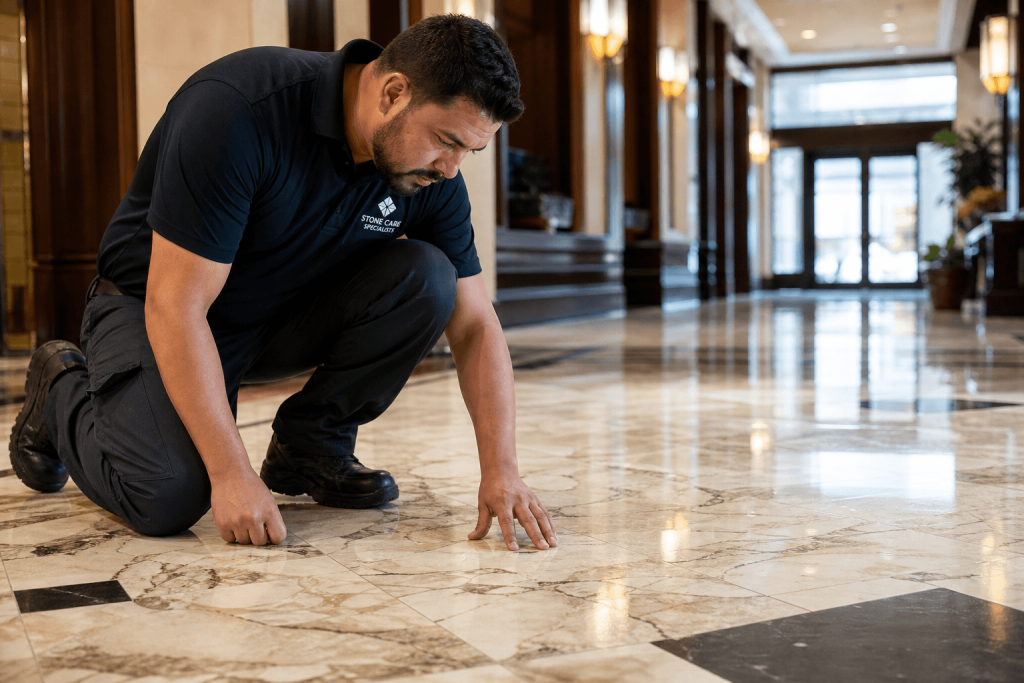
A stone floor protection system combines several treatments that work together. The correct system depends on the stone, the installation, and the type of exposure.
| System Layer | Main Purpose | Typical Use Case |
|---|---|---|
| Dry soil control | Reduces abrasion from sand and grit | Lobbies, entrances, corridors |
| Neutral cleaning | Removes daily soil without attacking stone | Marble, granite, terrazzo, limestone |
| Deep cleaning | Removes embedded dirt and old residues | Restorations, high-traffic areas |
| Anti-efflorescence treatment | Controls salt movement and moisture-related whitening | Damp stone, new installations, outdoor floors |
| Waterproofing protection | Reduces water penetration | Entrances, patios, wet areas, exterior stone |
| Oil and stain blocking | Slows absorption of oils, grease, glue, and colored liquids | Kitchens, garages, loading zones, commercial floors |
| Structural repair | Treats hollowing, looseness, or voids under slabs | Marble and granite floor renovation |
| Maintenance monitoring | Keeps the system effective over time | All professional stone floors |
The system should be planned before the final visible treatment is selected. For example, a floor with active efflorescence should not simply receive a glossy finish. The moisture path must be identified first, because trapped moisture can push salts upward again and create recurring white deposits.
Stone is durable, but it is not immune to water, salts, acids, oil, abrasion, and installation movement. The visible symptom often appears late, after the floor has already been exposed for weeks or months.
Moisture can enter stone from the surface, from the setting bed, from joints, from exterior rain exposure, or from wet cleaning methods. When water moves through stone or mortar, it may carry dissolved mineral salts. When the water evaporates at the surface, the salts remain as a white powder or crust.
Efflorescence is caused by water carrying mineral salts from below the stone surface and leaving powder behind as the water evaporates. Removing the powder with water may improve appearance temporarily, but the symptom usually returns if the moisture source remains active.
Some stones, especially marble, limestone, travertine, and other calcium carbonate stones, are sensitive to acids. Acidic cleaners can etch the surface, reduce gloss, or create dull marks that look like stains but are actually surface damage.
Granite and many siliceous stones are more acid-resistant than marble, but that does not mean every acidic or alkaline chemical is safe. Surface finish, resin treatment, grout, metal inserts, and nearby materials can still react differently.
Oil, grease, food residue, adhesive residue, tire marks, and colored liquids can penetrate porous or worn stone. Once the stain moves below the surface, normal cleaning may not remove it. Protection systems reduce absorption and give maintenance teams more time to clean spills before they become permanent.
Sand, dust, and grit act like abrasives under foot traffic. Even a protected floor loses clarity and gloss if dry soil control is poor. Mats, regular dust mopping, and correct cleaning pads are not cosmetic details. They are part of the protection system.
Loose stone, hollow-sounding slabs, and lifted edges are not finish problems. They can come from poor bonding, movement, moisture, thermal change, or voids under the slab. Applying a surface treatment over a moving slab does not solve the cause.
For hollowing and slab instability, a repair product such as stone hollowing adhesive may be part of the solution after inspection confirms that injection repair is appropriate.
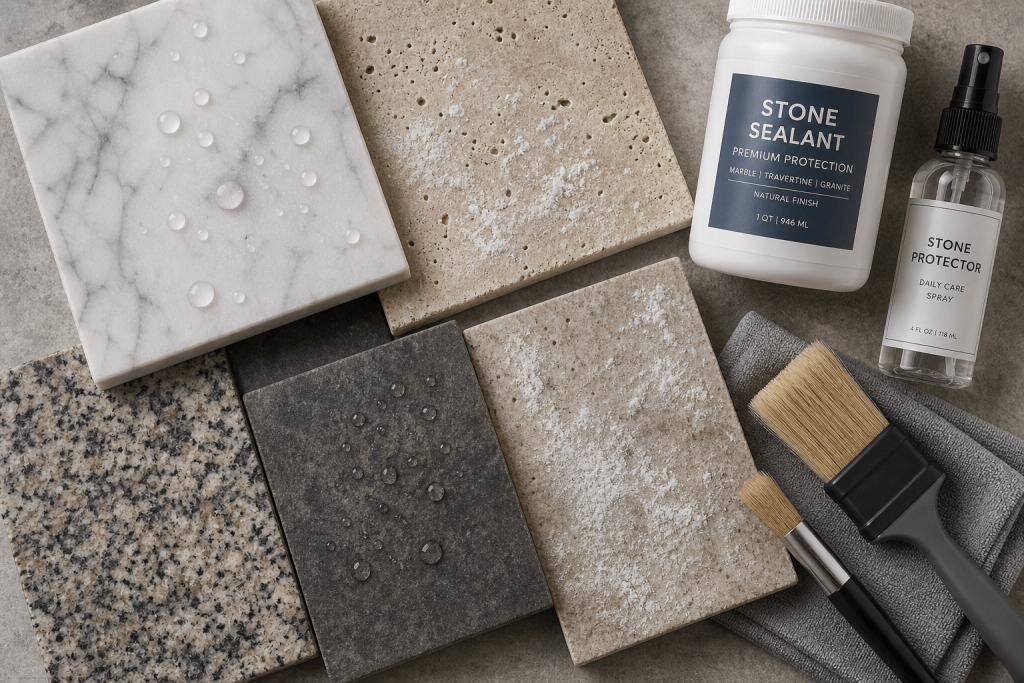
A stone floor protection system should connect the failure mode to the treatment path. Moisture, salts, oil, abrasion, hollowing, and weak edges need different evidence before waterproofing, stain blocking, hardening, repair, or routine maintenance protection is selected.
| Failure mode | Protection direction | Evidence to collect | Risk to avoid |
|---|---|---|---|
| Moisture or efflorescence | Diagnose water movement before selecting waterproofing, breathable protection, or salt treatment. | Moisture source, deposit pattern, drying time, drainage, and substrate condition. | Sealing over active moisture movement. |
| Oil, adhesive, or organic staining | Separate source control, cleaning response, porosity, and stain blocking before final protection. | Contaminant type, exposure route, stone porosity, and previous cleaner or poultice use. | Protecting the surface while the contamination source remains active. |
| Abrasion and traffic wear | Match protection to traffic, cleaning frequency, pad/brush contact, and finish expectations. | Traffic map, cleaning tools, soil type, gloss target, and maintenance owner. | Choosing a visual finish that cannot survive the maintenance routine. |
| Loose stone, cracks, or hollowing | Stabilize the substrate or installation issue before surface protection. | Sound map, movement, joint condition, cracks, moisture, and installation history. | Using protection as a cosmetic cover for structural movement. |
Before choosing a protection system, document stone type, location, failure signal, moisture and traffic evidence, cleaning history, repair status, and inspection photos. Related guides include waterproofing natural stone floors, stone hollowing repair, and Crystal Shield stone protection.
A good specification starts by naming the problem clearly. “Protect the floor” is too vague for field work. The table below maps common symptoms to the correct protection goal.
| Visible Symptom | Likely Concern | Protection Goal |
|---|---|---|
| White powder or white bloom | Moisture and salt movement | Control moisture path and apply anti-efflorescence treatment |
| Dark wet-looking patches | Moisture absorption or trapped water | Improve drying and reduce water penetration |
| Oil spots or greasy marks | Penetrating oil contamination | Clean, extract, and apply oil-resistant protection |
| Outdoor stone darkens after rain | High water absorption | Apply breathable waterproofing protection |
| Slabs sound hollow | Bond loss or voids | Inspect and repair structure before surface finishing |
| Gloss disappears quickly | Abrasion or wrong maintenance chemistry | Improve dry soil control, pads, cleaner, and maintenance cycle |
| Sticky residue after treatment | Over-application or poor removal | Strip residue and reset application method |
This diagnosis step prevents expensive mistakes. It also makes the article cluster easier to use: teams can move from the general guide into the specific support article they need, such as anti-efflorescence treatment for natural stone, waterproofing natural stone floors, stone hollowing repair, or outdoor stone floor protection.
Efflorescence is one of the clearest signs that a surface-only approach will fail. The white powder may be easy to wipe away, but the cause is usually moisture moving through the stone, mortar, grout, or substrate.
Professional efflorescence control follows this sequence:
KingHome’s stone anti-efflorescence care agent should be considered in projects where recurring salt movement is a known risk. The product selection still needs field testing, because stone type, porosity, and moisture conditions can change performance.
Outdoor stone protection is different from indoor decorative sealing. Exterior stone faces rain, UV exposure, wind-driven dirt, oils, landscape moisture, freeze-thaw cycles in some climates, and high soil load at entrances.
The goal is not to create a plastic film over every stone floor. In many cases, the goal is to reduce water absorption while allowing the stone system to release vapor. If moisture is trapped below an impermeable surface, whitening, dark patches, or coating failure can appear later.
Outdoor protection planning should consider:
For rough exterior stone, rough stone protective shield or GT-9000 stone oil-based protective agent may be evaluated depending on the surface and exposure. The treatment should always be tested on a small area before full application. For exterior paving, entrances, patios, and weather-exposed floors, continue with the outdoor stone floor protection guide.
Oil and adhesive contamination often needs a different strategy from water protection. A stone floor in a hotel lobby has different risks from a service corridor, loading dock, commercial kitchen, workshop, or parking entrance.
Oil-resistant protection is useful where the floor may contact:
The protection layer does not make maintenance unnecessary. It gives the cleaning team more working time and reduces the chance that contaminants penetrate below the surface.
For adhesive and oil-related contamination, products such as stone anti-glue and oil agent can be part of the protection specification. For active oil staining, cleaning and extraction should happen before protection is applied.
Protection should not hide structural problems. A floor that sounds hollow, moves under load, or shows cracking around joints should be inspected before any finish treatment is applied.
Common warning signs include:
If the slab is stable enough for repair, injection or bonding treatments may help fill voids and restore support. If the slab is severely loose, contaminated, or cracked, replacement may be safer than surface repair. This decision belongs to an experienced installer or restoration professional after inspection. For a focused repair workflow, read the stone hollowing repair guide.
Use this selection framework before choosing a product.
| Site Condition | Recommended Direction |
|---|---|
| New stone installation with white powder | Dry remove salts, monitor drying, identify moisture source, then anti-efflorescence treatment |
| Outdoor rough stone that darkens after rain | Breathable water-repellent protection after cleaning and drying |
| Kitchen or service corridor oil exposure | Degreasing, drying, and oil-resistant protection |
| Hollow-sounding marble slabs | Inspection and possible hollowing adhesive repair before surface treatment |
| Hotel lobby stone with high foot traffic | Dry soil control, neutral cleaning, periodic polishing, and targeted protection |
| Stone near entrances | Matting, frequent dry removal, water protection, and slip-risk review |
The best treatment is not always the strongest product. It is the product that matches the stone, the contaminant, the moisture condition, and the maintenance team.
A protection system should include a maintenance plan. Without it, even a good treatment can fail because of poor cleaning chemistry or abrasive soil.
| Frequency | Task | Purpose |
|---|---|---|
| Daily | Dust mop or vacuum dry grit | Prevent abrasion |
| Daily or as needed | Clean spills quickly | Reduce staining risk |
| Weekly | Neutral clean high-traffic zones | Remove soil without attacking stone |
| Monthly | Inspect entrances, joints, and wet areas | Catch moisture problems early |
| Quarterly | Check treated areas for absorption changes | Decide if touch-up is needed |
| Annually | Review protection system and product performance | Plan re-treatment or restoration |
Commercial teams should also keep Safety Data Sheets available and train workers on chemical handling. Labels, SDS records, and staff procedures should stay aligned with the site’s chemical-management requirements.
A: No. Sealing is only one possible part of protection. A full stone floor protection system may also include moisture diagnosis, anti-efflorescence treatment, waterproofing, oil resistance, cleaning chemistry, structural repair, and scheduled maintenance.
A: Sealing over active efflorescence is risky. The white powder is a symptom of moisture and salt movement. The salts should be dry removed, the moisture source should be evaluated, and the floor should be treated only after the condition is understood.
A: Not always. Many outdoor stone systems need reduced water absorption while still allowing vapor release. A non-breathable film can trap moisture and cause whitening, dark patches, or coating failure.
A: Active oil staining should be cleaned or extracted first. After the stone is clean and dry, an oil-resistant protective treatment may be used to reduce future absorption. The right product depends on stone porosity, finish, and exposure.
A: If a slab sounds hollow, moves, cracks joints, or shows repeated moisture at the same location, structural inspection should happen before surface protection. A surface product cannot stabilize a moving floor.
 English
  Spanish