WELCOME TO KINGHOME
Get A Free Quote
We will get back to you within 8 hours

WELCOME TO KINGHOME
We will get back to you within 8 hours
The biggest hotel floor cleaning mistakes are using residential cleaners that leave sticky residue, over-wetting LVP and stone floors, and choosing slow-drying products that delay room turnover. Hotels need low-residue, quick-dry, surface-matched cleaners plus clear housekeeping dilution and rinsing procedures to protect floors and speed inspections.
| Mistake | Operational impact | Professional fix |
|---|---|---|
| Using household cleaners in guest rooms | Sticky residue attracts dirt and triggers complaints. | Use low-residue commercial floor cleaner. |
| Over-wetting LVP, stone, or corridor floors | Long drying times slow turnover and risk floor damage. | Use controlled dilution, microfiber pads, and quick-dry chemistry. |
| No standard procedure for housekeeping teams | Different staff create inconsistent results. | Set dilution, dwell time, pad, and inspection rules. |
Hotel housekeeping teams face an ongoing challenge that directly impacts guest satisfaction, operational efficiency, and bottom-line revenue: maintaining spotless floors without compromising room turnover times. Studies consistently show that cleanliness complaints, particularly regarding floors, rank among the most damaging issues for hotel reputation and guest retention. Yet many properties unknowingly sabotage their efforts by using inappropriate cleaning products designed for residential use rather than commercial hospitality environments.
The consequences extend far beyond aesthetics. Sticky residue from household cleaners creates persistent guest complaints, while excessive moisture from improper cleaning techniques damages expensive LVP flooring installations. Meanwhile, extended drying times compress cleaning windows, creating operational bottlenecks that delay check-ins and reduce revenue potential. This comprehensive guide examines three critical mistakes that hotels make with floor maintenance and provides professional-grade solutions backed by industry benchmarks and chemical formulation science.
Walk into any housekeeping supply closet at budget or mid-tier hotels, and you might find familiar bottles of Fabuloso, Pine-Sol, or other residential cleaning products. These consumer-grade cleaners promise great results at attractive price points, making them seemingly cost-effective choices for facility managers working with tight budgets. However, the chemistry behind these products creates significant problems in commercial hospitality environments that far outweigh any initial savings.
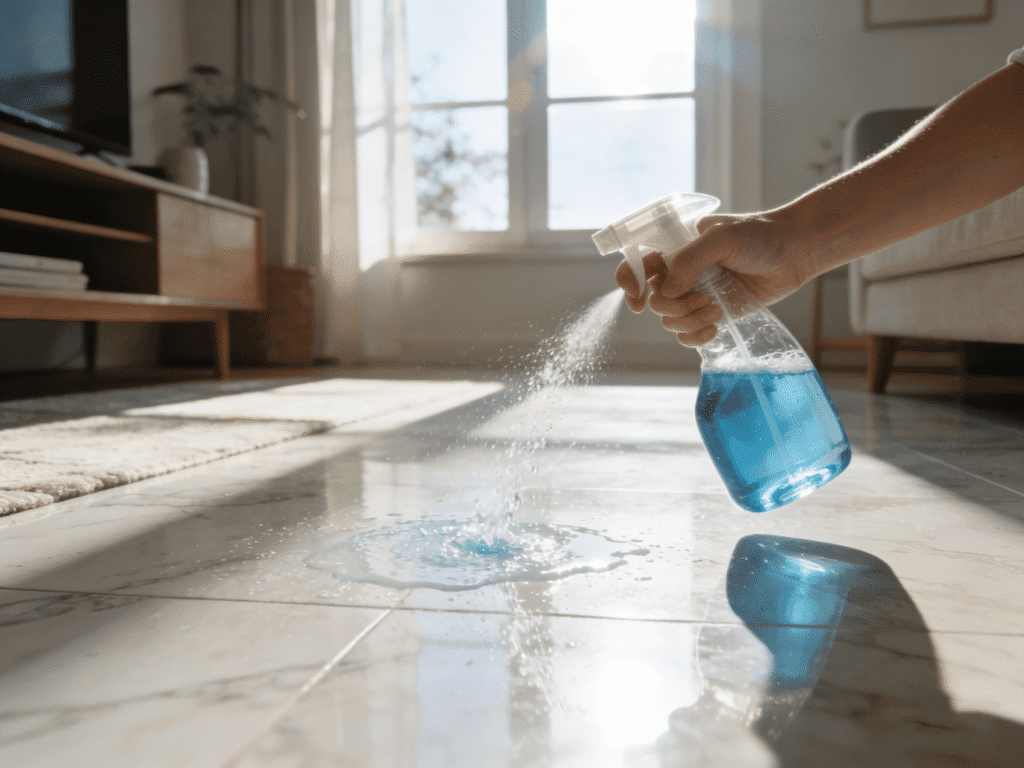
Residential cleaners like Fabuloso rely on soap-based formulations that leave a thin film of surfactant residue on floor surfaces. In a home where floors receive light traffic, this residue might go unnoticed. But in hotel corridors and guest rooms experiencing constant foot traffic, this film creates a tacky surface that attracts dirt, dust, and organic matter. The result is a floor that feels unclean within hours of mopping, despite housekeeping staff’s best efforts.
The financial implications compound quickly. Hotels reporting floor stickiness issues face increased labor costs as staff must clean more frequently to maintain acceptable standards. Guest complaints about floors being “sticky” or “not clean” directly correlate with lower satisfaction scores and negative online reviews. One property manager reported that switching from residential to commercial-grade hotel floor cleaning products reduced cleaning frequency by 40% while improving guest satisfaction scores by 12 percentage points.
Commercial floor cleaning chemicals differ fundamentally in their formulation philosophy. Professional products are engineered with pH-neutral chemistry and quick-evaporating solvents that clean effectively without leaving residue. While residential cleaners prioritize fragrance and visual suds to signal “cleaning power” to consumers, commercial formulations focus on measurable performance metrics: residue-free surfaces, rapid drying times, and compatibility with various flooring materials common in hospitality settings.
Luxury vinyl plank flooring has become the standard choice for hotel guest rooms due to its durability, water resistance, and aesthetic versatility. However, this increasingly popular flooring type comes with specific maintenance requirements that residential cleaning products violate in multiple ways. The consequences of using inappropriate cleaners extend beyond cleanliness issues to potentially catastrophic structural damage and warranty voidance.
Household cleaners containing waxes, oils, or soap-based surfactants create buildup on LVP surfaces that degrades the protective wear layer. This layer, typically 6-30 mil thick depending on the product grade, represents the flooring’s defense against scratches, scuffs, and UV damage. When residential cleaners deposit residue on this surface, they compromise its protective function and create a substrate that attracts soil particles, acting as an abrasive compound under foot traffic.
The moisture penetration problem poses an even greater threat to LVP flooring maintenance hotel operations. Traditional wet mopping with excessive water allows moisture to seep into the seams and edges of vinyl planks. Unlike ceramic tile or sealed concrete, LVP installations rely on tight seams and adhesive bonds that water intrusion can compromise. Facilities managers report LVP edge lifting, warping, and delamination issues in properties where housekeeping staff use residential cleaning methods involving saturated mop heads and extended drying periods.
Warranty implications create additional financial risk. Major LVP manufacturers including Shaw, Mohawk, and COREtec explicitly require pH-neutral cleaning products as a condition of warranty coverage. Residential cleaners typically have pH levels ranging from 9-12 (alkaline) due to surfactant and fragrance components. Using these products on LVP flooring technically voids manufacturer warranties, potentially leaving hotels liable for thousands of dollars in replacement costs when flooring failures occur.
Professional alternatives designed specifically for LVP flooring maintenance hotel applications solve these problems through careful chemical engineering. pH-neutral formulations (pH 6-8) clean effectively without attacking the polymer matrix of vinyl flooring or degrading protective wear layers. No-rinse chemistry eliminates the need for multiple passes with clean water, reducing both labor time and moisture exposure. These commercial products also include anti-resoiling agents that actively prevent dirt adhesion, extending the time between required cleanings.
Room turnover time represents one of the most critical operational metrics in hotel management, directly impacting revenue potential and guest satisfaction. Industry benchmarks indicate that standard business rooms should achieve complete turnover in 15-20 minutes, while larger family rooms require 25-30 minutes. Floor cleaning and drying represents a significant portion of this time window—and outdated wet mopping methods create bottlenecks that cascade through the entire operation.
Traditional mopping techniques using residential cleaning products and bucket systems introduce excessive water onto floor surfaces. A fully saturated cotton or blended mop head can deposit 300-500ml of liquid per square meter of floor space. Combined with soap-based cleaners that don’t promote rapid evaporation, this creates drying times of 30-45 minutes in typical guest rooms with limited air circulation. When housekeeping staff must wait for floors to dry before replacing furniture and preparing the room for inspection, the entire turnover process extends well beyond acceptable timeframes.
The ripple effects impact multiple operational areas. Delayed room readiness forces front desk staff to manage frustrated guests awaiting early check-in. Housekeeping supervisors struggle with scheduling inefficiencies as room attendants wait for floors to dry between assignments. During peak occupancy periods, extended drying times can reduce a hotel’s effective sellable inventory by 5-10% as rooms remain out of service longer than necessary. For a 100-room property at 85% occupancy with an average daily rate of $150, this represents potential revenue loss of $750-1,500 per day.
Quick-dry floor cleaner hospitality solutions address this challenge through multiple technological approaches. Low-moisture cleaning systems use microfiber mops and controlled solution delivery to apply precisely the amount of cleaning liquid required—typically 30-50ml per square meter, reducing moisture by 85% compared to traditional methods. The microfiber construction itself enhances cleaning effectiveness through mechanical action, allowing reduced chemical concentration while improving soil removal.
Advanced commercial formulations incorporate fast-evaporating solvent systems that promote rapid drying without leaving residue. While residential cleaners might take 30-45 minutes to fully dry, professional quick-dry floor cleaner hospitality products achieve touch-dry status in 5-10 minutes under typical room conditions. This transformation enables housekeeping staff to complete room turnover within standard time windows, directly improving operational efficiency and revenue capture.
The financial impact of switching from traditional wet mopping to professional quick-dry systems becomes clear when examining the mathematics of hotel operations. Consider a 75-room property operating at 70% average occupancy (52 occupied rooms daily). Traditional wet mopping averages 8 minutes of actual cleaning time plus 35 minutes of drying time per room, totaling 43 minutes. Professional quick-dry systems require 8 minutes of cleaning time plus 8 minutes of drying time, totaling 16 minutes—a 27-minute improvement per room.
Across 52 room turnovers daily, this efficiency gain yields 1,404 minutes (23.4 hours) of recovered housekeeping labor. This time reallocation allows properties to either reduce staffing costs or redirect labor toward higher-value activities like deep cleaning, amenity refresh, or maintenance support. For properties paying housekeeping staff $15 per hour, the annual labor savings total approximately $128,000.
Revenue implications extend beyond labor costs. Faster room turnover enables hotels to accommodate early check-in requests without inventory constraints, creating upsell opportunities averaging $25-50 per room. Even converting just 10% of these opportunities translates to meaningful incremental revenue. Additionally, improved floor cleanliness reduces guest complaints and negative reviews, which research indicates can improve occupancy rates by 1-3 percentage points—worth hundreds of thousands in annual revenue for mid-sized properties.
The “sticky floor syndrome” reported by hotel housekeeping teams creates a vicious cycle that increases cleaning frequency while simultaneously degrading floor appearance and guest satisfaction. This phenomenon stems directly from the soap-based chemistry of residential cleaning products interacting with commercial hospitality environments experiencing high traffic volumes and diverse soil loads.
Soap molecules contain both hydrophilic (water-loving) and lipophilic (oil-loving) components that enable them to suspend dirt particles in water for removal. However, these same molecules don’t fully rinse away during single-pass mopping, leaving a thin surfactant film on floor surfaces. This residue remains tacky or sticky, particularly in areas with higher humidity or temperature. The sticky surface acts as a dirt magnet, capturing dust particles, skin cells, textile fibers, and organic matter from foot traffic.
Guest perception of cleanliness suffers immediately. Even freshly mopped floors feel unclean when walking barefoot due to the tacky residue sensation. Housekeeping managers report that this tactile feedback triggers more guest complaints than visible dirt, as it signals inadequate cleaning standards regardless of actual hygiene levels. The psychological impact compounds the operational challenge—guests assume a sticky floor indicates poor overall property maintenance, affecting their entire stay experience and review ratings.
Liability concerns add another dimension to the residue problem. While sticky floors might seem merely annoying, they create legitimate slip hazard conditions under certain circumstances. The tacky surface can cause unexpected traction changes, particularly when wet or when guests transition between carpeted and hard floor areas. Hotels face premises liability exposure when foreseeable hazards contribute to guest injuries, making residue-free floor maintenance a risk management priority beyond cleaning standards.
Non-sticky floor cleaner formulations engineered for commercial use eliminate this cycle entirely. Professional products use detergent chemistry rather than soap-based systems, enabling complete rinsing even with no-rinse application methods. The molecular structure of commercial detergents prevents the film formation that creates stickiness, leaving truly clean surfaces that remain soil-resistant between cleaning cycles. Hotels switching to professional non-sticky floor cleaner products report 30-50% reductions in required cleaning frequency while improving guest satisfaction scores related to room cleanliness.
The distinction between “clean” and “visibly clean” becomes critical in hospitality settings. A floor might appear clean to visual inspection while failing tactile cleanliness tests that guests perform unconsciously when walking barefoot. Professional cleaning products address both visual and tactile cleanliness standards, ensuring floors not only look spotless but also feel clean—meeting the comprehensive expectations guests have for hospitality environments.
Hotel floor cleaning mistakes usually come from a protocol gap, not from one careless pass with a mop or scrubber. Before changing chemicals, confirm the floor type, guest traffic window, soil source, slip risk, drying target, and whether the surface is LVP flooring, tile, sealed concrete, marble, terrazzo, or another stone floor. A lobby, corridor, guest room, restaurant, and back-of-house area can all need different dwell time, rinse control, pad choice, and recovery checks.
| GSC search intent | Protocol check | Operational risk |
|---|---|---|
| Hotel floor cleaning mistakes | Audit chemical dilution, dwell time, rinse step, and recovery water quality | Sticky residue that attracts soil, creates footprints, and makes the floor look dirty again after cleaning. |
| Hotel cleaning protocols | Match schedule to guest flow, signage, drying time, and inspection responsibility | Wet areas, inconsistent staff decisions, and slow room turnover during busy periods. |
| Quick-dry floor cleaning | Use controlled moisture, working vacuum recovery, and airflow when needed | Extended drying times that delay reopening corridors, rooms, restaurants, or lobby zones. |
| LVP flooring and resilient floors | Use compatible neutral cleaner, soft pad or brush, and no harsh solvent residue | Film buildup, dull finish, seam stress, or surface damage from an aggressive product or pad. |
A practical hotel cleaning protocol should define what staff check before, during, and after cleaning. Before work starts, identify the flooring and choose the correct cleaner. During cleaning, keep dilution consistent, avoid over-wetting, and recover dirty solution quickly. After cleaning, inspect for sticky residue, haze, odor, footprints, and dry time. If residue keeps returning, treat it as a process problem: remove the buildup first, then reset the daily cleaner, pad, and machine settings.
Related planning paths: compare stone floor cleaner options, review floor scrubber vs buffer workflow choices, and use industrial stone floor cleaning guidance when hotel floors include marble, granite, terrazzo, or high-traffic natural stone.
Hotel floor cleaning problems usually show up as operational failures: slow drying, visible residue, guest complaints, odor, slip risk, or traffic-lane dullness. A practical hotel floor care plan should connect each area to a service-level target, cleaning chemistry, machine choice, and inspection method.
| Hotel area | Cleaning target | Machine or product direction | Inspection signal |
|---|---|---|---|
| Lobby, entrance, and elevator hall | Remove grit quickly and protect the visible appearance during peak traffic. | Use scheduled dust control, suitable scrubber support, and floor-safe cleaner selection. | Traffic-lane dullness, tracked-in soil, wet footprints, and matting performance. |
| Guest corridors and public routes | Keep drying time predictable so reopened areas do not feel sticky or unsafe. | Match cleaner dilution, pad or brush, and recovery to the floor finish. | Dry-to-touch time, residue feel, odor, and recurring marks near turns. |
| Restrooms, spa, or wet zones | Control residue, water recovery, and odor without damaging tile, grout, or stone. | Use area-specific chemistry and agitation rather than one hotel-wide cleaner. | Grout discoloration, standing water, slip complaints, and cleaner buildup. |
| Kitchen, service corridor, and back-of-house | Remove grease and soil while keeping rinse and recovery disciplined. | Confirm alkaline cleaner compatibility, dwell time, scrubber recovery, and safe traffic restart. | Greasy residue, haze, operator shortcuts, and dirty-solution disposal. |
| Stone feature floors | Preserve gloss and avoid etching or scratch marks during routine cleaning. | Use stone-safe cleaning first; separate crystallization or restoration from daily cleaning. | Etching spots, uneven gloss, swirl marks, and whether a test area is needed. |
Before changing products, record the floor type by area, cleaning frequency, guest traffic window, existing residue complaints, drying target, machine availability, and staff training needs. Related pages include commercial tile cleaning machines, industrial stone floor cleaning, and stone floor cleaning mistakes.
Hotel floor cleaning mistakes usually become visible in different areas for different reasons: lobby floors show sticky residue and footprints, corridors expose slow dry time, guest rooms need quiet and quick-dry floor cleaning, and carpeted areas need moisture recovery instead of surface wiping. A practical hotel cleaning protocol should match the product path to the area, the guest traffic window, the floor type, and the room turnover target before staff choose a cleaner, brush, pad, scrubber, extractor, or air mover.


| Hotel area | Protocol risk | Product or guide path |
|---|---|---|
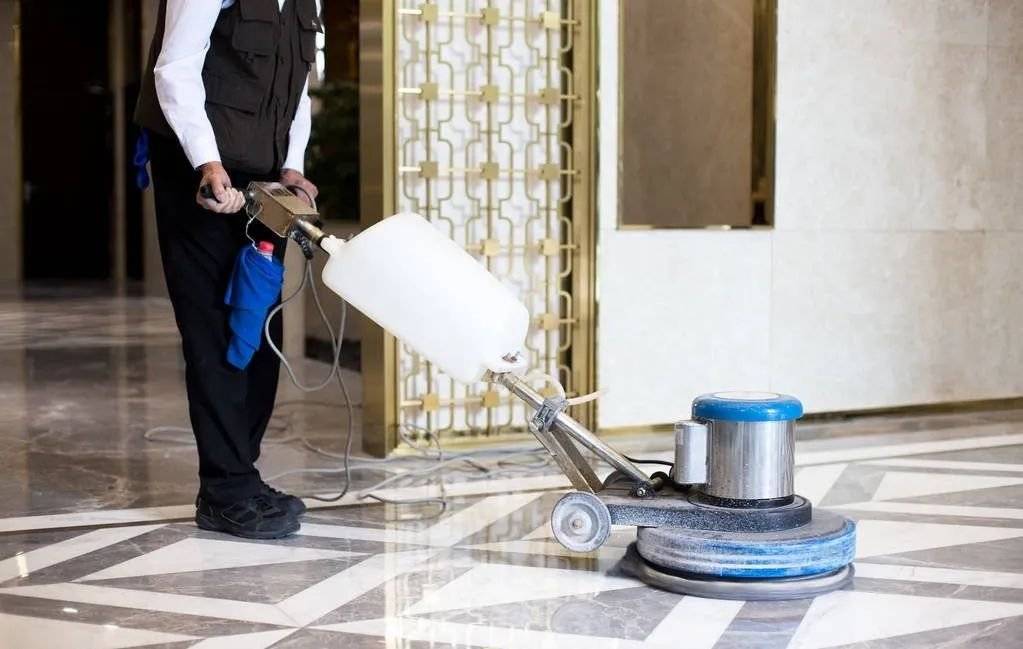
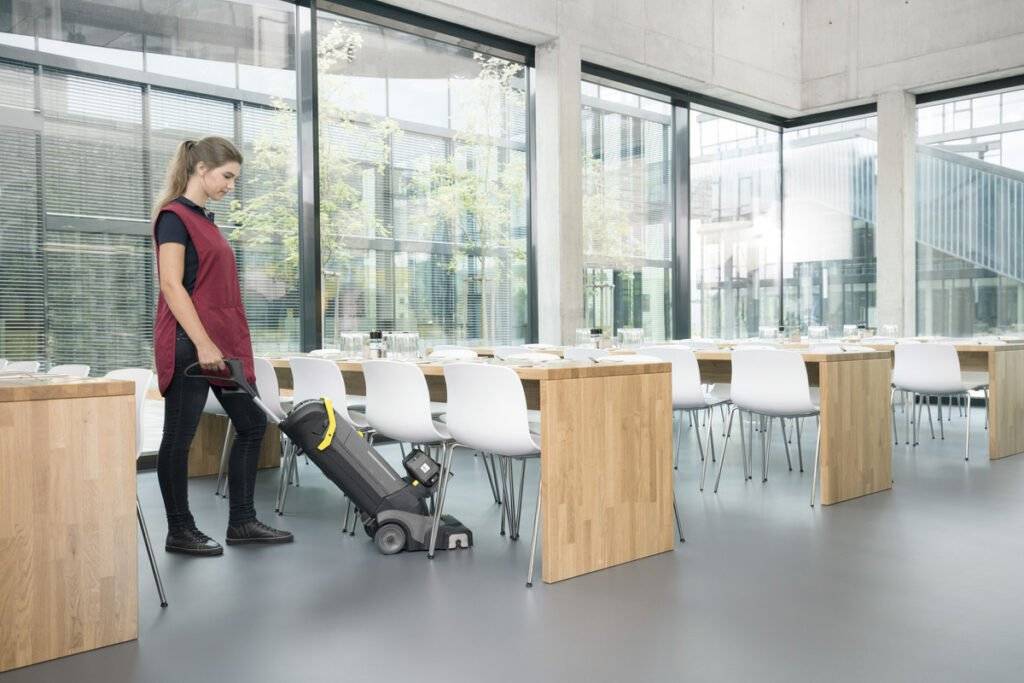
| Lobby, restaurant, and corridor hard floors | Over-wetting, wrong dilution, or poor recovery leaves sticky residue, footprints, and repeat cleaning complaints. | Tennant T300, stone floor cleaning machines, and floor scrubber vs buffer. |
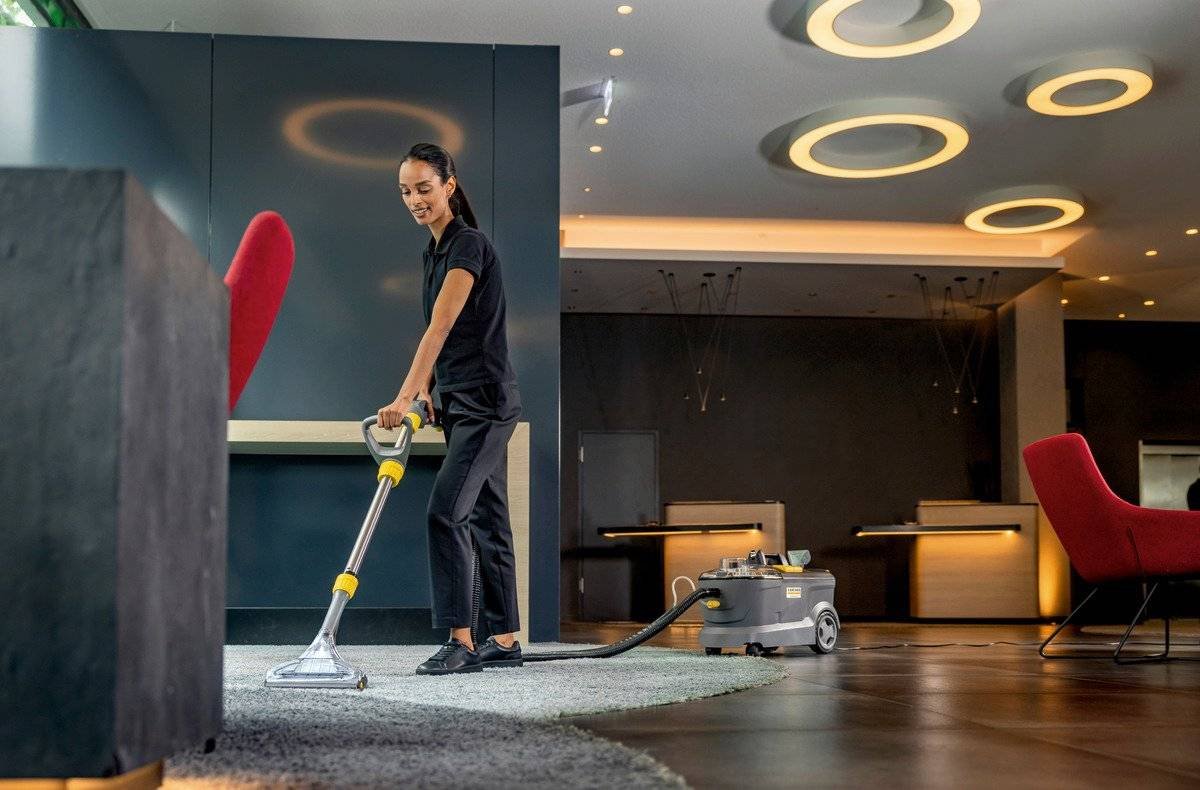
| Guest-room carpet, sofa, and fabric spot work | Surface wiping can leave odor, stains, and slow drying in rooms that need fast reuse. | Kärcher Puzzi 10/1 for spray extraction and moisture recovery planning. |
| Wet corridors, entrances, and service areas | Slow dry time increases slip risk, blocks guest flow, and delays room turnover. | Kärcher Air Blower AB 28 for quick-dry floor cleaning support. |
| LVP flooring, resilient floors, and mixed surfaces | A harsh pad or wrong brush can dull the finish, stress seams, or leave film on modern hotel flooring. | floor scrubber brush selection and specialized industrial cleaning machines. |
| Stone lobby or marble reception zones | Generic hotel cleaning chemicals can leave haze or damage gloss on calcium-based stone. | industrial stone floor cleaning for pH, residue, and recovery checks. |
The operational test is simple: if a floor looks clean but turns sticky, hazy, slippery, or slow to reopen, the issue is not only the chemical. Check dilution, brush or pad choice, contact time, recovery water, airflow, and inspection responsibility. This keeps hotel cleaning protocols connected to guest safety, appearance standards, and room turnover instead of treating each complaint as a one-off housekeeping problem.
The fundamental difference between residential and commercial floor cleaning chemicals extends beyond marketing positioning to encompass formulation philosophy, performance metrics, and application methodology. Understanding these distinctions enables facility managers and housekeeping directors to make informed purchasing decisions that optimize both cleaning effectiveness and operational efficiency.
Commercial floor cleaning chemicals are formulated with pH-neutral chemistry (pH 6-8) specifically to protect the diverse flooring materials found in hospitality environments. This balanced formulation prevents the chemical degradation that alkaline residential cleaners cause to vinyl, sealed wood, natural stone, and protective floor coatings. The pH neutrality also reduces occupational health risks for housekeeping staff who handle cleaning solutions repeatedly throughout their shifts, minimizing skin irritation and respiratory concerns.
Quick-dry technology represents another critical differentiation. Professional formulations incorporate fast-evaporating solvent systems and surfactants engineered to promote rapid moisture release. While residential cleaners might contain moisturizing agents designed to protect home users’ hands, commercial products prioritize evaporation speed to minimize room downtime. This distinction directly supports operational efficiency goals by reducing floor drying times from 30-45 minutes to 5-10 minutes under standard conditions.
No-rinse requirement eliminates the labor-intensive double-pass cleaning process that traditional mopping demands. Residential soap-based cleaners require application followed by clean water rinsing to prevent residue buildup. Commercial no-rinse formulations complete cleaning in a single pass, reducing labor time by 40-50% per room. The chemistry achieves this through careful surfactant selection and concentration optimization that enables effective soil suspension and removal without residue formation.
Streak-free finish addresses the visual cleanliness standards that hospitality environments demand. Professional formulations include anti-resoiling agents and gloss-maintenance compounds that leave floors visibly clean with appropriate sheen levels. This becomes particularly important for luxury properties where floor appearance directly impacts guest perception of overall property quality and attention to detail.
Application methodology differs significantly between residential and commercial cleaning protocols. Damp mopping systems using microfiber tools and controlled solution dispensing replace traditional bucket-and-mop approaches. Spray-and-mop systems allow even greater precision, applying cleaning solution directly to floor surfaces in quantities optimized for soil load and floor type. These professional methodologies reduce water consumption by 70-85% compared to conventional mopping while improving cleaning effectiveness through superior mechanical action of microfiber materials.
Dilution ratios and cost-per-room economics reveal that professional products often prove more economical than residential alternatives despite higher per-unit pricing. A quality commercial floor cleaner concentrate might cost $35-45 per gallon but dilutes at ratios of 1:128 or 1:256, yielding 128-256 gallons of working solution. This translates to cleaning costs of $0.14-0.35 per gallon of ready-to-use product. When combined with reduced cleaning frequency due to superior soil resistance, the total cost per room per year favors professional products by 25-40% while delivering dramatically better results.
Learn more about our professional chemicals designed for commercial applications
Implementing a comprehensive floor care program requires structured protocols that balance daily maintenance demands with periodic deep cleaning and protective treatments. The following framework has been validated across diverse hospitality properties from select-service to luxury full-service hotels.
Daily maintenance forms the foundation of floor care excellence. Microfiber dry mopping should occur in all guest rooms during turnover and in public spaces 2-3 times daily depending on traffic volume. This mechanical soil removal prevents abrasive dirt particles from scratching protective floor finishes and reduces the soil load that wet cleaning must address. High-traffic areas including lobby entrances, elevator banks, and corridor intersections require spot cleaning with professional no-rinse cleaners as needed throughout the day to maintain appearance standards between scheduled cleaning cycles.
Weekly deep cleaning using professional-grade neutral cleaners ensures thorough soil removal that daily maintenance might miss. This protocol involves complete wet cleaning with microfiber mops or auto-scrubber machines in public spaces, corridors, and back-of-house areas. The weekly cycle allows sufficient time for soil accumulation to justify the labor investment while preventing buildup that would require aggressive alkaline or acidic cleaners. Guest rooms on extended-stay status benefit from weekly deep cleaning even when occupied, scheduling around guest preferences when possible.
Monthly maintenance protocols should include protective coating assessment and reapplication as indicated by floor condition. Floors with polyurethane or acrylic finishes develop traffic patterns where protective coatings wear preferentially in high-use areas. Facility managers should conduct monthly inspections to identify areas requiring spot coating application or complete refinishing. This preventive approach extends floor service life by 30-50% compared to deferred maintenance strategies that delay coating renewal until visible damage occurs.
Emergency spill protocols require immediate response cleaning to prevent staining and permanent damage, particularly for natural stone, sealed wood, and light-colored vinyl flooring. Housekeeping staff should have ready access to neutral pH spot cleaners and microfiber towels positioned strategically throughout the property. Training should emphasize that immediate blotting and cleaning within 3-5 minutes prevents most staining, while delayed response often results in permanent discoloration requiring expensive restoration procedures.
View technical specifications for our Floor Deep Cleaner
Transitioning from household to commercial cleaning products requires strategic planning that addresses procurement, training, and change management. Properties attempting immediate wholesale product replacement often encounter resistance from housekeeping staff comfortable with existing procedures and skeptical of “new” solutions that might increase workload or complexity.
The transition strategy should begin with pilot testing in a controlled area—typically a single floor or wing representing diverse flooring types and traffic patterns. This approach allows housekeeping supervisors and staff to experience the performance differences firsthand without organization-wide disruption. Pilot testing periods of 2-4 weeks provide sufficient time to assess cleaning effectiveness, drying time improvements, and any unexpected compatibility issues with existing equipment or flooring materials.
Staff training essentials extend beyond simple product substitution to encompass proper dilution procedures, application techniques, and safety protocols. Commercial cleaning concentrates require precise dilution—improper ratios waste expensive products or deliver suboptimal cleaning performance. Facilities should implement dilution control systems (wall-mounted dispensers or portable proportioning equipment) that eliminate mixing errors and ensure consistent results across all shifts and staff members. Training should emphasize that commercial products often require less solution volume per area than residential cleaners, preventing the instinct to “use more” that undermines efficiency gains.
Application technique training proves equally critical. Microfiber mop systems function differently than traditional cotton or synthetic string mops, requiring modified wringing and floor contact methods. Staff accustomed to saturated mopping must learn that professional systems work effectively with damp rather than wet mops—a counterintuitive adjustment that directly enables quick-dry performance. Demonstration followed by supervised practice ensures technique adoption rather than reversion to familiar but inappropriate methods.
Product selection criteria should match specific cleaners to flooring types and cleaning challenges in different property areas. A single “universal” cleaner might suffice for most applications, but specialized products deliver superior results in challenging environments. Kitchen and food service areas benefit from degreasers with enhanced soil suspension capabilities. Spa and pool areas require cleaners compatible with moisture-rich environments and capable of addressing mineral deposits. Guest bathrooms need products that clean effectively without damaging natural stone vanity surfaces or tile installations.
Measuring success requires establishing objective KPIs that quantify improvement beyond subjective cleanliness assessments. Drying time measurement using simple before/after comparisons demonstrates operational efficiency gains. Guest satisfaction scores related to room cleanliness provide external validation that improvements meet customer expectations. Floor longevity tracking through reduced refinishing frequency and delayed replacement cycles quantifies long-term cost benefits. Housekeeping labor hours per occupied room reveal efficiency improvements that can justify staffing optimization or reallocation to higher-value activities.
Vendor partnerships with specialized suppliers ensure consistent product quality and provide access to technical support when challenges arise. Professional chemical manufacturers offer formulation expertise, application training, and troubleshooting assistance that mass-market consumer product companies cannot match. These partnerships become particularly valuable when addressing unique flooring materials, unusual soil conditions, or compatibility questions with existing floor finishes and equipment.
Explore our high-pressure floor scrubber for tough commercial environments
Hotel floor maintenance represents far more than a routine housekeeping task—it directly impacts guest satisfaction, operational efficiency, and long-term asset preservation. The three critical mistakes examined here—using inappropriate residential products, tolerating extended drying times, and creating residue buildup—share a common root cause: applying residential cleaning solutions to commercial hospitality challenges that demand professional-grade chemical technology and application methods.
The financial implications of switching to professional commercial floor cleaning chemicals extend beyond immediate cleaning costs to encompass labor efficiency, guest satisfaction improvements, and floor longevity extension. Properties implementing the strategies outlined in this guide report cleaning time reductions of 40-50%, guest satisfaction score improvements of 10-15 percentage points, and floor replacement cycle extensions of 30-50%—delivering comprehensive ROI that far exceeds the modest price premium of commercial products over household alternatives.
Facility managers and housekeeping directors evaluating floor care programs should prioritize LVP flooring maintenance hotel protocols that meet manufacturer warranty requirements, quick-dry floor cleaner hospitality formulations that optimize room turnover efficiency, and non-sticky floor cleaner chemistry that maintains both visual and tactile cleanliness standards. These evidence-based approaches transform floor maintenance from a cost center requiring constant attention to a strategic operational advantage that differentiates properties in competitive hospitality markets.
Discover our complete range of professional floor care solutions or learn about protective floor coating systems that extend the service life of your flooring investments.
Use this protocol with floor scrubber vs buffer, stone floor cleaners, and professional marble floor maintenance before you change the workflow.
Related: Professional marble maintenance plan · VCT floor maintenance schedule
 English
  Spanish