WELCOME TO KINGHOME
Get A Free Quote
We will get back to you within 8 hours

WELCOME TO KINGHOME
We will get back to you within 8 hours
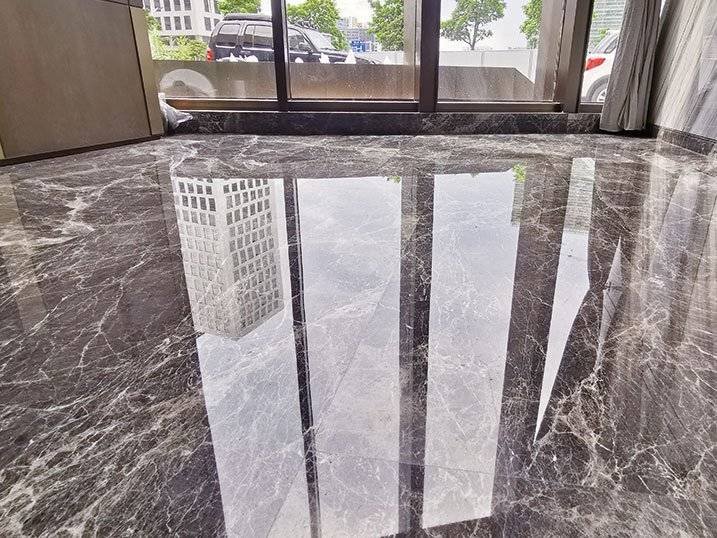
The safest marble floor cleaning trick is to match the cleaning method to the problem: remove dry grit first, use a pH-neutral stone cleaner for daily soil, treat rust, oil, adhesive or water stains with the right specialty product, then rinse and dry completely. Avoid vinegar, acidic bathroom cleaner, abrasive powders and water-only mopping on dirty marble because they can spread residue or create dull etching.
| Marble issue | Safer cleaning choice | Risk to avoid |
| Daily dust and footprints | Dust removal plus pH-neutral cleaner | Dragging sand under a wet mop |
| Oil, rust or adhesive stains | Stain-specific stone cleaner or remover | Using one harsh cleaner for every stain |
| Dull surface after cleaning | Inspect for residue, etching or polishing need | Adding wax before diagnosing the cause |
For deeper marble programs, compare professional marble floor maintenance, stone floor cleaning mistakes, and commercial stone floor maintenance.
Marble is a common building material in home renovations, with most families choosing it for flooring due to its elegant appearance and durability.
How do you clean and maintain your marble floors?
Is your marble care up to par?
Today, we’ll show you how to solve this.
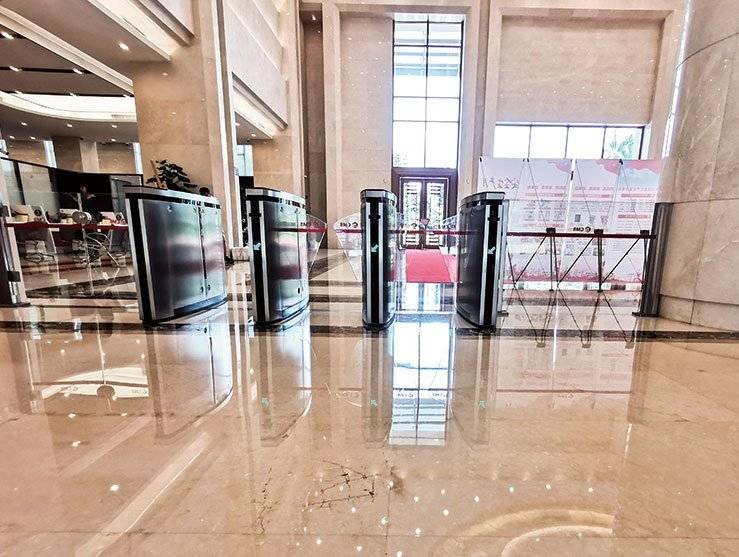
Dust Cleaning: Regularly clean dust from marble floors using professional dust mops and electrostatic dust removers, pushing back and forth until the surface is spotless.

Static Dust Collecting Agent uses a composite formula to generate static electricity, actively attracting dust for a cleaner, brighter floor. With a lasting pleasant fragrance, it reduces labor by maintaining surfaces dust-free longer, ideal for commercial use.
Regular Stains: Wipe localized ordinary stains with a slightly damp cloth.

Stone Stain Remover is formulated with organic acids, isomeric surfactants, and a special stain-suspending agent. It quickly eliminates tough grime, cement residues, limescale, and efflorescence stains from hard surfaces.
Special Stains: For ink, gum, or colored stains, clean immediately. Gently pat with a damp towel to absorb color, then wipe with a clean towel.

Water Spot Remover delivers exceptional performance by penetrating deeply into stone surfaces. It undergoes a targeted chemical reaction with water spots to effectively eradicate them—no stubborn marks left behind.

All-Purpose Adhesive Remover‘s unique solvents and dispersing agents effectively eliminate a wide range of adhesives from hard & carpet surfaces—ideal for chewing gum, shoe polish, ink, asphalt, tar, sticker residues & more.
Stubborn Stains: Use marble-specific concentrated cleaners for large or tough stains to remove organic pollutants. Mix with scouring powder, or blend enzyme cleaners (for plant stains) with powder. Apply the mixture to stains, let sit, absorb residue, then clean with a wet towel.

Floor Deep Cleaner features non-ionic and cationic surfactants, effectively breaking down various stains. It targets tough stains—oil, paint, colored marks, nicotine, asphalt, etc.—on hard floors and pathways, with exceptional results, especially on oil-based stains.
Scratches: Scratches require polishing—best handled by professionals.
Yellowing: Apply multifunctional scouring paste, especially along grout lines with waterproof sealant. Ideal for damp areas like bathrooms.

Marble Rapid Rust Remover effectively removes rust stains, tea stains, yellow stains, and other blemishes from marble surfaces, causing little to no damage to the marble surface.

SR Stone Anti-Efflorescence Care Agent is a new-gen maintenance product for stone efflorescence. Penetrating capillaries, it lets moisture evaporate while blocking Ca(OH)₂—stopping surface efflorescence at source, and preventing/treating efflorescence & mold.
Precautions: Always use neutral cleaners—avoid acidic/alkaline ones like laundry detergent or dish soap. Test strong cleaners or enzymes on a small area first to prevent dark marks. Wring mops completely dry before use.

Neutral Cleaner is a neutral, mild cleaner—ideal for daily cleaning of various material surfaces. Formulated with anionic & non-ionic agents, it boasts excellent penetration, emulsification, and dirt dispersion.
Marble floor cleaning should start by separating removable soil from etching, absorbed staining, residue haze, and worn protection. A stronger cleaner or machine is not automatically the right next step; the surface signal, moisture behavior, and finish target should be identified first.
| Observed signal | Likely direction | Evidence to collect | Risk to avoid |
|---|---|---|---|
| Loose soil, footprints, or routine film | Use controlled marble-safe cleaning with clean-water recovery before considering restoration. | Cleaner history, dilution, mop water, residue feel, and dry-surface clarity. | Escalating chemistry when residue or poor recovery is the real cause. |
| White dull mark after acidic contact | Treat the mark as possible etching rather than ordinary dirt; cleaning alone may not restore the reflection. | Contact substance, shape of the mark, scratch pattern, and finish around the edge. | Repeating acid or abrasive cleaning on calcium-based stone. |
| Dark stain or water-sensitive patch | Allow the stone to dry and identify the contaminant or protection failure before poultice or resealing decisions. | Stain color, porosity, drying time, source, and sealer history. | Locking moisture or residue under a new coating. |
| Uneven gloss after cleaning | Compare residue removal, scratch depth, polishing sequence, and lighting before choosing crystallization or polishing. | Before/after photos, inspection light, traffic path, and finish target. | Polishing over a film and creating a wider uneven-gloss area. |
For a technical review, record the marble type, finish, mark source, cleaner or chemical history, drying behavior, affected area, and the appearance required after recovery. Related planning paths include professional marble maintenance, stone cleaning mistake diagnosis, and marble crystallization powder selection.
Proper marble maintenance and cleaning keeps it looking new and extends floor lifespan.
That’s all on marble cleaning and care—hope this equips you with effective methods for your home.
 English
  Spanish