WELCOME TO KINGHOME
Get A Free Quote
We will get back to you within 8 hours

WELCOME TO KINGHOME
We will get back to you within 8 hours
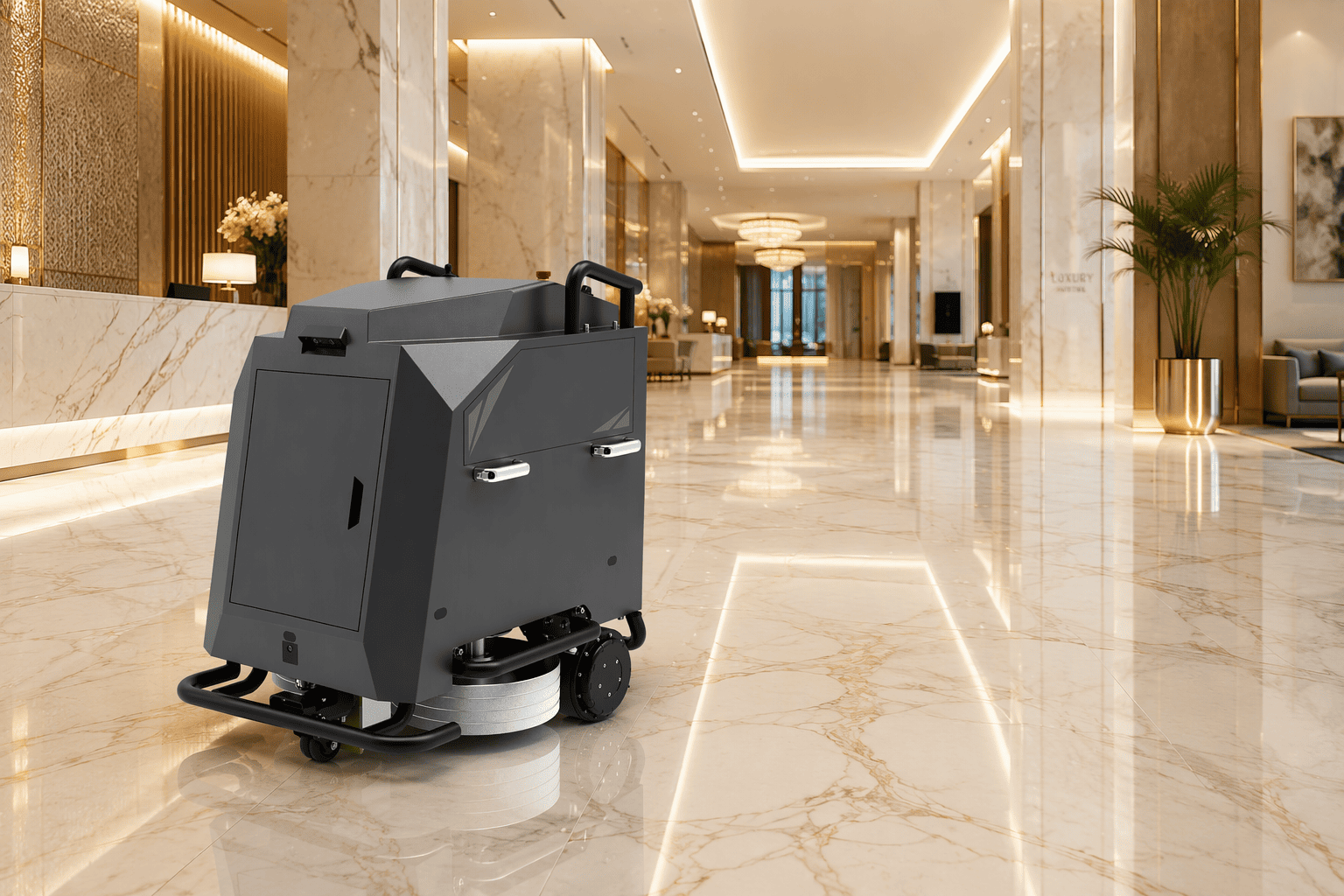
A hotel marble maintenance checklist should combine frequent grit removal, prompt spill response, controlled wet cleaning, and documented inspections. Organize work by area and guest traffic, then schedule polishing, crystallization, or resealing according to floor condition, not simply because a calendar date has arrived.
For lobby protection, start at the entrance: maintain effective walk-off matting and remove tracked-in grit before shoes and luggage wheels carry it across the marble. The Natural Stone Institute’s care recommendations identify sand, dirt, and grit as abrasive contaminants and recommend frequent dust mopping and entrance mats.

Before approving chemicals or machine work, record:
Marble is generally a calcareous stone, making acidic cleaners and acidic food or drink spills an etching risk. Granite, engineered stone, and terrazzo require their own compatibility checks; a marble treatment should not automatically be extended to neighboring materials. The Natural Stone Institute distinguishes calcareous and siliceous stones and recommends selecting care products accordingly.
Clean and dry a small test area before diagnosing dullness:
| Observation | What to investigate | Next action |
|---|---|---|
| Haze or streaks that disappear after appropriate cleaning and rinsing | Detergent film, dirty rinse water, or incomplete recovery | Correct dosing, tools, rinsing, and pickup |
| Dull rings or splash-shaped patches that remain after cleaning | Possible acid etching | Assess localized polishing or professional refinishing |
| Fine scratches concentrated along traffic routes | Abrasive grit, unsuitable pads, or contaminated wheels | Improve soil control and assess finish repair |
| Dark discoloration that persists after drying | Absorbed staining or continuing moisture | Identify the source before stain treatment or sealing |
| White powder that repeatedly returns | Possible efflorescence | Investigate moisture rather than repeatedly polishing |
Etching changes the stone’s finish; it is not ordinary dirt. Efflorescence involves mineral salts carried to the surface by moisture. The Natural Stone Institute’s diagnosis guidance recommends professional refinishing for etched areas and installer investigation when efflorescence persists.
Assign each zone to a named housekeeping supervisor, with engineering responsible for installation, moisture, and equipment issues.
| Hotel area | Main exposure | Operational checklist |
|---|---|---|
| Entrances | Sand, rainwater, wet footwear, luggage wheels | Inspect mat condition and edges; replace saturated mats; remove grit and tracked-in water; increase checks during rain and arrival peaks |
| Reception | Concentrated foot traffic, queue positions, luggage | Clean around desk bases and queue barriers; inspect repeated luggage routes; keep a dry, accessible route to reception |
| Main lobby | Visible traffic lanes, beverage spills, furniture movement | Dust mop before wet cleaning; blot spills promptly; inspect under daylight and installed lighting; check furniture protectors |
| Elevator halls | Turning traffic, wheel debris, moisture near thresholds | Remove grit around thresholds; detail corners; prevent solution entering elevator openings; maintain access to operating lifts |
| Guest-room corridors | Housekeeping carts, luggage, restricted access | Inspect cart wheels; clean in sections; avoid saturating joints and adjacent carpet; coordinate noise and access with occupied rooms |
| Restaurants and dining areas | Grease, food, wine, citrus drinks | Remove spills promptly; use stone-compatible cleaning chemistry for oily soil; assess persistent stains separately from surface dirt |
| Restrooms | Splash water, soap film, nearby toilet chemicals | Use marble-compatible products; keep acidic descalers off marble; recover water around fittings; follow the hotel’s separate hygiene protocol |
For food and drink spills, blot rather than spreading the liquid, then clean, rinse as required, and dry the affected area. Acidic spills may leave etching even after the liquid has been removed.
Traffic should determine inspection frequency. A lobby receiving a coach arrival needs additional grit and water checks; a quiet corridor may need less wet cleaning but more attention to cart wheels and edges.
Use this table as a starting operating schedule. The intervals organize checks—not mandatory treatment cycles.
| Frequency | Tasks | Responsible owner | Evidence to retain |
|---|---|---|---|
| Daily and each relevant shift | Remove loose grit; inspect mats; respond to spills; wet clean where needed; recover solution; verify dry access routes | Housekeeping team; shift supervisor signs off | Zone checklist, spill reports, defects, chemical and dilution used |
| Weekly | Detail edges and corners; inspect luggage and cart wheels; check pads, brushes, squeegees, and recovery performance; clean persistent soil with an approved method | Housekeeping supervisor; equipment operator | Equipment checklist, recurring-soil photos, corrective actions |
| Monthly | Compare traffic lanes with reference areas; investigate haze and repeated dullness; review actual cleaning and drying times; assess localized finish repair | Facilities manager with housekeeping | Consistent-location photographs, defect map, optional gloss readings |
| Quarterly | Review staining and protection needs; inspect joints and moisture patterns; review slip incidents and near misses; arrange specialist assessment where indicated | Engineering or facilities manager; stone-care contractor when needed | Condition report, incident review, protection assessment, specialist findings |
| Annual | Review the maintenance specification, budget, equipment suitability, staff competence, and restoration needs | Facilities manager, procurement, and specialist contractor | Updated floor-care plan, training records, approved repair scope, purchasing requirements |
Do not automatically grind, crystallize, or reseal every month or quarter. Some stones do not require an impregnator, and resealing requirements depend on the stone and the selected product. The Natural Stone Institute’s sealing guidance also emphasizes that impregnation improves stain resistance rather than making stone stain-proof.
Connect these hotel-specific records with the wider professional marble floor maintenance plan, while keeping treatment decisions tied to documented site conditions.
| Process | Appropriate purpose | What it does not replace |
|---|---|---|
| Routine cleaning | Remove loose and surface soil, spills, and compatible detergent residue | Repair of scratches, etching, or installation defects |
| Localized polishing | Refine suitable shallow finish damage and blend a small area with surrounding marble | Deep scratch removal, stain extraction, or loose-tile repair |
| Crystallization | Product-specific chemical-mechanical gloss treatment on compatible, prepared stone | Grinding, structural repair, stain treatment, or slip assessment |
| Grinding and honing | Mechanically correct surface damage or unevenness within an approved restoration scope | Repair of unstable bedding or resolution of moisture sources |
| Impregnating sealer | Reduce absorption and staining where the stone and product warrant treatment | Restoration of lost polish or correction of acid etching |
| Slip-resistance assessment | Evaluate the floor using an appropriate method and relevant site requirements | Cleaning, contamination control, or safe reopening checks |
Crystallization is not a universal stone-care method. KingHome’s marble crystallization powder guide separates compatible marble gloss work from deep scratches, lippage, moisture problems, and non-calcium stone applications. Confirm the exact formulation and application instructions before choosing a process.
For newly installed or repaired floors, confirm adhesive and grout curing requirements, moisture conditions, and surface readiness before finish treatments. Review new marble maintenance and crystallization timing rather than assigning a universal waiting period.
Approve the complete working combination—not just the cleaner or machine name.
Excess cleaner can leave film and streaks; acid-containing cleaners can etch calcareous stone. These are specific concerns identified in the Natural Stone Institute’s cleaning guidance, not reasons to assume that every commercial cleaner is suitable.
For mixed-material properties, consult granite and terrazzo floor cleaning machines when comparing equipment layouts, but verify each surface’s chemistry and tooling separately.
KingHome lists RV-82 Marble Polishing Powder among its Revontulet products. It can enter a product-selection discussion when compatible marble needs assessed gloss recovery—not as a daily cleaner or automatic cure for lobby dullness. Request the current TDS and SDS, confirm the recommended machine and pad, and approve a representative test area first.
Coordinate with reception, security, housekeeping, and engineering. Check late arrivals, events, restaurant closing times, occupied rooms, and morning service requirements.
Plan time for setup, treatment, recovery, drying or curing, inspection, and contingency—not machine operation alone.
Close the working section with effective barriers and provide a clearly identified dry route. Preserve required emergency egress and accessible access.
The UK Health and Safety Executive’s cleaning guidance explains that signs and cones warn of hazards but do not prevent entry. This is UK guidance; apply the relevant local safety and access requirements at the property.
Remove loose soil before machine work. Protect sensitive trims, furnishings, neighboring flooring, and elevator thresholds against the selected chemistry and slurry.
Map the machine route before starting. Use consistent passes appropriate to the process, keep cables and hoses inside the controlled area, and avoid moving dirty wheels or loaded pads onto completed sections.
Do not start a section too large to recover and inspect within the available window.
Use a suitable scrubber-dryer or wet vacuum. Detail joints, edges, corners, and thresholds; rinse according to the treatment instructions.
Do not allow reactive slurry to remain simply because the surface already looks glossy. KingHome’s powder application guidance calls for prompt slurry removal and final residue inspection.
Distinguish a dry-looking surface from a treatment ready for traffic. Follow product-specific reopening and curing requirements.
Do not promise a fixed drying time without a site trial. A smooth floor can remain a slip risk while damp, even after well-wrung mopping or squeegee use.
The designated supervisor checks dryness, residue, unfinished areas, equipment removal, and safe routes. Record the completion and reopening times. Keep any failed section closed and document the corrective action.
Inspect the dry floor under normal lobby lighting and from repeatable viewing positions.
Gloss is an appearance measure, not proof of slip resistance. Where testing is required, document the method, floor condition, locations, and applicable regional or project requirements rather than applying one universal friction threshold.
| Trigger | Required escalation |
|---|---|
| Deep scratches or extensive wear | Specialist assessment for honing or grinding, including stone thickness and repair constraints |
| Persistent or widespread acid etching | Finish-restoration assessment rather than stronger cleaning |
| Hollow-sounding tiles, movement, cracking, or loose joints | Installer or engineering investigation before heavy machine work |
| Recurrent efflorescence | Identify the moisture source; do not repeatedly wet-clean, seal, or polish over it |
| Oil staining that remains after surface cleaning | Stain identification and specialist extraction assessment |
| Rapidly recurring loss of gloss | Review chemistry, grit control, tools, recovery, and previous treatments before repeating polishing |
| Repeated slips or near misses | Immediate risk review, contamination control, and competent assessment |
The Natural Stone Institute recommends professional repair for deeper scratches and investigation of continuing moisture when efflorescence persists.
Use marble cleaning mistakes to avoid and hotel floor cleaning mistakes as supporting review topics; retain a property-specific approved product list and operating procedure.
For a KingHome product and machine-combination enquiry, provide the hotel’s marble area, stone type and finish, busiest traffic periods, available overnight window, current maintenance cycle, existing chemicals and equipment, and photographs showing both the problem areas and surrounding floor. Request compatibility guidance, current product documents, and a test-area procedure before approving the combination.
 English
  Spanish